
- NEW BOOKS FROM PIPER: Since I get much out of the writing of John Piper, as do many others, I was thrilled to hear his latest update at the conclusion of his writing leave: Four books are in the works! Great news!
- REVIEW OF THE SHACK: Tim Challies has an extensive review of William P. Young’s The Shack that takes a hard look at what makes this book dangerous and heretical to many despite its popularity.
- DEBATE ON CALVINISM: Dr. James White gives a powerful closing statement in a debate with George Bryson on Calvinism.
- MACARTHUR ON COURT RULING: John MacArthur weighs in following the recent California Supreme Court ruling that same-sex couples have a constitutional right to marry.
Is it offbeat that God answers prayer?
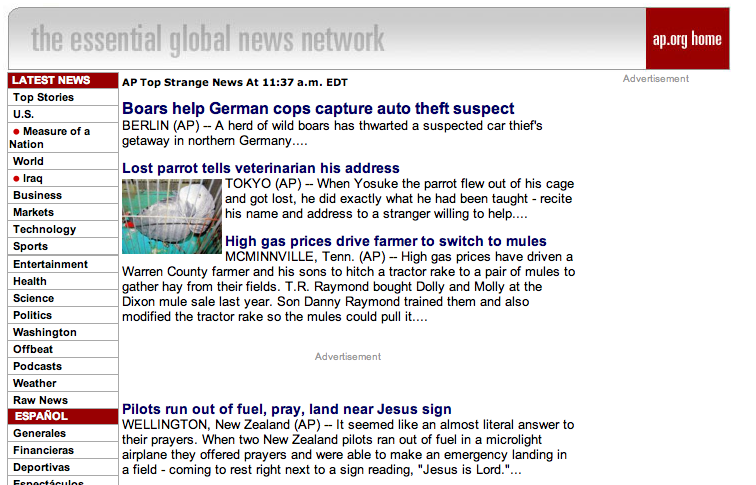 In a completely unsurprising story from the Associated Press, two New Zealand men were in a plane that was about to go down due to a lack of fuel. What they did next was what many people, Christian or not, would have done: They prayed. And, not only did God hear their prayers, he caused them to land their plane next to a billboard that said “Jesus is Lord — The Bible.” Here is part of the story:
Grant Stubbs and Owen Wilson, both from the town of Blenheim on the country’s South Island, were flying up the sloping valley of Pelorus Sound when the engine spluttered, coughed and died.
“My friend and I are both Christians so our immediate reaction in a life-threatening situation was to ask for God’s help,” Stubbs told The Associated Press on Wednesday.
Now, I say this is unsurprising because I know that God can — and does — answer prayer. I think God has a sense of humor in that he caused their plane to land near the sign so it could be “more newsworthy” (to the Associated Press, that is). After all, is it that remarkable that God answers prayers, often dramatically, every day? It shouldn’t be. After all, he says just as much in “The Bible.” Sidenote: I am irritated at these billboards that make broad statements and then attribute them to “The Bible” or “God,” meaning you cannot refute them. You can make many true-sounding statements that are not necessarily biblical this way e.g. — “You can’t beat your kids. — God”
So, this story about God answering a prayer in an amazing fashion now catches the eye of the Associated Press and ends up on its Web site under “AP Top Strange News.” This is the kind of world we live in, sadly. And, perhaps even sadder, I believe there are many Christians who think it strange that God actively works in our lives each minute so that they live their lives as if God is only there as some kind of cosmic 911 operator. Although I can’t be totally sure, the statement above by one of the men has that kind of ring to it.
Here’s the thing: Did the men think to pray to God before the trip or maybe before they realized their plane was in danger? I have a good friend who works as a missionary pilot. He flies in places that many people would say are extremely dangerous and is a great praying man. He e-mails updates before his trips and then sends out updates afterwards about how God answered those prayers. Most are uneventful, but there are several where you see how God answers prayers in a way different than was prayed, but it turned out that it was the best way possible. And my friend acknowledges that in his updates.
These kind of stories (the one about the men in New Zealand) make big splashes and will get many people excited about Christianity and God. But the truth is that God is working day in and day out doing things that may seem mundane but are just as mighty. Jesus, who we worship as Lord, upholds the universe by his mighty hand:
Long ago, at many times and in many ways, God spoke to our fathers by the prophets, but in these last days he has spoken to us by his Son, whom he appointed the heir of all things, through whom also he created the world. He is the radiance of the glory of God and the exact imprint of his nature, and he upholds the universe by the word of his power. After making purification for sins, he sat down at the right hand of the Majesty on high, having become as much superior to angels as the name he has inherited is more excellent than theirs.
Christian or not, we are all believers
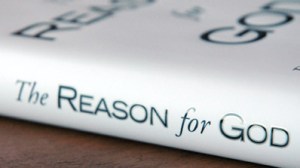 We often use a special jargon that some of us, as Christians, are “believers” while others are not. While that is true, in a sense, when talking about a belief in Jesus Christ, the truth is that we all hold to some kind of beliefs. Tim Keller, in his excellent book “The Reason for God: Belief in an Age of Skepticism,” explains:
Some say [religion] is a form of belief in God. But that would not fit Zen Buddhism, which does not really believe in God at all. Some say it is belief in the supernatural. But that does not fit Hinduism, which does not believe in a supernatural realm beyond the material world, but only a spiritual reality within the empirical. What is religion then? It is a set of beliefs that explain what life is all about, who we are, and the most important things that human beings should spend their time doing. For example, some think that this material world is all there is, that we are here by accident and when we die we just rot, and therefore the important thing is to choose to do what makes you happy and not let others impose their beliefs on you. Notice that though this is not an explicit, “organized” religion, it contains a master narrative, an account about the meaning of life along with a recommendation for how to live based on that account of things.
Some call this a “worldview” while others call it a “narrative identity.” In either case it is a set of faith-assumptions about the nature of things. It is an implicit religion. Broadly understood, faith in some view of the world and human nature informs everyone’s life. Everyone lives and operates out of some narrative identity, whether it is thought out and reflected upon or not. All who say “You ought to do this” or “You shouldn’t do that” reason out of such an implicit moral and religious position. Pragmatists say that we should leave our deeper worldviews behind and find consensus about “what works”– but our view of what works is determined by (to use a Wendell Berry title) what we think people are for. Any picture of happy human life that “works” is necessarily informed by deep-seated beliefs about the purpose of human life. Even the most secular pragmatists come to the table with deep commitments and narrative accounts of what it means to be human (The Reason for God: Belief in an Age of Skepticism, 15,16).
Tim Keller explains why he wrote “The Reason for God: Belief in an Age of Skepticism”
Go here to hear sermons related to Keller’s book
More free resources for you: Dr. Martyn Lloyd-Jones
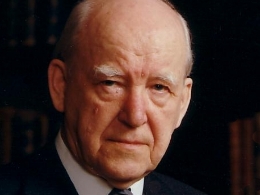 From OnePlace.com:
Dr Martyn Lloyd-Jones (1899 – 1981) has been described as ‘a great pillar of the 20th century Evangelical Church’. Born in Wales, and educated in London, he was a brilliant student who embarked upon a short, but successful, career as a medical doctor at the famous St Bartholemew’s Hospital. However, the call of Gospel ministry was so strong that he left medicine in order to become minister of a mission hall in Port Talbot, South Wales. Eventually he was called to Westminster Chapel in London, where thousands flocked to hear his ‘full-blooded’ Gospel preaching, described by one hearer as ‘logic on fire’. With some 1600 of his sermons recorded and digitally restored, this has left a legacy which is now available for the blessing of another generation of Christians around the world – ‘Though being dead he still speaks’.
You can hear sermons from this great preacher for free! at OnePlace.com (with registration). If you own an iPod or an MP3 player, this is a great way to fill it with awesome encouragement, teaching and counsel. If you don’t you can still listen online for free.
Barack Obama, unapologetic abortion supporter
Just to be clear, this is what Barack Obama, the most likely Democrat nominee for president, sees as a key issue in this election. He is very clear on where he stands. He is pro abortion. His reaction to a Supreme Court ruling upholding a ban on partial-birth abortions? “It is time for a different attitude on the Supreme Court. It is time to turn the page and write a new chapter.”
HT: Justin Taylor
Myanmar didn’t go away
Last week I posted about the tragedy in Myanmar and how, although reported on the by the media regularly, we tend to turn away from tragedies that occur out of our comfort area. Well, it’s still there and it still a major tragedy. I posted a link the American Red Cross, but there are several organizations out there reaching out to people who are needy.
 One such organization is a Michigan-based group called Christian Freedom International. This group’s mission is based on Hebrews 13:3, which says: “Remember the prisoners, as though in prison with them, and those who are ill-treated, since you yourselves also are in the body.” Thousands upon thousands in Myanmar have been affected by the effects or Cyclone Nargis. Among those are the Karen Christians. Even among the suffering, these are singled out. This from CFI:
Residents in the Irawaddy Delta, which bore the brunt of the cyclone that tore through the country on May 3, 2008, are now claiming that the Burmese military is diverting aid from areas heavily populated by ethnic Karen villagers — a claim consistent with the government’s longstanding history of discriminatory practices against the Karen, the largest and mostly Christian minority ethnic group in the country.
So, for those who call themselves Christians, how does that make you feel? Bad? Uneasy? Something? How do you explain it to your children? Do you? Maybe there’s more you could do. Perhaps you might show them that a little sacrifice for the good of the body is really not a sacrifice but a way to honor God.
You want more examples? Perhaps you may want to consider the Macedonians from Paul’s letter to the Corinthians (II Cor. 2:1,2 and 8 ) when he was taking aid to the starving believers in Jerusalem:
We want you to know brethren about the grace of God which has been shown in the churches of Macedonia, for in a severe test of affliction, their abundance of joy and their extreme poverty have overflowed in a wealth of liberality on their part . . . I say this not as a command, but to prove by the earnestness of others that your love also is genuine.
OK, you get the point. Go here to Christian Freedom International and see what you can do.
C.S. Lewis was more than The Chronicles of Narnia
 Ligonier Ministries has graciously made available its January issue of Tabletalk magazine, which looked at the life and writings of C.S. Lewis. With Prince Caspian opening this weekend, it is as good a time as any to look at the man whose writing have inspired many people, myself included.
It has been a treasured memory of mine the time I spent reading through the Chronicles of Narnia books (in the originally published order, not the modern order) with my children. First of all, Lewis was a great writer, and it is good for children to hear and read (when they could) what good literature looks like. Secondly, the Christian message is clear throughout the books in telling the story of Narnia, Aslan and the struggle that ultimately ends in the triumph of good over evil.
But Lewis wrote much more than children’s books, and you would be missing much if you didn’t look into his other writings. Books like “Mere Christianity” or “The Screwtape Letters” or essays like “The Weight of Glory” or “The Four Loves.” Lewis is a writer who puts your mind to work and points you to God.
So, while watching a movie is enjoyable, it would also be good to pull out a good book by C.S. Lewis and stretch your mind a little.
Hollister, the Bible and teenagers
I’ve been reading through Alex and Brett Harris’ book “Do Hard Things” and I can’t overstate how much I like it and strongly recommend it. As a parent of a teenager, I am constantly doing battle with our culture’s low expectations for them so it is encouraging to see two young men who are giving a great message that we all need to hear.

One of the things Alex and Brett talk about is that the whole idea of a special class of people called “teenagers” is a 20th century idea that has strongly taken root. In their research for the book, they discovered that even the word “teenager” did not exist publicly until 1941 and that, in an effort to protect children from cruel labor laws at the turn of the 20th century and instill universal education, we created a period where children are not yet adult but no longer children. We created the low expectations. In “America in So Many Words,” it is described this way:
Thus the years ending in -teen became something new and distinctive … The teenager remade our world. The concept is … subversive: why should any teenager enjoying freedom submit to the authority of adults? With the discovery of this new age, ours has been the century of the teenager ever since.
What does the Bible say about teenagers? Absolutely nothing. But it is not silent about youth and expectations. Instead, in I Corinthians 13:11 it says: “When I was a child, I spoke as a child, I thought as a child, I reasoned like a child. When I became a man, I gave up childish ways.” Furthermore, in I Timothy 4:12 it says: “Don’t let anyone look down on you because you are young, but set an example for believers in speech, in life, in love, in faith and in purity.” And finally, in Romans 12:2: “Do not conform any longer to the pattern of this world!”
What does our culture say? There is a joke that if Hollister (or American Eagle) said breathing was uncool, 92 percent of all teens would be dead. So, maybe it’s time for all of us to start thinking more highly and expecting more from these people we call teenagers. I leave you with the wisdom from I Corinthians 14:20:
Brothers, stop thinking like children. In regard to evil be infants, but in your thinking be adults.
Bella and why you should see it
Earlier, I had posted about the movie Juno and its life-affirming message. Well, there is another movie, just out on video, that is just out on DVD that I would strongly encourage because of its clear pro-life message.
Bella is the love story of a soccer star and a waitress whose lives become entertwined through her pregnancy. It is a small movie that opened and didn’t get as much notice as Juno probably because its pro-life message is more overt. In fact, among the reviews that I saw, most gave it an unfavorable rating simply for the fact that it was unashamedly pro-life.
But for those who can look past their own biases, there is a beautiful movie here. This review (second down), from Colin Covert of the Minneapolis Star Tribune:
There’s not much more happening here than two people getting to know each other as we come to understand them both, yet that’s a story we never tire of, so long as it’s told well. And here, it is. Writer/director Alejandro Gomez Monteverde’s film is utterly touching and captivating, wisely humanist in refusing to cast even the most unpleasant characters as cardboard villains. A loving testament to the beauty of family, “Bella” won the People’s Choice Award at last year’s Toronto Film Festival. Rarely are crowd-pleasers so effortlessly artful.


There are no ordinary people
This is a piggyback post, based on something I read earlier today. The question is: Do people bore you? And is so, why? It is hard to show Christ’s glory when the only person we find interesting is ourselves. Here is what C.S. Lewis says:
It is a serious thing to live in a society of possible gods and goddesses, to remember that the dullest and most uninteresting person you talk to may one day be a creature which, if you saw it now, you would strongly be tempted to worship, or else a horror and a corruption such as you now meet, if at all, only in a nightmare. All day long we are, in some degree, helping each other to one or other of these destinations. It is in the light of these overwhelming possibilities, it is with the awe and the circumspection proper to them, that we should conduct all our dealings with one another, all friendships, all loves, all play, all politics. There are no ordinary people. You have never talked to a mere mortal. (The Weight of Glory, 14-15)
Our evangelism suffers when we can’t put away worship of ourselves long enough to engage someone else. Perhaps their view of Christ in us is being clouded by our own love for ourselves.
HT: Desiring God
 Rockstanding
You must be logged in to post a comment.