The best news: What can you learn from a lying, murdering, rapist?

A lot about what it means to have a tender heart for God. Consider David in Psalm 51:

Have mercy on me, O God, according to your steadfast love; according to your abundant mercy blot out my transgressions. Wash me thoroughly from my iniquity, and cleanse me from my sin! For I know my transgressions, and my sin is ever before me. Against you, you only, have I sinned and done what is evil in your sight, so that you may be justified in your words and blameless in your judgment. Behold, I was brought forth in iniquity, and in sin did my mother conceive me. Behold, you delight in truth in the inward being, and you teach me wisdom in the secret heart. Purge me with hyssop, and I shall be clean; wash me, and I shall be whiter than snow. Let me hear joy and gladness; let the bones that you have broken rejoice. Hide your face from my sins, and blot out all my iniquities. Create in me a clean heart, O God, and renew a right spirit within me. Cast me not away from your presence, and take not your Holy Spirit from me. Restore to me the joy of your salvation, and uphold me with a willing spirit. “Then I will teach transgressors your ways, and sinners will return to you. Deliver me from bloodguiltiness, O God, O God of my salvation, and my tongue will sing aloud of your righteousness. O Lord, open my lips, and my mouth will declare your praise. For you will not delight in sacrifice, or I would give it; you will not be pleased with a burnt offering. The sacrifices of God are a broken spirit; a broken and contrite heart, O God, you will not despise. Do good to Zion in your good pleasure; build up the walls of Jerusalem; then will you delight in right sacrifices, in burnt offerings and whole burnt offerings; then bulls will be offered on your altar.

What has led David to this lowly state of remorse? Turn back to 2 Samuel 11:2-5 to see where it started:

It happened, late one afternoon, when David arose from his couch and was walking on the roof of the king’s house, that he saw from the roof a woman bathing; and the woman was very beautiful. And David sent and inquired about the woman. And one said, “Is not this Bathsheba, the daughter of Eliam, the wife of Uriah the Hittite?” So David sent messengers and took her, and she came to him, and he lay with her. . . . Then she returned to her house. And the woman conceived, and she sent and told David, “I am pregnant.”

And not only does David do this, he compounds his sin by bring Bathsheba’s husband, Uriah, back from battle so he can sleep with his wife and thus cover up David’s sin. It doesn’t work and so David has Uriah killed in battle. It is only when the prophet Nathan confronts him that David repents.

And what is God’s response? “The Lord has taken away your sin; you shall not die.” (2 Kings 12:13). From here, John Piper picks up the story and why it matters that we should care why God answers in this way:

And, Piper goes on to show that David’s response to his sin is a good example for us to follow. Piper lays out four ways in his sermon, “A Broken and Contrite Heart God Will Not Despise.”

What to do with a pro-choice president?

UPDATE: The headline has now been corrected to what I intended it say. Everyone needs an editor!

Honor everyone. Love the brotherhood. Fear God. Honor the emperor.I Peter 2:17

How should Christians who honor the life of the unborn respond if pro-choice Barack Obama is elected president of the United States? John Piper gives eight ways to honor the president, as the verse above says we must:

1. Humbling Ourselves

We will honor you, Mr. President, by humbling ourselves under the mighty hand of God (1 Peter 5:6) and acknowledging that we are ourselves sinners and in need of mercy and forgiveness from God. We are not infallible. We are open to new light on this and every issue. We are not the final judge in this matter. God is. We stand before the cross of Christ on level ground with you, not above you, utterly dependent on mercy and seeking to live by the will of Christ.

2. Acknowledging God’s Image

We will honor you by acknowledging that you are a man, created in the image of God, and distinct among all the beings in the world (as it says in James 3:9). You are not a mere animal. You have the glorious potential, like all humans, of being a child of God (if you aren’t already) and shining like the sun in the kingdom of God forever and ever. We honor you as an utterly unique, human being created in the image and likeness of the living God with untold potential.

3. Acknowledging God’s Institution

We will honor you by acknowledging that government is God’s institution. He wills that there be leaders like presidents and governors. You are in power by God’s appointment and we honor that. In Romans 13:4 the Bible even calls you, “God’s servant for our good.” It grieves us that you do not intend to enact laws to protect the good of the unborn the most innocent, weak, and helpless group of Americans. But we have seen from Somalia that bad government is better than no government. The absence of some laws to protect some people is better than the absence of all laws to protect anybody. We honor your stabilizing role in this sense as a blessing from God.

4. Honoring Laws Not Conflicting with Christ’s Lordship

We will honor you by submitting to the laws of the state and the nation wherever they do not conflict with our higher allegiance to Christ the King of kings and Lord of lords. We will submit to the laws that take away

  • our “right” to chose to go 75 miles an hour,
  • our “right” to choose to keep our lights off when our windshield wipers are on,
  • our “right” to choose to drive without a seat belt,
  • our “right” to choose to fish without a license,
  • our “right” to choose to make loud noises in the middle of the night,
  • our “right” to choose to keep our kids out of schooling,
  • our “right” to choose to send them to school without DPT shots,
  • our “right” to choose to use leaded gas,
  • our “right” to choose not to pay taxes,
  • our “right” to choose to smoke on the other side of the restaurant, etc.

We submit to the right of government to limit our right to choose in hundreds of areas, especially when the good of others is at stake. We understand that governments exist to limit the right to choose and we submit to that.

1 Peter 2:13 says that we are to submit not for your sake but for the Lord’s sake. Verse 16 says that we are free in respect to you but slaves of God. We will submit not because you have power, but because our King commands it for the honor of his institution of civil government. Yet our submission is an honor to you because under God and from God you bear the authority to enforce the laws of the land.

5. Not Withdrawing into Isolation

We will honor you by not withdrawing into little communes of disengaged isolation from American culture. But according to 1 Peter 2:15, we will honor you by trying to do as much good as we possibly can for the unborn, and for unwanted children, and for women in distress, so that we will not be thought insolent or inconsistent in asking from you what we are not willing to do ourselves. We do this because the Bible says, “It is the will of God that by doing right you may silence the ignorance of foolish men” (1 Peter 2:15).

6. Opposing with Non-Violence

We will honor you by opposing your position as long as we can with non-violence instead of violence, with reasoning instead of rocks, with rational passion instead of screaming, with honorable speech instead of obscenities, with forthright clarity of language instead of dodging the tough realities and tough words, with evidence instead of authority, and with scientific portrayals of life instead of authoritarian blackouts (cf. 2 Corinthians 4:2). We will honor you by a relentless effort to put truth, and not mere emotion, before you in the White House.

7. Expecting Straightforward Answers

And we will honor you by expecting from you straightforward answers to straightforward questions. We would not expect this from a con-man or a chimp. We expect it from an honorable man.

For example, are you willing to explain why a baby’s right not to be killed is less important than a woman’s right not to be pregnant?

Or are you willing to explain why most cities have laws forbidding cruelty to animals, but you oppose laws forbidding cruelty to human fetuses? Are they not at least living animals?

Or are you willing to explain why government is unwilling to take away the so-called right to abortion on demand even though it harms the unborn child; yet government is increasingly willing to take away the right to smoke, precisely because it harms innocent non-smokers, killing 3,000 non-smokers a year from cancer and as many as 40,000 non-smokers a year from other diseases?

And if you say that everything hangs on whether the fetus is a human child, are you willing to go before national television in the oval office and defend your support for the “Freedom of Choice Act” by holding in your hand a 21 week old fetus and explaining why this little one does not have the fundamental, moral, and constitutional right to life? Are you willing to say to parents in this church who lost a child at that age and held him in their hands, this being in your hands is not and was not a child with any rights of its own under God or under law?

Perhaps you have good answers to each of these questions. We will honor you by expecting you to defend your position forthrightly in the public eye. You have immense power as President of the United States. To wield it against the protection of the unborn without giving a public accounting in view of moral and scientific reality would be dishonorable. We will honor you by expecting better.

8. Trusting the Sovereign, Loving Purpose of God

Finally we will honor you by trusting that the purpose of our sovereign and loving God to defend the fatherless and contend for the defenseless and to exalt the meek will triumph through your presidency. And to that end we will pray for you as Christ our King commands us.

Read the whole article from Piper here.


Turning to the Psalms in despair and in hope: Good counsel from Dr. Martyn Lloyd-Jones

Dr. Martyn Lloyd-Jones, the great preacher of the 20th Century, wrote “Spiritual Depression: Its Causes and Its Cure,” a collection of 21 sermons he originally delivered at Westminster Chapel in London. “Christian people.” writes Lloyd-Jones, “too often seem to be perpetually in the doldrums and too often give this appearance of unhappiness and of lack of freedom and absence of joy. There is no question at all but that this is the main reason why large numbers of people have ceased to be interested in Christianity.”

Believing that Christian joy was one of the most potent factors in the spread of Christianity in the early centuries. Lloyd-Jones not only lays bare the causes that have robbed many Christians of spiritual vitality but also points the way to the cure that is found through the mind and spirit of Christ.

This summer, John Piper is going through the Psalms in a sermon series at Bethlethem Baptist Church in Minneapolis. Last week’s sermon, “Spiritual Depression in the Psalms,” leans on Lloyd-Jones’ work and looks at how Psalm 42 is an antidote for depression. Below is an excerpt, go here for the whole sermon.

Thank God for another year

Celebrating my birthday Today is my birthday! To celebrate my family took me to one of my favorite places to eat in Grand Island, Sutter Deli. I had a delicious bowl of chicken noodle soup while Ruth Anne had the oriental chicken salad, Andrew the simple pepperoni pizza and Liz the Sutter Deli club. Four stars all.


On this milestone day I am thankful that in the past year God has mercifully loved me and guided me. I have failed him often, but I know that God has stretched me to hopefully be the man he wants me to be, or at least closer to that man.

I also am thankful for the many people God has put in my life to serve his purposes both to serve and be served by. God is good, and I am hopeful at the start of another year of getting closer to Him for his sake and my happiness.

Pilgrim’s Progress audiobook for free

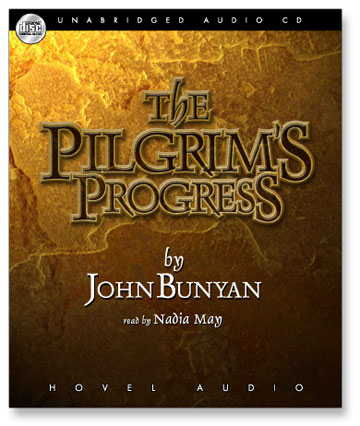
\"Pilgrim\'s Progress\"Christianaudio.com is offering an audiobook of John Bunyan’s “Pilgrim’s Progress” for free as a download with the code JUN2008 when you checkout. From the site:

John Bunyan was a simple maker and mender of pots and kettles who received very little education. In spite of that, he penned the most successful allegory ever written. He lost his first wife and was imprisoned for twelve years for his compelling—but unlicensed—preaching. Nevertheless, his preaching about the gravity of sin, salvation by grace, the cost of discipleship, perseverance, and the glory of eternal life lives on in the signs and symbols of The Pilgrim’s Progress. Embark on a perilous journey with Christian, the lead character, from the City of Destruction to the luminous safe haven of the Celestial City. The journey will encourage you to “set your hope fully on the grace to be given you” amidst the obstacles of life.

And, for more free audio, go here to hear a great biography of the man who wrote “Pilgrim’s Progress.”

How pain points us to God

Every day, each one of faces pain in our life. There is emotional and spiritual pain, for sure, but there is also physical pain. In my case, the pain is a sore back and joints that bark at me more or less each day, reminding me that my body is aging more each day and that my hope lies in more than this earthly body.

Among the people I know, I see people who I know love and trust God deal with varying degrees of pain. My struggles with my back pale in comparison and I am almost embarrassed to mention my own complaints. It is one thing to live a joyful life in God when you are feeling terrific, but what does it say about God when we are hurting?

Do we hurt because of the Fall? Does God use pain for a reason in our lives? In his review of Pain and Its Transformations, Phillip Yancey explores the wonder of pain in our bodies:

Every square millimeter of the body has a different sensitivity to pain, so that a speck of dirt may cause excruciating pain in the vulnerable eye whereas it would go unreported on the tough extremities. Internal organs such as the bowels and kidneys have no receptors that warn against cutting or burning—dangers they normally do not face—but show exquisite sensitivity to distention.

When organs such as the heart detect danger but lack receptors, they borrow other pain cells (“referred pain”), which is why heart attack victims often report pain in the shoulder or arm. The pain system automatically ramps up hypersensitivity to protect an injured part (explaining why a sore thumb always seems in the way) and turns down the volume in the face of emergencies (soldiers often report no pain from a wound in the course of battle, only afterwards).

Pain serves us subliminally as well: sensors make us blink several times a minute to lubricate our eyes and shift our legs and buttocks to prevent pressure sores. Pain is the most effective language the body can use to draw attention to something important.

Read More »

Alex and Brett Harris interviewed on NPR

Alex and Brett Harris

Alex and Brett Harris, teen authors of “Do Hard Things: A Teenage Rebellion Against Low Expectations,” recently were interviewed about their book and other things on Tell Me More on NPR. Here are some things they talked about:

Can you do hard things yet still find time to relax?
How does doing hard things relate to their faith?
What five types of hard things do they say you should do?
What’s the hardest thing they’ve done lately?
What’s next for them?
Their involvement with the Mike Huckabee campaign
What motivated them to think about “doing hard things.”

Miscellanea: New books from Piper, review of The Shack, Calvinism, gay marriage

  • NEW BOOKS FROM PIPER: Since I get much out of the writing of John Piper, as do many others, I was thrilled to hear his latest update at the conclusion of his writing leave: Four books are in the works! Great news!
  • REVIEW OF THE SHACK: Tim Challies has an extensive review of William P. Young’s The Shack that takes a hard look at what makes this book dangerous and heretical to many despite its popularity.
  • DEBATE ON CALVINISM: Dr. James White gives a powerful closing statement in a debate with George Bryson on Calvinism.
  • MACARTHUR ON COURT RULING: John MacArthur weighs in following the recent California Supreme Court ruling that same-sex couples have a constitutional right to marry.

Is it offbeat that God answers prayer?

\"Strange News?\"In a completely unsurprising story from the Associated Press, two New Zealand men were in a plane that was about to go down due to a lack of fuel. What they did next was what many people, Christian or not, would have done: They prayed. And, not only did God hear their prayers, he caused them to land their plane next to a billboard that said “Jesus is Lord — The Bible.” Here is part of the story:

Grant Stubbs and Owen Wilson, both from the town of Blenheim on the country’s South Island, were flying up the sloping valley of Pelorus Sound when the engine spluttered, coughed and died.


“My friend and I are both Christians so our immediate reaction in a life-threatening situation was to ask for God’s help,” Stubbs told The Associated Press on Wednesday.

Now, I say this is unsurprising because I know that God can — and does — answer prayer. I think God has a sense of humor in that he caused their plane to land near the sign so it could be “more newsworthy” (to the Associated Press, that is). After all, is it that remarkable that God answers prayers, often dramatically, every day? It shouldn’t be. After all, he says just as much in “The Bible.” Sidenote: I am irritated at these billboards that make broad statements and then attribute them to “The Bible” or “God,” meaning you cannot refute them. You can make many true-sounding statements that are not necessarily biblical this way e.g. — “You can’t beat your kids. — God”

So, this story about God answering a prayer in an amazing fashion now catches the eye of the Associated Press and ends up on its Web site under “AP Top Strange News.” This is the kind of world we live in, sadly. And, perhaps even sadder, I believe there are many Christians who think it strange that God actively works in our lives each minute so that they live their lives as if God is only there as some kind of cosmic 911 operator. Although I can’t be totally sure, the statement above by one of the men has that kind of ring to it.

Here’s the thing: Did the men think to pray to God before the trip or maybe before they realized their plane was in danger? I have a good friend who works as a missionary pilot. He flies in places that many people would say are extremely dangerous and is a great praying man. He e-mails updates before his trips and then sends out updates afterwards about how God answered those prayers. Most are uneventful, but there are several where you see how God answers prayers in a way different than was prayed, but it turned out that it was the best  way possible. And my friend acknowledges that in his updates.

These kind of stories (the one about the men in New Zealand) make big splashes and will get many people excited about Christianity and God. But the truth is that God is working day in and day out doing things that may seem mundane but are just as mighty. Jesus, who we worship as Lord, upholds the universe by his mighty hand:


Long ago, at many times and in many ways, God spoke to our fathers by the prophets, but in these last days he has spoken to us by his Son, whom he appointed the heir of all things, through whom also he created the world. He is the radiance of the glory of God and the exact imprint of his nature, and he upholds the universe by the word of his power. After making purification for sins, he sat down at the right hand of the Majesty on high, having become as much superior to angels as the name he has inherited is more excellent than theirs.

Hebrews 1:1-4


Christian or not, we are all believers

\We often use a special jargon that some of us, as Christians, are “believers” while others are not. While that is true, in a sense, when talking about a belief in Jesus Christ, the truth is that we all hold to some kind of beliefs. Tim Keller, in his excellent book “The Reason for God: Belief in an Age of Skepticism,” explains:

Some say [religion] is a form of belief in God. But that would not fit Zen Buddhism, which does not really believe in God at all. Some say it is belief in the supernatural. But that does not fit Hinduism, which does not believe in a supernatural realm beyond the material world, but only a spiritual reality within the empirical. What is religion then? It is a set of beliefs that explain what life is all about, who we are, and the most important things that human beings should spend their time doing. For example, some think that this material world is all there is, that we are here by accident and when we die we just rot, and therefore the important thing is to choose to do what makes you happy and not let others impose their beliefs on you. Notice that though this is not an explicit, “organized” religion, it contains a master narrative, an account about the meaning of life along with a recommendation for how to live based on that account of things.

Some call this a “worldview” while others call it a “narrative identity.” In either case it is a set of faith-assumptions about the nature of things. It is an implicit religion. Broadly understood, faith in some view of the world and human nature informs everyone’s life. Everyone lives and operates out of some narrative identity, whether it is thought out and reflected upon or not. All who say “You ought to do this” or “You shouldn’t do that” reason out of such an implicit moral and religious position. Pragmatists say that we should leave our deeper worldviews behind and find consensus about “what works”– but our view of what works is determined by (to use a Wendell Berry title) what we think people are for. Any picture of happy human life that “works” is necessarily informed by deep-seated beliefs about the purpose of human life. Even the most secular pragmatists come to the table with deep commitments and narrative accounts of what it means to be human (The Reason for God: Belief in an Age of Skepticism, 15,16).

Tim Keller explains why he wrote “The Reason for God: Belief in an Age of Skepticism”

Go here to hear sermons related to Keller’s book