Remembering today in history

June 6, 1944

Today marks the 64th anniversary of D-Day, the turning point in World War II when the Allied forces stormed the beaches of Normandy, France. Here is how the AP originally reported the mission:

SUPREME HEADQUARTERS, ALLIED EXPEDITIONARY FORCE, TUESDAY (AP) – American, British and Canadian troops landed in northern France this morning, launching the greatest overseas military operation in history with word from their supreme commander, Gen. Dwight D. Eisenhower, that “we will accept nothing except full victory” over the German masters of the continent.

Go here to read the whole story.

What an incredible effort and great sacrifice was made for the sake of freedom. We owe much to brave men who much gave much.

Turning to the Psalms in despair and in hope: Good counsel from Dr. Martyn Lloyd-Jones

Dr. Martyn Lloyd-Jones, the great preacher of the 20th Century, wrote “Spiritual Depression: Its Causes and Its Cure,” a collection of 21 sermons he originally delivered at Westminster Chapel in London. “Christian people.” writes Lloyd-Jones, “too often seem to be perpetually in the doldrums and too often give this appearance of unhappiness and of lack of freedom and absence of joy. There is no question at all but that this is the main reason why large numbers of people have ceased to be interested in Christianity.”

Believing that Christian joy was one of the most potent factors in the spread of Christianity in the early centuries. Lloyd-Jones not only lays bare the causes that have robbed many Christians of spiritual vitality but also points the way to the cure that is found through the mind and spirit of Christ.

This summer, John Piper is going through the Psalms in a sermon series at Bethlethem Baptist Church in Minneapolis. Last week’s sermon, “Spiritual Depression in the Psalms,” leans on Lloyd-Jones’ work and looks at how Psalm 42 is an antidote for depression. Below is an excerpt, go here for the whole sermon.

‘We no longer have a moral compass’

This story has outraged many people because it shows the utter indifference of our society:

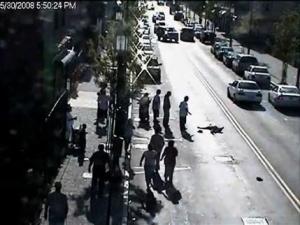
HARTFORD, Conn. (AP) — A 78-year-old man is tossed like a rag doll by a hit-and-run driver and lies motionless on a busy city street as car after car goes by. Pedestrians gawk but do nothing. One driver stops briefly but then pulls back into traffic. A man on a scooter slowly circles the victim before zipping away.

The chilling scene – captured on video by a streetlight surveillance camera – has touched off a round of soul-searching in Hartford, with the capital city’s biggest newspaper blaring “SO INHUMANE” on the front page and the police chief lamenting: “We no longer have a moral compass.”

But is this really something so new? Have we maybe heard this story somewhere before? The point is, none of us is immune to acting this way so we shoudn’t point fingers. Instead, we should open our eyes.

Thank God for another year

Celebrating my birthday Today is my birthday! To celebrate my family took me to one of my favorite places to eat in Grand Island, Sutter Deli. I had a delicious bowl of chicken noodle soup while Ruth Anne had the oriental chicken salad, Andrew the simple pepperoni pizza and Liz the Sutter Deli club. Four stars all.
On this milestone day I am thankful that in the past year God has mercifully loved me and guided me. I have failed him often, but I know that God has stretched me to hopefully be the man he wants me to be, or at least closer to that man.

I also am thankful for the many people God has put in my life to serve his purposes both to serve and be served by. God is good, and I am hopeful at the start of another year of getting closer to Him for his sake and my happiness.

Hand over the keys: How to (possibly) lose your license

And, in another dog-bites-man story from The Associated Press (emphasis mine):

WELLINGTON, New Zealand (AP) — Police say an elderly couple, aged 100 and 99, who drove the wrong way along a highway for more than a mile in New Zealand before crashing will probably be asked to surrender their driver’s licenses.

OK, where to begin? Granted, there were consequences involved, but I can relate to being a little confused at times on the road. I don’t know how many times I’ve lectured my kids on the importance of wisely choosing who they hang out with; now I have a concrete example. Not only does the driver in this case face losing his license, but so does the passenger.

It’s all fun and games until somebody gets hurt (or crashes the car). The story continues:

Calder said Tuesday the pair are unlikely to face charges and that police are still trying to determine who was driving the car at the time of the incident and how they ended up going the wrong way.

OK, here are a few guesses: The man was driving. He was lost and his wife was asking if he knew where he was going. He couldn’t hear her. Despite the onslaught of oncoming traffic and the pleas of his panicked wife, he plowed ahead. Chaos ensues.

In my previous post, I linked to research about how our eye sees things a split second ahead of our brains and then our brains, predicting the future, act accordingly. I think I’ve just seem my future about 60 years ahead. Unless my wife takes the keys.

Spider-Man? How about every man?

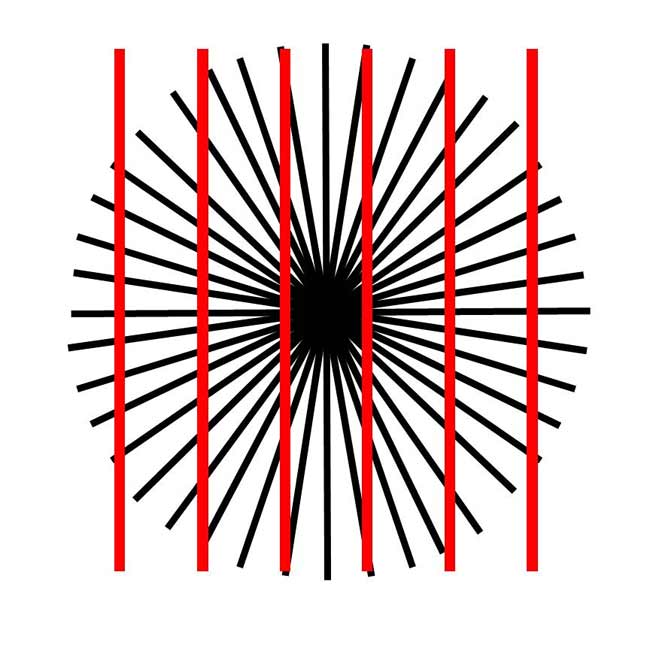
\According to new research, humans can see into the future ever so briefly, which explains why we are tricked by optical illusions.

Researcher Mark Changizi of Rensselaer Polytechnic Institute in New York says it starts with a neural lag that most everyone experiences while awake. When light hits your retina, about one-tenth of a second goes by before the brain translates the signal into a visual perception of the world.

Scientists already knew about the lag, yet they have debated over exactly how we compensate, with one school of thought proposing our motor system somehow modifies our movements to offset the delay.

Changizi now says it’s our visual system that has evolved to compensate for neural delays, generating images of what will occur one-tenth of a second into the future. That foresight keeps our view of the world in the present. It gives you enough heads up to catch a fly ball (instead of getting socked in the face) and maneuver smoothly through a crowd. His research on this topic is detailed in the May/June issue of the journal Cognitive Science.

The article goes on to explain that illusions occur because our brains try to perceive the future but reality doesn’t match our perceptions. The question that comes to my mind: Is this something that has evolved or is it one more way we are “fearfully and wonderfully made.” ?

\

HT: Centurion

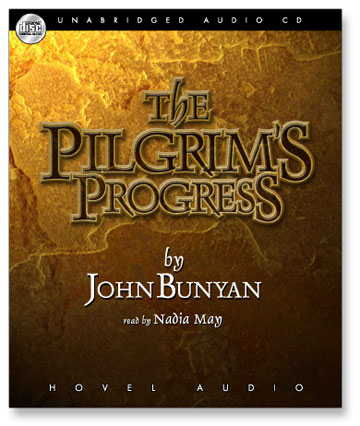
Pilgrim’s Progress audiobook for free

\"Pilgrim\'s Progress\"Christianaudio.com is offering an audiobook of John Bunyan’s “Pilgrim’s Progress” for free as a download with the code JUN2008 when you checkout. From the site:

John Bunyan was a simple maker and mender of pots and kettles who received very little education. In spite of that, he penned the most successful allegory ever written. He lost his first wife and was imprisoned for twelve years for his compelling—but unlicensed—preaching. Nevertheless, his preaching about the gravity of sin, salvation by grace, the cost of discipleship, perseverance, and the glory of eternal life lives on in the signs and symbols of The Pilgrim’s Progress. Embark on a perilous journey with Christian, the lead character, from the City of Destruction to the luminous safe haven of the Celestial City. The journey will encourage you to “set your hope fully on the grace to be given you” amidst the obstacles of life.

And, for more free audio, go here to hear a great biography of the man who wrote “Pilgrim’s Progress.”

How pain points us to God

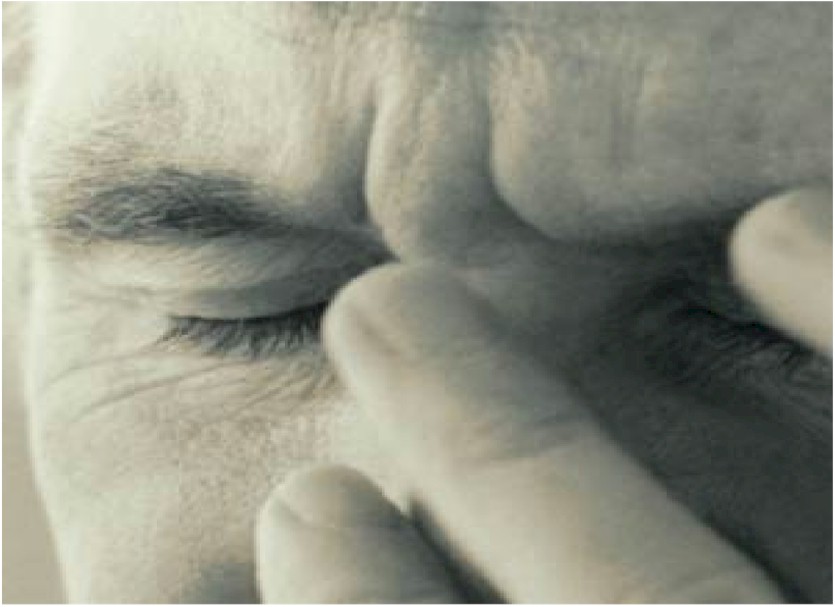
Every day, each one of faces pain in our life. There is emotional and spiritual pain, for sure, but there is also physical pain. In my case, the pain is a sore back and joints that bark at me more or less each day, reminding me that my body is aging more each day and that my hope lies in more than this earthly body.

Among the people I know, I see people who I know love and trust God deal with varying degrees of pain. My struggles with my back pale in comparison and I am almost embarrassed to mention my own complaints. It is one thing to live a joyful life in God when you are feeling terrific, but what does it say about God when we are hurting?

Do we hurt because of the Fall? Does God use pain for a reason in our lives? In his review of Pain and Its Transformations, Phillip Yancey explores the wonder of pain in our bodies:

Every square millimeter of the body has a different sensitivity to pain, so that a speck of dirt may cause excruciating pain in the vulnerable eye whereas it would go unreported on the tough extremities. Internal organs such as the bowels and kidneys have no receptors that warn against cutting or burning—dangers they normally do not face—but show exquisite sensitivity to distention.

When organs such as the heart detect danger but lack receptors, they borrow other pain cells (“referred pain”), which is why heart attack victims often report pain in the shoulder or arm. The pain system automatically ramps up hypersensitivity to protect an injured part (explaining why a sore thumb always seems in the way) and turns down the volume in the face of emergencies (soldiers often report no pain from a wound in the course of battle, only afterwards).

Pain serves us subliminally as well: sensors make us blink several times a minute to lubricate our eyes and shift our legs and buttocks to prevent pressure sores. Pain is the most effective language the body can use to draw attention to something important.

Read More »