We live in a time of crisis regarding marriage and the family, and only by a return to the biblical foundation can these institutions be rebuilt. To provide an integrated, biblical treatment of the full range of marriage and family issues, the authors of God, Marriage, and Family examine what Scripture says about God’s purposes for humans in their marriage and family interactions. Their examination covers the special issues stemming from marriage, childrearing, singleness, homosexuality, and divorce and remarriage. With study questions and points for further discussion, this book is a comprehensive yet concise resource for anyone seeking a Scriptural response to our culture’s complex challenges to God’s intentions for marriage and family.
To get Andreas Kostenberger’s “God, Marriage and Family: Rebuilding the Biblical Foundation,” go here.
In December I had the pleasure of reading “Peace Like A River,” which was the fictional tale of a Minnesota family that treks into North Dakota in search of a family member on the run from the law. Like many others, I got caught up in the story and enjoyed the way author Leif Enger told the story through the eyes of young Rube Land, whose retelling of the story caught the innocence yet had a maturity to it.
If you enjoyed that, imagine a true story of two young adventurers on amazing trips, including one by themselves!Bud & Me: The True Adventures of the Abernathy Boys is told through the eyes of Temple Abernathy (the “Me” in the title), who at age 5 rode horseback with his 9-year-old brother Bud from Frederick, Okla., to Santa Fe, N.M., and back.
The world was a different place in 1905, but to read something like this it just amazes you. At one point, Temple Abernathy says he and his brother were encouraged by reading Mark Twain’s “Roughing It,” a book that I’ve read and enjoyed. This is the kind of book that would be fun to read with children and then talk about. In the last year I’ve read through “Do Hard Things” by Alex and Brett Harris and so have my two children. The idea of that book was to defy the low expectations that are placed on kids. I would say these kind of adventures would fall in the “Do Hard Things” category!
To read some sample pages of “Bud and Me” go here.
As usual, Piper does an outstanding job, this time explaining that marriage is much more than what we think is about. From the Desiring God Web site:
Romance, sex, and childbearing are temporary gifts of God. So is marriage. It will not be part of the next life. And it is not guaranteed even for this life. It is one possible path along the narrow way to Paradise. It passes through breathtaking heights and through swamps with choking vapors. With marriage comes bitter providences, and it makes many things sweeter.
There never has been a generation whose view of marriage is high enough. The chasm between the biblical vision of marriage and the common human vision is now, and has always been, gargantuan. Some cultures in history respect the importance and the permanence of marriage more than others. Some, like our own, have such low, casual, take-it-or-leave-it attitudes toward marriage as to make the biblical vision seem ludicrous to most people.
Reflecting on his forty years of matrimony, Piper explains:
Most foundationally, marriage is the doing of God. And ultimately, marriage is the display of God. It displays the covenant-keeping love between Christ and his people to the world in a way that no other event or institution does. Marriage, therefore, is not mainly about being in love. It’s mainly about telling the truth with our lives. And staying married is not about staying in love. It is about keeping covenant and putting the glory of Christ’s covenant-keeping love on display.
“If you are married, this is why,” says Piper. “If you hope to be, this should be your dream.”
John Piper has an upcoming book on marriage that is based on a sermon series he did last year at Bethlehem Baptist Church. Based on what I’ve heard of those messages, it should be excellent. In one of his messages, Piper talks of the wonder of marriage:
Marriage is more wonderful than anyone on earth knows. And the reasons it is wonderful can only be learned from God’s special revelation and can only be cherished by the work of the Holy Spirit to enable us to behold and embrace the wonder. The reason we need the Spirit’s help is that the wonder of marriage is woven into the wonder of the gospel of the cross of Christ, and the message of the cross is foolishness to the natural man, and so the meaning of marriage is foolishness to the natural man (1 Corinthians 2:14).
And because of that thinking, we are confused about what is intended by marriage. He explains in the following excerpt from that message:
We often use a special jargon that some of us, as Christians, are “believers” while others are not. While that is true, in a sense, when talking about a belief in Jesus Christ, the truth is that we all hold to some kind of beliefs. Tim Keller, in his excellent book “The Reason for God: Belief in an Age of Skepticism,” explains:
Some say [religion] is a form of belief in God. But that would not fit Zen Buddhism, which does not really believe in God at all. Some say it is belief in the supernatural. But that does not fit Hinduism, which does not believe in a supernatural realm beyond the material world, but only a spiritual reality within the empirical. What is religion then? It is a set of beliefs that explain what life is all about, who we are, and the most important things that human beings should spend their time doing. For example, some think that this material world is all there is, that we are here by accident and when we die we just rot, and therefore the important thing is to choose to do what makes you happy and not let others impose their beliefs on you. Notice that though this is not an explicit, “organized” religion, it contains a master narrative, an account about the meaning of life along with a recommendation for how to live based on that account of things.
Some call this a “worldview” while others call it a “narrative identity.” In either case it is a set of faith-assumptions about the nature of things. It is an implicit religion. Broadly understood, faith in some view of the world and human nature informs everyone’s life. Everyone lives and operates out of some narrative identity, whether it is thought out and reflected upon or not. All who say “You ought to do this” or “You shouldn’t do that” reason out of such an implicit moral and religious position. Pragmatists say that we should leave our deeper worldviews behind and find consensus about “what works”– but our view of what works is determined by (to use a Wendell Berry title) what we think people are for. Any picture of happy human life that “works” is necessarily informed by deep-seated beliefs about the purpose of human life. Even the most secular pragmatists come to the table with deep commitments and narrative accounts of what it means to be human (The Reason for God: Belief in an Age of Skepticism, 15,16).
Tim Keller explains why he wrote “The Reason for God: Belief in an Age of Skepticism”

 In December I had the pleasure of reading “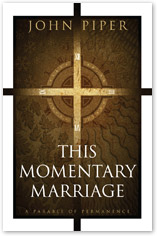
 Rockstanding
You must be logged in to post a comment.