
I came across this today and I have to say that, sadly, it had a familiar feel to it. This reminded me of some of the conversation we were having last night at our small group about how we lack intimacy with those within our own church because we are often harsher than the world with what we see as flaws and failures. Because of that tendancy, I think we tend to put on phony faces in front of each other like we see in the video. What happens is we are a) hypocritical and b) not really helped by or helping those around us.
Tag: God
Hitchens-Turek debate: Does God exist?
Christopher Hitchens and Frank Turek debated at Virginia Commonwealth University on the topic: Does God Exist? The video is below. Click on the image to view it.

What to say to someone who is depressed, angry, doubting or skeptical
If we call ourselves Christians, then we are to take to heart the Bible’s instructions to bear one another’s burdens. And, in this day and age, there are many things we are burdened with whether it’s finances, relationships, family, health or career. At the Desiring God blog, pastor John Piper gives great counsel about what to say to those who are depressed, angry, doubting or skeptical:
1. Don’t be offended.
First, resist the temptation to be offended. Don’t pout or take your ball and go home. That’s what you may feel like. They wanted to talk, and here they are throwing my suggestions back in my face with a dismissive attitude. Don’t leave. Not yet. “Love suffers long” (1 Corinthians 13:4, NKJV).
2. Listen.
Second, listen to their responses. Part of your power is not only what you say, but how they feel about the way you listen. If your truth produces empathetic ears, it will feel more compelling. This listening will be a witness. In 2 Timothy 2:24-26, Paul describes the kind of engagement that may set people free from sin and error. One feature is “patiently enduring evil.”
3. End with hope.
Third, when you have spoken all the experiential counsel you can think of, and they seem to have demeaned it all, don’t let them have the last word of despair. You leave the last word of hope.
Interview with John Piper
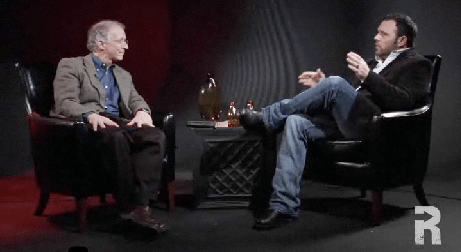
Mark Driscoll, pastor at Mars Hill Church in Seattle, sat down for an interview with John Piper. Driscoll in unabashed in his appreciation for Piper (the post is entitled “Why I Love John Piper,” so that should give you a pretty good idea!) and asks a wide range of questions in the 49-minute talk.
God’s chief goal is not my self-esteem
As I looked at the post I linked to yesterday and the then the responses to that person’s post, I came across a warning from one person that the video and accompanying post presents a too man-centered view and is just as fallible as the medieval church and its harrassment of people like Galileo and Copernicus. Well, since we are only able to see the universe from this perspective, how else would we be able to interpret such a remarkable thing as the universe.
In one respect, yes, we are the center of God’s creation. If you look at Genesis, man was the crowning creation of his work. He made man, called it good, and then rested. But we fool ourselves greatly and risk great danger for our lives if we think that God is all about how good we feel about ourselves. I have heard people — often children, but adults as well — say that the reason God created this world or man was because he was lonely. While it sounds innocent enough, it also implies that we supply something that God was lacking and thus works to elevate us and lower God in stature.
We were not created to have our deepest joys come from ourselves through the boosting of our self-esteem. Rather, we were created to get our deepest joy from God, who created us. John Piper explains:
We are all bent to believe that we are central in the universe. How shall we be cured of this joy-destroying disease? Perhaps by hearing afresh how radically God-centered reality is according to the Bible.
Both the Old and New Testament tell us that God’s loving us is a means to our glorifying him. “Christ became a servant … in order that the nations might glorify God for his mercy” (Romans 15:8-9). God has been merciful to us so that we would magnify him. We see it again in the words, “In love [God] destined us to adoption … to the praise of the glory of His grace” (Ephesians 1:4-6). In other words, the goal of God’s loving us is that we might praise him. One more illustration from Psalm 86:12-13: “I will glorify your name forever. For your lovingkindness toward me is great.” God’s love is the ground. His glory is the goal.
This is shocking. The love of God is not God’s making much of us, but God’s saving us from self-centeredness so that we can enjoy making much of him forever. And our love to others is not our making much of them, but helping them to find satisfaction in making much of God. True love aims at satisfying people in the glory of God. Any love that terminates on man is eventually destructive. It does not lead people to the only lasting joy, namely, God. Love must be God-centered, or it is not true love; it leaves people without their final hope of joy.
I agree totally with this. But it is a never-ending battle against the god of myself and my constant desire to boost my own ego for my own sake. And it is everywhere. How often have we heard that it is important to love yourself before you can love someone else? It is as if we didn’t have a natural-born love already hardwired into us. Love of myself doesn’t motivate me to love others, but love of God motivates me to love others and be much more happy as a result.
The universe points to the glory of God
This post, by Jeff Gray at RootsRain, is pretty awesome.
As high as the heavens are above the earth, so great is his steadfast love toward those who fear him…
—Psalm 103:11
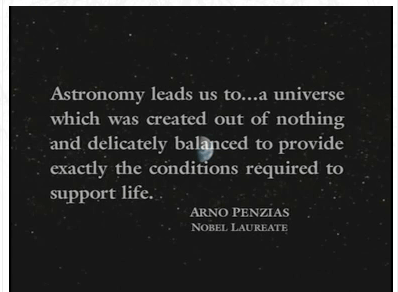
- The glory of God is displayed in the universe
The ESV Study Bible Online — an awesome tool
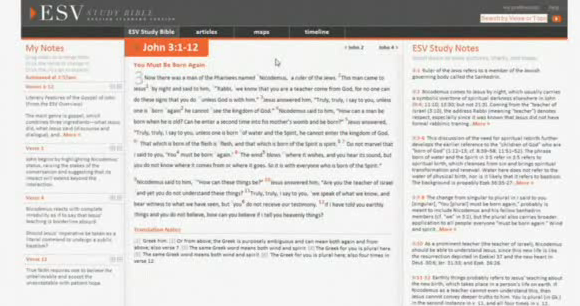
I am very excited about the release of the upcoming ESV Study Bible. One of the promising features is that, for those who purchase it, they will receive the online study Bible for free. See the video:
Hurting others with our words
Paul Tripp, who will speak at the Desiring God National Conference later this month, speaks about overcoming the damage of words that hurt others:
Religion and politics: Is God on our side?
This fall, in our Sunday school class at church, we are studying a book called “Is God on America’s Side?” The book looks at the thinking that God somehow reserves his blessing for American because it is a “Christian nation.” We’ve just started it, but I think it will be a good thing to clear up some attitudes about how God’s will is not always what we think it is.
In light of that, I want to add an essay by Joe Carter, who is the managing editor for Culture11. Carter, in what he calls “an open letter to the religious right,” lays out 11 thoughts he wants to share with them about religion and politics. You may agree or disagree with his points, but his conclusion is well worth noting:
(F)inally, we must recognize that America is not a “Christian nation”, though we should aspire to be a nation where those of us who are Christians are admired as good and noble citizens. America is not a “shining city on a hill”, though we should let our light of freedom be a shining example for the entire world. America is not the “greatest blessing God gave mankind”, though it is a great nation worthy of our conditional adoration. Patriotic sentiment has its place but we mustn’t let it expand beyond its acceptable borders. We are citizens of both the City of God and the City of Man and must always be careful not to confuse the one for the other.
The evil of 9/11 and spectacular sins against God

On this day, seven years ago, terrorists crashed two planes into the World Trade Center, another into the Pentagon and crashed another into a Pennsylvania field. More than 3,000 people died that day in an openly evil act. Our nation’s history was dramatically altered on that day.
With the thought of evil on my mind, I became aware that John Piper’s new book “Spectacular Sins and Their Global Purpose in the Glory of Christ” has now been released. This is what it says about the book at the Desiring God Web site:
What does the fall of Satan reveal about Christ’s glory? How does Adam’s sin magnify our Lord? How does the glory of Jesus shine through in Judas’ betrayal? How is the honor of Jesus at stake in the sin and evil, the suffering and the calamities and the wickedness, which abound in the world today? In this book John Piper seeks to provide a biblical perspective on God’s sovereign and righteous governance over even the sinful acts of men. History’s greatest sins do not thwart God’s purposes to save his people and glorify his Son; they fulfill them. And being grounded in this hope is the key to “Christ-exalting strength in calamity and Christ-exalting courage in conflict.”
We see indescribably evil things happen each day in our world. There is no escaping it. When we think of these things we may wonder how God can allow it and, if so, how does it fit into his plan. John Piper recently explained what he hopes to accomplish with the book:
The aim of this book is not to meet felt needs, but to awaken needs that will soon be felt, and then to save your faith and strengthen your courage when evil prevails.
And, even though the events of Sept. 11, 2001, are receding into history, I think none of us who lived through that day will ever feel we are free from the presence of evil. And, for that reason, it would be good to understand the purpose of God in “spectacular sins.”
ALSO SEE: How Sept. 11, 2001, proved 10 truths about God’s sovereign love
 Rockstanding
You must be logged in to post a comment.