
So, you’ve been saved. What does that mean for your everyday life? Should it mean anything? John Piper explains that it must.
Tag: God
John Piper on ‘Finally Alive’

John Piper’s new book Finally Alive is due for release next week. Today at the Desiring God Blog is a Q&A with Piper about why he decided to write this book at this time. Of note, he voices a concern that he sees in the church today:
I am deeply concerned that there are many church members in America and beyond who think they are saved when they are not. Part of the reason for this nominalism is a failure to teach and understand the true meaning of the new birth.
You must be born again. It is a miracle. Many, I fear, don’t even want to think in terms of “being saved” as being in the category of a miracle that only God can perform. They want it to be a decision based wholly on human power involving no necessary miracle. That is deadly.
We are all needy people
My thoughts and prayers are with the folks who are navigating their way through their neighborhoods and towns in the wake of ice storms. My friend Barry, who is from Missouri, has posted some pictures and some background about the storm there and what it’s left behind. I also have other friends who have been caught in the storm in their areas as well.
It is during times like these that we have opportunities to look at how God moves powerfully in our lives, even in ways that seem harsh. With one brush of His hand, God breaks into our lives and gives us just a glimpse of his power, creativity and sovereignty. We are left amazed and helpless. God, who seeks glory in all things, stands alone during the storms in our lives. Daniel 4:35 says God “does according to his will among the host of heaven and among the inhabitants of the earth; and none can stay his hand or say to him, ‘What have you done?’ ”
But we can also know “that for those who love God all things work together for good, for those who are called according to his purpose.” It’s good to know that the same powerful God who makes the storm also directs our lives for good if we love him. And see our need.
Footnotes
Mark Driscoll talks about Jesus to Nightline reporter
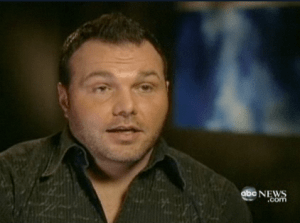
Mars Hill pastor Mark Driscoll was the subject of a recent segment on ABC’s Nightline. While Driscoll is unapologetic about his love for Jesus and the Bible, the reporter just couldn’t seem to get over the fact that the people at Mars Hill don’t look like typical evangelicals or that Driscoll himself is not what a “typical pastor” is supposed to look or sound like. As if Jesus wasn’t enough to get someone’s attention, the reporter even referred to Driscoll as the “indie rock star of evangelicals.”
And, even stranger (to the reporter), Driscoll is one of those Calvinists (!). Wow. Perhaps that would be a good subject for a future episode. We can only hope.
John MacArthur explains the most important thing you need to know
Bitterness and unforgiveness: The danger we all face
There would be a lot of things different in this world if we had no disagreements, but we are all sinful people and this is the life we must live until the end of this age.
In my sinful condition, I struggle with relationships from time to time and need to be reminded of what the Bible says about things like bitterness and anger. We cannot be fooled into thinking that it is “all right” to be this way, as if somehow another’s misstep has given us license to “bare our teeth,” so to speak. It is a dangerous thing to be unforgiving or bitter. A while back, I heard John Piper answer a question concerning these issues:
(U)nforgiveness is a hell-bent sin. The Bible says that if you do not forgive those who sin against you, God will not forgive you (Matthew 6:15). In other words, this is a mortal issue. An ongoing, unforgiving, bitter, and angry spirit will kill a person’s heart, making them shipwreck their faith and prove that they never belonged to God. God is showing you how serious this sin is.
This means that now you have the potential of saying, “If he loves me still, and he forgives this, it’s like forgiving the apostle Paul!” (It’s like forgiving murderers, because the Bible says that if you hate your brother you’ve killed him [Matthew 5:21-22]). And then maybe the emotional transaction of forgiveness and justification would so overwhelm you that the resources that you do not now have for loving this other person would be given you out of that fresh, new experience of grace.
We can’t choose to just live with these things in our heart. They don’t just sit there, but rather fester and poison everything around them. It’s not healthy, and in fact is deadly.
Who really was behind the crash of USAir Flight 1549
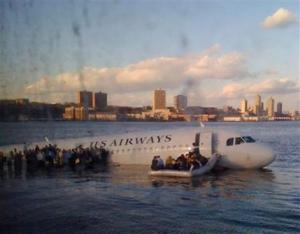 So, earlier here at this blog we’ve seen how a child from a broken home and difficult circumstances grew up to be the first African American President of the United States. Just days before, we saw something truly incredible happen when USAir Flight 1549 made a crash landing in the Hudson River and all 155 people aboard survived. Two spectacular events, each remarkable in its own right.
John Piper writes about just how remarkable the story of Flight 1549 is:
Picture this: The Airbus A320 is taking off at an angle—maybe 30 degrees. It’s not flying horizontal with the earth. Not only that, it is flying fast—not full speed yet, but perhaps four times as fast as your car would go at top highway speeds.
The geese are flying horizontally with the ground, more or less. They are not flying in a cloud like a swarm of bees. They fly level with the ground, often shaped like a V. In view of all that, what are the odds that, traveling at this speed and at this angle, this airplane would intersect with the flight of those geese at that very millisecond which would put a bird not just in one of those engines, but both of them?
Two laser-guided missiles would not have been as amazingly effective as were those geese. It is incredible, statistically speaking. If God governs nature down to the fall (and the flight) of every bird, as Jesus says (Matthew 10:29), then the crash of flight 1549 was designed by God.
He continues, pointing to the significance of this spectacular event:
If God guides geese so precisely, he also guides the captain’s hands. God knew that when he took the plane down, he would also give a spectacular deliverance. So why would he do that? If he means for all to live, why not just skip the crash?
Because he meant to give our nation a parable of his power and mercy the week before a new President takes office. God can take down a plane any time he pleases—and if he does, he wrongs no one. Apart from Christ, none of us deserves anything from God but judgment. We have belittled him so consistently that he would be perfectly just to take any of us any time in any way he chooses.
So, as much as some of us want to complain, we should stop and remember God’s mercy to all of us and repent. Piper gives good counsel for all of us:
As much as I reject Obama’s stance on abortion, I am thankful to the bottom of my soul that an African-American can be President of United States. The enormousness of it all is unspeakable. This is God’s doing. The geese were God’s doing. The landing of Flight 1549 was God’s doing. And the Obama presidency is God’s doing. “He removes kings and sets up kings” (Daniel 2:21).
And I pray that President Obama has eyes to see. The “miracle on the Hudson” and the “miracle in the White House” are not unrelated. God has been merciful to us as a nation. Our racial sins deserved judgment a thousand times over. God does not owe America anything. We owe him everything. And instead of destruction, he has given us another soft landing. We are not dead at the bottom of the Hudson.
Why does God allow Satan to live?
The book that Piper is referencing is Spectacular Sins and Their Global Purpose in the Glory of Christ.
Department of complaints
Matt Perman, over at What’s Best Next, nailed me today with a post about avoiding the temptation to complain. It’s an easy thing to do, and I am the chief among sinners. In fact, I am already considering this as one of my resolutions for 2009. Don’t do resolutions, you say? That could be another post.
Anyway, read Matt’s post, digest it, think about it, repent for being a complainer (like me) and then do something about it. I like what Matt said:
Fight the frustration of life by working on behalf of others, even when it doesn’t come easy (or it may not be “your” job). Try to figure out something you can do, even if it’s not obvious at first.
Thank you, Matt, I needed that. God is good. And, if you ask, who then can we complain to, since life often seems not fair. Try this: Tell your complaint to God.
Three questions on Newsweek’s “The Religious Case for Gay Marriage”
Greg Koukl, who does the Stand to Reason radio broadcast — also available as a podcast — gives three questions we should ask when reading Newsweek’s “The Religious Case for Gay Marriage”:
1. What do they want you to believe?
2. What are the reasons they offer in support of this idea they want you to believe?
3. Are the reasons good ones?
Koukl reviews the article and goes through these questions on the podcast.
 Rockstanding
You must be logged in to post a comment.