Being second is a good thing, just ask Jason Castro

This past weekend, my wife and I had the opportunity to help at a youth retreat that our two children attended with other kids from our church’s youth group. Like most events involving teens and preteens, there was a lot of activity, food, laughter and little sleep.

But the important part of the weekend, the meat in the sandwich, were a series of lessons we did together about how to put Jesus Christ first in our lives. Now, these are church kids and youth group kids, so this is a message that shouldn’t be unfamiliar to them. But, they’re just like us adults in that a simple message can often get confused when you’re living in the everyday world of U.S. culture.

So, it was very helpful when our youth pastor, Mat Ingram, went over passages like the story of the rich, young ruler in Mark 10:17-27 or how we will reap what we sow as it talks about in Galatians 6. It was good to sit there knowing all these kids were hearing these things without the distractions of everyday, normal teen life bearing in on them.

Along with the messages, we would also watch testimonies from various people called “I am second.” The idea was that instead of striving to be the most important person in their lives, these people had seen the light and made Jesus No. 1 in their life. It was good for these kids — all of us, really — to see that everything this world has to offer is never going to be as satisfying as what Christ has to offer us.

Here is what Jason Castro, of American Idol fame, had to say about being second to Jesus Christ:

Lots of people in life have their ideas of what’s real and what’s not and sometimes they think faith isn’t real and I feel bad for them. But there were times on the show when I wouldn’t laugh at a joke and they were like, “Are you really that religious?” And I would tell them, “I just don’t think it’s that funny. I don’t think it’s right or something to laugh about it.” It is a challenge to stand up for what’s right, especially when it’s not cool, but being cool is overrated. Cool is a joke, cool is a perception and I don’t think it’s real. What is real? God is real, God is cool. I wish more people knew the real God and how cool it really is. Just imagine something bigger than you like your dad when you were a kid, you just want to know about him, and he can do so many things you can’t, and there’s something very cool about that.
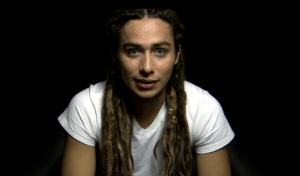
Click on the image to see video of Jason Casto explaining why he is second.
Click on the image to see video of Jason Castro explaining why he is second.

And there are more great testimonies of the way God does great things for humble people, including Darrell Waltrip, Brian Welch (formerly with Korn), Greg Ellis and Stephen Baldwin.
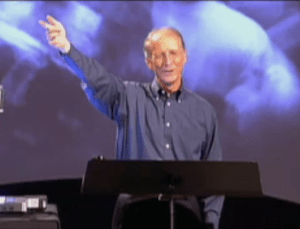
The Pursuit of God in Corporate Worship: questions and answers

As a deer pants for flowing streams, so pants my soul for you, O God. My soul thirsts for God, for the living God. When shall I come and appear before God? My tears have been my food day and night, while they say to me all the day long, “Where is your God?” These things I remember, as I pour out my soul: how I would go with the throng and lead them in procession to the house of God with glad shouts and songs of praise, a multitude keeping festival.” Psalms 42:1-4

What does worship as the Body of Christ mean to you? What does it mean to God? Is He indifferent? Pastor John Piper, in a seminar from September 2008 at The Bethlehem Institute, explores some of these questions and more.

Click on the image to view the video

Christopher Hitchens acknowledges the supernatural

At least, in a way. This, from Lawrence Osborne in Forbes.com:

But later that night, three of our “scoop” brigade–Jonathan Foreman, Michael Totten and Christopher Hitchens–got involved in a street brawl with some thugs of a Syria-loving skinhead party called the SSNP after Hitchens rather gallantly insulted their swastika flag. On our way to a meeting with Minister of State Nassib Lahoud, Hitchens showed me the gashed knuckles and bruises suffered during the punch up. The attackers had apparently come out of nowhere on posh Hamra Street, where they had gone to buy shoes. “I was on the ground,” Hitchens said, “and getting it in the head.” It was a miracle they didn’t pull Kalashnikovs.

As James Taranto at the Wall Street Journal’s Best of the Web speculates about the author of “God Is Not Great”:  If Osborne’s account is accurate, God intervened to save the hide (though presumably not the soul) of a professional atheist. The Lord does work in mysterious ways. Maybe he just figures there’s no such thing as bad publicity.

What are the basics for the gospel?

For those in protestant circles, many have had the opportunity to share their testimony before they were baptized. When you think about it and, if you’ve ever heard one given, it often starts with the person and how they came to faith. But that isn’t the whole story, whether they realize it or not.

In this message to a Children’s Desiring God conference, John Piper explains that it goes much further than an individual’s own life if you want to explain how they were saved. It’s obvious, really, if you believe what the Bible says. Since no one saves himself, you can’t tell your story without going back to the Person who saved you, namely Jesus Christ. And, if you do that, it effects what kind of person you will be and how you live your faith.

Memorize scripture with your iPod

Don’t let your iPod come between you and time in the Word of God. Rather put the Word of God in your iPod and in your heart. Psalm 119:11 says: “I have stored up your word in my heart, that I might not sin against you.” And it doesn’t just get there unless you hear it, know it and live it.

As I’ve previously mentioned, you can download the audio version of the ESV either as a podcast or entirely to put on your iPod or MP3 player. But, also very helpful, B.C. McWhite shares at the weight of glory how you can put individual passages on your iPod to assist in scripture memory. I know I am always looking for ways to help me and my family “hide the word in our hearts,” so I am very glad to hear this tip.

Good news on heaven: There’s plenty to look forward to

Because we are small-minded, big-headed and have a too-small view of God, there is an idea that people sometimes hold that heaven will be boring. Think about it, that feeling that you’ve been there, seen it all and now are looking for the next big thing. Only, the problem is that there is no next thing because heaven is it. Somehow, there are people who are willing to risk an eternity in hell because they believe that heaven will somehow be unsatisfying.

After all, doesn’t Paul say in I Corinthians 13:12: “Now I know in part; then I shall know fully, even as I have been fully known”? Yes, but we shouldn’t assume that just because we will be made perfect we will know everything there is about God. John Piper, as part of an article at the Desiring God blog, gives an explanation, based on other passages:

What Paul means [in I Cor. 13:12] is not that I will know exhaustively the way God knows me, but rather I will know accurately the way God knows me. The point is not that I won’t have limits to what I know, but rather I won’t have mistakes in what I know.

God is infinite and therefore inexhaustible in the complexity of his glory. His created universe, as the Hubble telescope shows, is big. His thoughts toward us are countless. And his ways are beyond finding out.

Part of what makes “eternal life” satisfying (and not boring) forever is that it will take an eternity for perfect, finite creatures like us to know God fully. He is perfect and infinite. We will be perfect and finite. He will enjoy increasing revelation of himself, and we will enjoy increasing jubilation in him—forever.

So, this idea that eternity in heaven can’t match up to a lifetime of sin and an eternity of punishment in hell doesn’t cut it.

A study in God’s sovereignty: The Strange Case of Frank Cash and the Morning Paper

Click on the image to here samples

T Bone Burnett, before he made a name for himself producing great albums like the soundtrack for “O Brother, Where Art Thou” and the recently multi-awarded “Raising Sand,” was producing great, if underappreciated, CDs of his own.

Recently, a friend pointed me to the online music site lala.com, where I discovered a lot of older stuff I had in my collection but had worn out. Among those finds was Burnett’s The Talking Animals, which was released in 1988. While not among his strongest efforts, it’s still very good overall. One of the songs that stands out is the baroquely titled “The Strange Case of Frank Cash and the Morning Paper.” This song, which is really Burnett narrating with a musical background, tells a fascinating story with a fascinating twist at the end. It is that twist that points to God’s sovereignty in our lives and our utterly foolishness in trying to deny it. I won’t spoil it for you here, but you can click on the accompanying image to hear a sample of the song.

Using your time well

From C.J. Mahaney’s interview with John Piper:

What single bit of counsel has made the most significant difference in your effective use of time?

A great tree will fall with many small chops. Pray for daily grace to keep chopping.

Who saved you? And how?

PreacherIf all of us are so depraved that we cannot come to God without being born again by the irresistible grace of God, then it is clear that the salvation of any of us is owing to God’s election. Election refers to God’s choosing whom to save. It is unconditional in that there is no condition man must meet before God chooses to save him. Man is dead in trespasses and sins. So there is no condition he can meet before God chooses to save him from his deadness. We are not saying that final salvation is unconditional. It is not. We must meet the condition of faith in Christ in order to inherit eternal life. But faith is not a condition for election. Just the reverse. Election is a condition for faith. It is because God chose us before the foundation of the world that he purchases our redemption at the cross and quickens us with irresistible grace and brings us to faith. – Dr. John Piper, in “What We Believe About the Five Points of Calvinism