Calvinism: The thing people fear in their churches

What is the most detestable thing a person can imagine happening to their church? A disregard of the scripture? A lack of mission? Triviality or a worship of culture? Moral corruption among church leaders or an unloving attitude? A lack of worship?

No, it seems that a great many fear the teaching of Calvinism. That is, the five points of Calvinism. The doctrines of grace. These things:

  • Total depravity
  • Unconditional Election
  • Limited Atonement
  • Irresistible Grace
  • Perseverance of the saint

That is, you believe that:

  1. We experience first our depravity and need of salvation.
  2. Then we experience the irresistible grace of God leading us toward faith.
  3. Then we trust the sufficiency of the atoning death of Christ for our sins.
  4. Then we discover that behind the work of God to atone for our sins and bring us to faith was the unconditional election of God.
  5. And finally we rest in his electing grace to give us the strength and will to persevere to the end in faith.

Radical stuff, that Calvinism. Goodness knows where that could lead.

Not sure? Here are some things you could read to maybe give you a better idea.

Remember Ed Thomas and what he treasured above all

Click on image to see the ESPN report featuring Ed Thomas that ran last year.

Ed Thomas may have been remembered as the man who coached football (successfully) at Aplington-Parkersburg High School in Iowa. He may also be remembered as the man who was shot early Wednesday morning by a former student and died shortly afterward at a high school. To those who knew him, however, he will be remembered as a man who followed a greater mission in life than football. From a report Wednesday by the Associated Press:

“Coach Thomas was very special to me and many other young men from the Aplington-Parkersburg communities,” said Green Bay Packers linebacker Aaron Kampman. “His legacy for many will be associated with his tremendous success as a football coach. However, I believe his greatest legacy comes not in how many football games he won or lost but in the fact that he was a committed follower of Jesus Christ.”

At times like these we must step back and wonder about how God works mysteriously. It’s a mystery in that he does not tell us his plans, but it is enough to know that it is to bring himself glory. Our success is not his ultimate goal, but there will be times when it works out that way. Our failure or suffering is not his ultimate goal, but there will also be times when that will come about. What is his ultimate goal? Having people see Him as supreme. And people like Ed Thomas do that. Today, through the testimony of those who knew him, we are reminded of that.

Humility: Clothes I’m having a hard time wearing

Likewise, you who are younger, be subject to the elders. Clothe yourselves, all of you, with humility toward one another, for “God opposes the proud but gives grace to the humble. Humble yourselves, therefore, under the mighty hand of God so that at the proper time he may exalt you, casting all your anxieties on him, because he cares for you.

I Peter 5:5-7

Here’s the thing. God, I trust. He knows everything. He is all powerful. He is all wise. He is loving. He is holy. But a man, like me, is sinful. I know that I am a wretch. I have loved these verses for almost all my life as a Christian. I understand the need to be humble. I know God will take my anxieties and care for me because he is great. The part where I stumble is the first part, where it says to be subject to my elders and to clothe myself with humility toward another. And it makes me miserable.

I’m miserable because it shows my trust in God is a lie, and I’m not fooling anyone. Well, maybe myself until I see how I cannot trust God to work in a situation with another person. So, I act like I think God is big and I’m small and yet you’re somehow smaller than me. It’s not a good thing, and I see it like cancer in myself and people around me. These are clothes that we don’t want to wear, this humility to one another. Yes, it is so easy to see the sinfulness in those around us. But that is not the point. The point is to be humble to God, who made that person, and trust him to work things for our good and his glory.

American Idolatry: When your pleasure becomes your god

There is a danger every day to make an idol out of something or someone in our lives. Because I live in a country and in a time when there is such a great deal of luxury and leisure time, it is a great danger. With that in mind, John Piper has written about 12 ways we can recognize the rise of covetousness in our lives:

Most of us realize that enjoying anything other than God, from the best gift to the basest pleasure, can become idolatry. Paul says in Colossians 3:5, “Covetousness is idolatry.”

“Covetousness” means desiring something other than God in the wrong way. But what does that mean—“in the wrong way”?

The reason this matters is both vertical and horizontal. Idolatry will destroy our relationship with God. And it will destroy our relationships with people.

All human relational problems—from marriage and family to friendship to neighbors to classmates to colleagues—all of them are rooted in various forms of idolatry, that is, wanting things other than God in wrong ways.

Piper goes on to identify 12 ways we can do this when it comes to enjoyment. He says enjoyment is becoming idolatrous when:

  1. It is forbidden by God.
  2. It is disproportionate to the worth of what is desired.
  3. It is not permeated with gratitude
  4. It does not see in God’s gift that God himself is more to be desired than the gift.
  5. It is starting to feel like a right, and our delight is becoming a demand.
  6. It draws us away from our duties.
  7. It starts to awaken a sense of pride that we can experience this delight while others can’t.
  8. It is oblivious or callous to the needs and desires of others.
  9. It does not desire that God be magnified as supremely desired through the enjoyment.
  10. It is not working a deeper capacity for holy delight.
  11. Its loss ruins our trust in the goodness of God.
  12. Its loss paralyzes us emotionally so that we can’t relate lovingly to other people.

This is just the list, read the article to get the full explanation. Be happy in God.

Providence vs. luck: Where God is involved

John Ensor, the vice president of Heartbeat International, has written an article for World Magazine talking about a near-tragic episode in his family’s life:

Baby Jack, our 3-month-old grandson, was rocking away peacefully when terror struck. Our daughter-in-law thought a tornado was hitting them. What she really heard was a multi-ton, mighty tall oak tree cracking and crashing onto their old, wooden house, directly and immediately above baby Jack. What she saw, when she got outside, brought convulsive waves of shock and awe. After I, too, calmed down, I was left with an insatiable desire to ask just what do we mean by “providence”?

Providence, of course, always has a natural explanation. For many, “it just so happened” is sufficient by itself. In the case of the tree, it just so happened that the tree struck first with a glancing blow, on the single strongest point of the house, the chimney. Absorbing the blunt force of tons of weight, bricks crashed down and rolled into the Ensor living room. Next, the tree hit the roof at precisely the angle where the roofline splits in two and the tree could hit evenly and at the same time the upper and lower roofline, further displacing the weight. Third, it appears that the limbs and branches of greater and less flexible strength further absorbed the blow, like a hundred shock absorbers at work. The roof held. Baby Jack merrily click-clacked away in his swing. His mommy cried like a baby. Lucky? Yes, you might say so. Providential is more to my liking.

But what if it had been a tragic outcome—if the tree had fallen a mere two or three inches to the right of that wonderful old brick chimney? Oh, how we would be weeping this week. The question “Why?” would stick like a shiv in our gut. But the question works both ways. Why was Jack spared? At least part of the answer to either question is found in Psalm 57:2: “I cry out to God Most High, to God who fulfills his purpose for me.” Jack was saved because the Lord has not yet fulfilled his purpose for him. If he had been crushed, though our hearts would be crushed as well, we would take a measure of comfort in knowing that evidently all God’s purposes for Jack’s life here on earth were fulfilled in three months.

There are complexities, bi-directional, even multi-textured joys and sorrows set within God’s providences. But they all together trend in one direction: the goodness of God in the face of Jesus Christ glowing in the hearts of His people. Today I rejoice that God is a God of inches and angles as much as eons and consummating events. That makes me want to get up in the morning and see what the day will bring.

We are all at the brink of eternity. Like John Ensor, I am often left feeling shock and awe when seeing God’s hand in my life or life around me. It doesn’t always go “my way,” but I know that there is nothing that is insignificant to God.

Look at the birds of the air: they neither sow nor reap nor gather into barns, and yet your heavenly Father feeds them. Are you not of more value than they? And which of you by being anxious can add a single hour to his span of life? Matthew 6:26-27

And we know that for those who love God all things work together for good, for those who are called according to his purpose. — Romans 8:28

ALSO SEE: Who was really behind the crash of USAir Flight 1549


Bad idea: Trying to fit God into the American Dream

Over the last few days over at the Desiring God blog, Paul Tripp has been answering questions. It’s been a great series, but I thought this one was particularly good:

What is the greatest hindrance to cultivating community in the American church?

The first thing that comes to mind is frenetic western-culture busyness.

I read a book on stress a few years back, and the author made a side comment that I thought was so insightful. He said that the highest value of materialistic western culture is not possessing. It’s actually acquiring.

If you’re a go-getter you never stop. And so the guy who is lavishly successful doesn’t quit, because there are greater levels of success. “My house could be bigger, I could drive better cars, I could have more power, I could have more money.”

And so we’ve bought an unbiblical definition of the good life of success. Our kids have to be skilled at three sports and play four musical instruments, and our house has to be lavish by whatever standard. And all of that stuff is eating time, eating energy, eating money. And it doesn’t promote community.

I think often that even the programs of a local church are too sectored and too busy. As if we’re trying to program godliness. And so the family is actually never together because they’re all in demographic groupings. Where do we have time where we are pursuing relationships with one another, living with one another, praying with one another, talking with one another?

I’ve talked to a lot of families who literally think it’s a victory to have 3 or 4 meals all together with one another in a week, because they’re so busy. Well, if in that family unit they’re not experiencing community, there’s no hope of them experiencing it outside of that family unit.

We have families that will show up at our church on Sunday morning with the boys dressed in their little league outfits, and I know what’s going to happen. They’re going to leave the service early. Now what a value message to that little boy! Do I think little league is bad? I don’t think it’s bad at all. I think it’s great. But they’re telling him what’s important as they do that.

You can’t fit God’s dream (if I can use that language) for his church inside of the American dream and have it work. It’s a radically different lifestyle. It just won’t squeeze into the available spaces of the time and energy that’s left over.

Read the rest of Tripp’s answer here.

Cancer and the Christian: There is no such thing as a divine accident

Christians are never anywhere by divine accident. There are reasons for why we wind up where we do. Consider what Jesus said about painful, unplanned circumstances: “They will lay their hands on you and persecute you, delivering you up to the synagogues and prisons, and you will be brought before kings and governors for my name’s sake. This will be your opportunity to bear witness” (Luke 21:12 -13). So it is with cancer. This will be an opportunity to bear witness. Christ is infinitely worthy. Here is a golden opportunity to show that he is worth more than life. Don’t waste it.

— John Piper, Don’t Waste Your Cancer

RachelBarkeyRachel Barkey is dying of cancer, and she knows it. She battled breast cancer for four-and-a-half years, but was recently diagnosed with terminal bone and liver cancer. On March 4, she spoke to a group of about 600 women in Richmond, British Columbia. “The gospel is not just a ticket to heaven. It is a whole way of living,” she told the women in attendance. And what does that mean? It means a woman who is coming to the unexpected end of her life and the imminent removal from the  family she loves can stand in front of hundreds of women (and thousands more via the Internet) and speak clearly about what faith really is and her confidence in God. What a beautiful testimony to a great God. This woman knows why she was put on her earth and, even in her illness, she is doing it. She is glorifying God. Please watch her talk or listen to it.
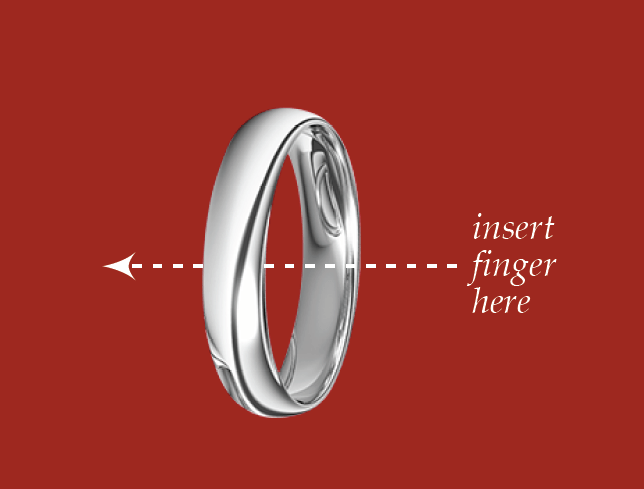
Love is the essence of God

From Tim Keller in “The Reason For God: Belief in the Age of Skepticism“:

If there is no God, then everything in and about us is the product of blind impersonal forces. The experience of love may feel significant, but evolutionary naturalists tell us that it is merely a biochemical state in the brain.

But what if there is a God? Does love fare any better? It depends on who you think God is. If God is unipersonal, then until God created other beings there was no love, since love is something that one person has for another. This means that a unipersonal God was power, sovereignty, and greatness all from eternity, but not love. Love then is not the essence of God, nor is it at the heart of the universe. Power is primary.

However, if God is triune [Father, Son, Holy Spirit], then loving relationships in community are the “great fountain … at the center of reality.” When people say “God is love,” I think they mean that love is extremely important, or that God really wants us to love. But in the Christian conception, God really has love as his essence. If he was just one person he couldn’t have been loving for all eternity.

A Guy’s Guide to Marrying Well

MarryWellThanks to the folks at Boundless and Focus on the Family for providing A Guy’s Guide To Marrying Well. The 32-page booklet (a free download at the link) is a collection from several really good books and sources. This is what the folks at Focus on the Family  hope the guide will do for young men:

The simple purpose of this booklet is to present a path that is as Biblical as possible in order to help you marry well. But not just so that you can experience all the happiness, health and wealth that guys who marry well enjoy, but so that your marriage can point to God’s glory and His greater purposes.

This guide is based on a few timeless concepts — intentionality, purity, Christian compatibility and community — that we rarely encounter in popular culture but are a proven path to marrying well.

In a world where we get garbage like The Bachelor, it’s good to know that young men can have something more trustworthy when it comes to giving clear, sound advice.

What’s the problem with the church?

Why We Love the ChurchKevin DeYoung and Ted Kluck, who brought us “Why We’re Not Emergent (By Two Guys Who Should Be), have teamed up for a new book that looks at the local church and its biblical mandate. The book, called “Why We Love the Church: In Praise of Institutions and Organized Religion,” is due out July 1 and is described this way by the publisher:

Why We Love the Church presents the case for loving the local church.  It paints a picture of the local church in all its biblical and real life guts, gaffes, and glory in an effort to edify local congregations and entice the disaffected back to the fold.  It also provides a solid biblical mandate to love and be part of the body of Christ and counteract the “leave church” books that trumpet rebellion and individual felt needs. 

DeYoung, in lead up to the book’s release, looks at reasons people are disillusioned with the church. He breaks those reasons into four groups:

  • Missiological — it doesn’t work any more and is making no difference whatsoever
  • The Personal — it’s views are too harsh toward certain groups and unloving and has an “image problem”
  • The Historical — the church is corrupted from its original pristine state
  • The Theological — the modern view of the church is foreign to what Jesus came for in the Bible

Over the coming weeks, DeYoung will post excerpts from the book and address these concerns. I look forward to reading them and the book’s release.