Is God our lover? Our daddy? How should we love Him?

John Piper considers the question “Should our love for God be more like the love between a child and a father or the lover between two lovers?”:

What you look for for health—in a soul and in a church—is biblical proportion. So when it comes to intensity, it is high level intensity on each of the kinds of relationships. When it comes to which relationship is emphasized, let’s read the whole Bible and try to shape our hearts and our minds around the kinds of relationships that are highlighted in the Scriptures.

See his whole answer here.

ESV Online Study Bible to be sold by itself

As a followup to yesterday’s post, Crossway Books has announced that it will be selling the ESV Online Study Bible as a standalone for $19.99. As you may recall, you can access the ESV Online Study Bible this month free of charge. It is also offered for free for those who purchased an ESV Study Bible in print. This standalone option is good way for those who would want to try it out without necessarily purchasing the print study Bible.

Why consider this? Here is what the Crossway Web site says:

ESV Online Study Bible provides additional unique features, including the ability to create personal online notes; to search and follow interactive links between notes, maps, articles, charts, timelines, illustrations, and cross-references; to listen to audio recordings of the ESV; and to access additional resources not available in the print edition.

The second coming of Christ: good news and bad news

Since this is the season where we celebrate the first coming of Christ and his sacrificial death for sinners, we should also think about his second coming when it will be much different. You can reasonably say it will be both good news and bad news for everyone who has ever lived.

It will be good news for those who have trusted him with their life and have accepted his death as payment for their sins. We should eagerly look forward to it, for this world is not our final destination and as children of God we long to be with the one we belong to for eternity.

But, as John Piper points out, we should not be quick to believe rumors about his second coming:

Jesus is going to return to earth. I pray very soon. He said that before he comes—periodically throughout history—some people would think he has already come.

If they say to you, “Look, he is in the wilderness,” do not go out. If they say, “Look, he is in the inner rooms,” do not believe it. (Matthew 24:26)

Then he gave two reasons not to believe such rumors.

The first is that his coming will be globally unmistakable. It will be as publicly unmistakable as lightning.

For as the lightning comes from the east and shines as far as the west, so will be the coming of the Son of Man. (Matthew 24:27)

And that brings us to the bad news. For those who don’t believe, it will be a terrible time of realization that all hope is gone:

The second reason for not believing these rumors is that he will come like vultures come on a corpse.

Wherever the corpse is, there the vultures will gather. (Matthew 24:28)

When the world is as ready for judgment as road kill is for the vultures, then he will come in great wrath.

The Lord Jesus is revealed from heaven with his mighty angels in flaming fire, inflicting vengeance on those who do not know God and on those who do not obey the gospel of our Lord Jesus. (2 Thessalonians 1:7-8)

This will not be private, secret, or pleasant for unbelievers. He will come “on the clouds of heaven with power and great glory” (Matthew 24:30). And the judgment will be like vultures sweeping in on the corpse of human rebellion.

Who was John Calvin?

This year marks the 500th anniversary of reformer John Calvin’s birth. To mark that anniversary, Reformation Trust has published a collection of essays from some of the top reformed teachers and pastors looking at Calvin’s life, ministry and teachings. The list of authors in the 20-chapter book is impressive:  Derek W. H. Thomas, Sinclair B. Ferguson, D. G. Hart, Harry L. Reeder, Steven J. Lawson, W. Robert Godfrey, Phillip R. Johnson, Eric J. Alexander, Thabiti Anyabwile, John MacArthur, Richard D. Phillips, Thomas K. Ascol, Keith A. Mathison, Jay E. Adams, Philip Graham Ryken, Michael Horton, Jerry Bridges, and Joel R. Beeke.

About the book, D.A. Carson says: “On the five-hundredth anniversary of John Calvin’s birth, it is utterly fitting that a book of essays should appear that is designed for ordinary Christians, not scholars. The scholars will have their conferences, of course, and rightly so, but here is a collection of essays that will inform and move ordinary readers to grasp something of the profound gift God gave to the church in the person and ministry—and especially the writings—of Calvin.”

Ligonier Ministries, of which Reformation Trust is a division, is selling the book as well as offering a sample chapter online. It would do anyone well to better understand a man who had a profound effect on church history and was probably one of the greatest Christian thinkers.

Time Magazine notices: There’s something about those Calvinists

Time Magazine lists Calvinism — or rather, the “New Calvinism,” as it calls it — as one of the 10 Ideas Changing the World Now. It comes in at No. 3:

Calvinism is back, and not just musically. John Calvin’s 16th century reply to medieval Catholicism’s buy-your-way-out-of-purgatory excesses is Evangelicalism’s latest success story, complete with an utterly sovereign and micromanaging deity, sinful and puny humanity, and the combination’s logical consequence, predestination: the belief that before time’s dawn, God decided whom he would save (or not), unaffected by any subsequent human action or decision.

Read the rest here.

Meditation: Why it’s not about clearing your mind

When you talk about meditation with someone you can often be talking about different things entirely. The other day in the paper there was an article about yoga which mentioned the benefits of a healthy mind and body.

As a Christian, I want to have a healthy mind and body. I want to bring glory to God through doing my best to be healthy because our bodies are temples of the Holy Spirit. But for Christians to practice yoga is a misunderstanding about what the Bible means by meditation and the way the world sees meditation. They are two different things entirely.

In the article, it is briefly explained that yoga was developed as a way of preparing the body for meditation. And while it goes on to say that the Western practice of yoga is a set of postures, there is more to it than that. Even the instructor, while trying to deflect concerns, hints at the real reason behind yoga:

“Some are skeptical of yoga at first — some think it’s a religion or something, but are surprised to find the movements and breathing exercises help them.”
Frazier said she hopes her students derive some of the same benefits from practicing yoga she has.
“Yoga brought me a new compassion for my self,” she said. “Yoga is embracing what is, an acceptance of reality.”

The idea of embracing yourself and “acceptance of reality” is not harmless exercise talk but in fact echoing tenets of Hinduism and Buddhism. That, and the fact that yoga brings “compassion for my self” should sound alarms for any Christian. Is that what yoga and meditation brings? Compassion for ourselves? When I am alone with my thoughts, rather, this is what confronts me: I am not good. Consider what the Bible says about how we should meditate:

  • This Book of the Law shall not depart from your mouth, but you shall meditate on it day and night, so that you may be careful to do according to all that is written in it. For then you will make your way prosperous, and then you will have good success. (Joshua 1:8)
  • but his delight is in the law of the Lord, and on his law hemeditates day and night. (Psalm 1:2)
  • I will ponder all your work, and meditate on your mighty deeds. (Psalm 77:12)
  • I will meditate on your precepts and fix my eyes on your ways. (Psalm 119:15)
  • I remember the days of old; I meditate on all that you have done; I ponder the work of your hands. (Psalm 143:5)

Notice in those verses what is lacking? Yes, any reference to self or self worth. Instead, we are to focus on God’s greatness and his majesty. Why? Because only He can save us from our terrible conditions. “Clearing” your minds won’t make it go away, it’ll just mask the problem.

While yoga may not be advertised as a religion class, by going through the routine you get the same effect. Even in the “non-religious” Western world. Christians should beware.

What are the basics for the gospel?

For those in protestant circles, many have had the opportunity to share their testimony before they were baptized. When you think about it and, if you’ve ever heard one given, it often starts with the person and how they came to faith. But that isn’t the whole story, whether they realize it or not.

In this message to a Children’s Desiring God conference, John Piper explains that it goes much further than an individual’s own life if you want to explain how they were saved. It’s obvious, really, if you believe what the Bible says. Since no one saves himself, you can’t tell your story without going back to the Person who saved you, namely Jesus Christ. And, if you do that, it effects what kind of person you will be and how you live your faith.

Why you need the gospel every day

So, you’ve been saved. What does that mean for your everyday life? Should it mean anything? John Piper explains that it must.

Mark Driscoll talks about Jesus to Nightline reporter

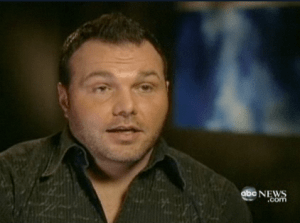
ABC's Nightline profiled Mars Hill pastor Mark Driscoll in a recent show.

Mars Hill pastor Mark Driscoll was the subject of a recent segment on ABC’s Nightline. While Driscoll is unapologetic about his love for Jesus and the Bible, the reporter just couldn’t seem to get over the fact that the people at Mars Hill don’t look like typical evangelicals or that Driscoll himself is not what a “typical pastor” is supposed to look or sound like. As if Jesus wasn’t enough to get someone’s attention, the reporter even referred to Driscoll as the “indie rock star of evangelicals.”

And, even stranger (to the reporter),  Driscoll is one of those Calvinists (!). Wow. Perhaps that would be a good subject for a future episode. We can only hope.

How do we help the poor?

There is a divide in this country, and you can almost discern it based on the question, “How do we help the

How do we help the poor?

poor?” Politically, there is a divide for sure, but even within the church there is divergence on this question. To be sure, the Bible instructs us that we are to care for the poor, but even that point is debated as one group emphasizes responsibility and another justice.

Because faith without works is dead, we need to understand just how it is we should care for poor and downtrodden in our society. Tim Keller, writing at Thermelios, has written a thorough and helpful essay on the subject, “The Gospel and the Poor.” Keller is senior pastor of Redeemer Presbyterian Church in Manhattan, N.Y., and an adjunct professor of practical theology at Westminsters Theological Seminary in Philadelphia. Among the books he has written are “The Reason for God: Belief in the Age of Skepticism” and “The Prodigal God: Recovering the Heart of the Christian Faith.”

In his essay, Keller explores from the position that the church is commanded to help the poor, yet this is not the primacy of the gospel:

So what does it mean to be committed to the primacy of the gospel? It means first that the gospel must be proclaimed. Many today denigrate the importance of this. Instead, they say, the only true apologetic is a loving community; people cannot be reasoned into the kingdom, they can only be loved. “Preach the gospel. Use words if necessary.” But while Christian community is indeed a crucial and powerful witness to the truth of the gospel, it cannot replace preaching and proclamation. Nevertheless, the primacy of the gospel also means that it is the basis and mainspring for Christian practice, individually and corporately, inside the church and outside. Gospel ministry is not only proclaiming it to people so that they will embrace and believe it; it is also teaching and shepherding believers with it so that it shapes the entirety of their lives, so that they can “live it out.” And one of the most prominent areas that the gospel effects is our relationship to the poor.

It is a lengthy read, but well worth your time. For conservatives, it is a good reminder that merely proclamation of the gospel while failing to help the poor and needy shows a lack of understanding of the gospel. For liberals, it is a good reminder that giving aid is not an end in itself.