The daily earthquake of abortion is right in your back yard

On Jan. 12, 2010, a deadly earthquake hit Haiti. It has been estimated that anywhere from 150,000 to maybe up to 500,000 people lost their lives in this tragedy. There is still much suffering as many who have survived have been left homeless. There are many ways you can help beyond being there physically. Among many choices you can consider I would offer Compassion International, which works with children and their families, and Food for the Hungry. I cannot strongly enough urge you to help in whatever way you can.

Since that day when the major quake hit Haiti, there has been an equally devastating human tragedy that has hit among the most defenseless people in our society. I am talking about abortion. There are some estimates that 3,000 babies in the United States and 130,000 babies worldwide are killed by abortion. John Piper puts it in perspective in his sermon on his observance of Sanctity of Human Life Sunday yesterday at Bethlehem Baptist Church.

There are about 3,000 abortions a day in the United States and about 130,000 a day worldwide. Which means that the horrific, gut-wrenching reality of Haiti’s earthquake on January 12 happens everyday in the abortion clinics of the world. And it is likely that if the dismemberment and bloodshed and helplessness of 130,000 dead babies a day received as much media coverage as the earthquake victims have—rightly have!—there would be the same outcry and outpouring of effort to end the slaughter and relieve the suffering.

Americans have been giving 1.6 million dollars an hour for Haiti Relief for the last ten days—a beautiful thing. I hope you are part of it. It is so unbelievably easy to give with phones and computers. But the funding and resistance to the suffering of the silent, hidden destruction of the unborn is not so easy. So the 3,000 babies who are crushed to death every day in America by the earthquake of abortion go largely unnoticed.

If you have been compelled to perhaps adopt a Haitian child because they have been left orphaned, how much more so should you consider adopting a child that may be aborted. Is there really any difference? The point is not that we should do less for situations like the one in Haiti, but rather that we should not ignore a far greater tragedy in our society. As I sat in my own church on Sunday I couldn’t help but feel disappointed that nothing was mentioned about this tragedy. It is much safer to be concerned about Haiti. I hope we can muster our courage to change that.
A Sweet and Bitter Providence: Piper examines sex, race and God’s sovereignty in his new book

John Piper’s latest book, A Sweet and Bitter Providence: Sex, Race and the Sovereignty of God is now available. In it, he examines the book of Ruth and how it’s themes are relevant in the 21st century. From the publisher:

The sovereignty of God, the sexual nature of humanity, and the gospel of God’s mercy for the undeserving-these massive realities never change. And since God is still sovereign, and we are male or female, and Jesus is alive and powerful, A Sweet and Bitter Providence bears a message for readers from all walks of life. But be warned, Piper tells his audience: This ancient love affair between Boaz and Ruth could be dangerous, inspiring all of us to great risks in the cause of love.

Chronicles of Narnia update: Dawn Treader movie heading into troubled waters

It appears that the long-delayed movie version of The Voyage of the Dawn Treader, the third installment of The Chronicles of Narnia series, has finally wrapped in Australia. And the word is that Michael Apted, who some had feared as a poor choice to direct the feature, has done nothing to prove his critics wrong. Julia Duin, writing recently in the Washington Times, says Apted seems intent on backing off the Christian theme in the book:

“Voyage” director Michael Apted, who has admitted to excising a lot of the religious connotations out of his 2007 film “Amazing Grace,” sounds double-minded.

The Narnia films, he told Rhema FM, a New Zealand Christian radio station, “present a challenge, for me to put the material out there in an evenhanded and interesting way; and not to be, in a sense, narrow-minded about it, either narrow-minded in a faith way or narrow-minded in an agnostic way. I have to open my heart to what the stories are about.”

“Narrow-minded in a faith way”? That’s going to rev up Christians to see this movie.

This truly is disappointing since many fans of C.S. Lewis’ work had been eagerly waiting to see how these literary treasures would be made into movies. When Disney bailed on the series in Decenber 2008 after The Lion, The Witch and The Wardrobe and Prince Caspian (which already started to drift from the series’ Christian theme), there was much doubt as to whether the series would continue. Fox picked up the series and Dawn Treader, which was scheduled for a May 2009 release, was pushed back to May 2010. Now, Druin reports, the movie will be released in December. As I’ve mentioned before, it’s not that you couldn’t enjoy the movie, it’s just that knowing what the books are like and then seeing the story altered in ways that I’m sure Lewis would be displeased with would be a huge letdown.

As before, my advice would be to find the books. Read them, both for your own sake and your children’s. See exactly what Apted thinks is so “narrow-minded.”

HT: Trevin Wax

Show resolve, not wishful thinking

Mat Perman, over at What’s Best Next, has a good post about why most people don’t keep their New Year’s resolutions — and how to keep yours. The idea of why people don’t is that they never envision how they will fit into their schedules. So, their resolutions never translate into anything more than wishful thinking. Something needs to happen. Perman explains:

Think of an Olympic athlete. They don’t simply say “my goal is to win the gold medal.” Instead, they adhere to a workout schedule. Without that concrete mechanism of action, the goal would simply be wishful thinking.

Now, what about those more intangible aims such as “lose 10 pounds”? How do you schedule that? Obviously you can schedule the exercise portion of that goal. But what about the “eating less” portion? Speaking from experience, it’s easy to get to the dinner table and forget (or deliberately neglect?) all intentions of eating healthy.

This is where reviewing your goals comes in. Mindsets that need to be more or less continuous (like “eat less”) tend to be kept in mind through regular review until they become second nature. The weekly review helps accomplish this; for things that tend to fall out of mind easily (like “eat less”), just pausing at the beginning of your work day to remember your aims can be helpful.

Which leads to one last thing: you have to keep your number of resolutions small. It’s not possible to create actionable mechanisms for or keep in mind a large number of new (or renewed) aims.

Also good to consider:

God approves of New Year’s resolutions

What if I fail?

Jesus can change your way of thinking

It is now 2010, and many of us have been thinking of ways to discipline our lives. We may not all say it that way, but that’s what we intend. Some call them resolutions (I do) and we hope to improve our lives in some way by doing things either a new way or doing the things we already do in a better way. We need to change our way of thinking.

John Knight, in a post at The Works of God, points to an article in the New York Times that talks about how our brain functions and how, for example, in people who are blind it reorganizes the impulses that usually function for sight to do other tasks. It’s an amazing thing and, for me and many others, points to how God has made our brains in his infinite wisdom. Knight says that this also makes the miracle Jesus performed for the blind man in John 9 even more spectacular because the man’s sight was restored instantly and he saw clearly. By science, this man’s brain would have not been able to adjust this quickly because his it would not have been functioning in this capacity for a long time.

As I read John’s post I thought about my hopes for this year and the goals (resolutions) I have made for myself. I am left feeling hopeful because I can see that God can work in ways that are not my natural inclination, my current way of thinking (although my faith in God is present) to do the thing desired. So, I will press on in hope that God will do the daily miracle in my life. And I hope you, dear reader, press on in God as well that he will change our way of thinking.

Fear and trembling: Remembering the Great Storm of 1975

It snowed today in Nebraska — a lot. Here in south central Nebraska (and I’ve lived here since 1994) we don’t get a lot of snow. At least, not in the way I remember growing up in southwestern Minnesota. It seemed like we always had more snow when I was a kid. It would start in late October or early November and there was enough to go sledding down big hills or to build tunnels around our yards or forts for snow fights. We spent a lot of time outdoors because, frankly, there wasn’t a lot to do indoors except maybe get on my mom’s nerves, which was pretty easy to do when you’re a rambunctious kid and you have three channels to choose from — four if you count PBS, but nobody did.

And, when thinking about snow like I am today, my mind always goes back to the big blizzard of 1975. The one that started on Jan. 10 and kept us snowbound in our house for three days without power. My family laughs at me because I recount this episode by talking about all of my family sleeping with all our clothes (and coats) on in one bed to stay warm and eating cold peaches by candlelight. The cold peaches part of the story always brings laughter, as if there were another way to eat peaches (peach pie, I suppose, but the point is lost on my family as they dissolve into laughter).

While anyone can be suspicious of an older person (or a not-so-old person in my case) when they start to wax nostalgic about big storms of the past, my advantage is that I have weather history to back up my stories of just how bad it was. It was bad. The snow came fast and hard and then it just blew furiously for days. We lost all power (as did our entire little town) early on and no one was able to go anywhere. One of my sisters, driven by cabin fever and a loathing for little kids I’m sure, decided she would rather spend the blizzard with one of her high school friends. I never did quite understand this since the friend she chose happened to be from a family of 18 kids. Miraculously, she managed to make her way to her friend’s house though she was literally snow blind almost immediately upon leaving our house.

How bad was it? Try out these facts and shudder:

Winds were blowing at 90 mph in Iowa during the blizzard. North Dakota and South Dakota were stung with wind chills of -80ºF.

The snow began falling on Friday, January 10 and continued for the next two days. Snowfall of a foot or more was common from Nebraska to Minnesota, with a high amount of 27 inches in Riverton, Minn. The heaviest snow fell to the west of the low pressure center, which tracked from northeast Iowa through central Minnesota up to Lake Superior. Sustained winds of 30 – 50 mph with gusts from 70 – 90 mph produced snowdrifts up to 20 feet  in some locations. Some roads were closed for up to 11 days.

Sioux Falls, S.D., saw visibilities of below one-quarter mile for 24 straight hours, and just east of Sioux Falls a 2,000-foot broadcast tower collapsed under the storm’s fury. In Willmar, Minnesota, 168 passengers were trapped in a stranded train for hours, unable to walk to shelter because of dangerously low wind chills. In Omaha, Neb., a foot of snow fell, Sioux Falls saw 7 inches, Duluth, Minn., saw 8 inches, and International Falls, Minn., saw 24 inches.

Record low pressures were recorded in communities in Nebraska, Minnesota, Illinois, and Wisconsin, with a low of 28.55 in  in Duluth, Minn. In all, approximately 58 people died from effects of the blizzard and over 100,000 farm animals were lost. The combination of snowfall totals, wind velocities, and cold temperatures made this one of the worst blizzards the Upper Midwest has experienced.

It is a fearsome thing to see weather like that. Days like this in Nebraska, when the snow falls steadily and the wind blows hard, take me back to those days. We are all so utterly small and helpless before the mighty hand of God.

Pastor Matt Chandler rejoices in God’s goodness in suffering is his own life

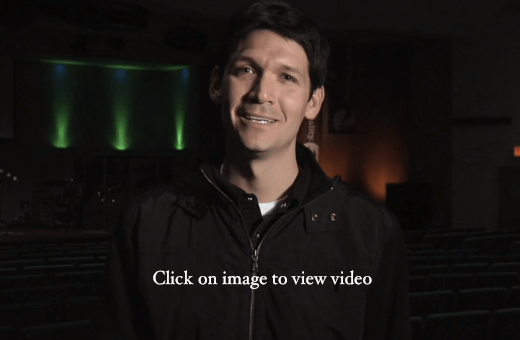
If you have never heard of Matt Chandler, he is a man who loves God deeply and has served well as the lead pastor at The Village Church in Highland Park, Texas. On Thanksgiving morning, he suffered a seizure in his home and it was discovered that he had a tumor growing in his brain. This past Friday he underwent surgery as neurosurgeons removed it. This is a message he taped for his congregation before his surgery. Please keep Matt and his wife and three children in your prayers. He loves God deeply and his life points to God’s greatness. Here is his message to his church and for all of us.

This is the update posted Sunday by the elders at The Village: Matt was moved out of ICU on Sunday and continues to get plenty of rest as part of his recovery, per doctor’s orders. Please continue to pray for patience during this recovery time and to honor family-only visitation until further notice.
Pathology results of the tumor are due sometime mid-week, and we will keep you notified whenever possible.

It’s really winter in Nebraska

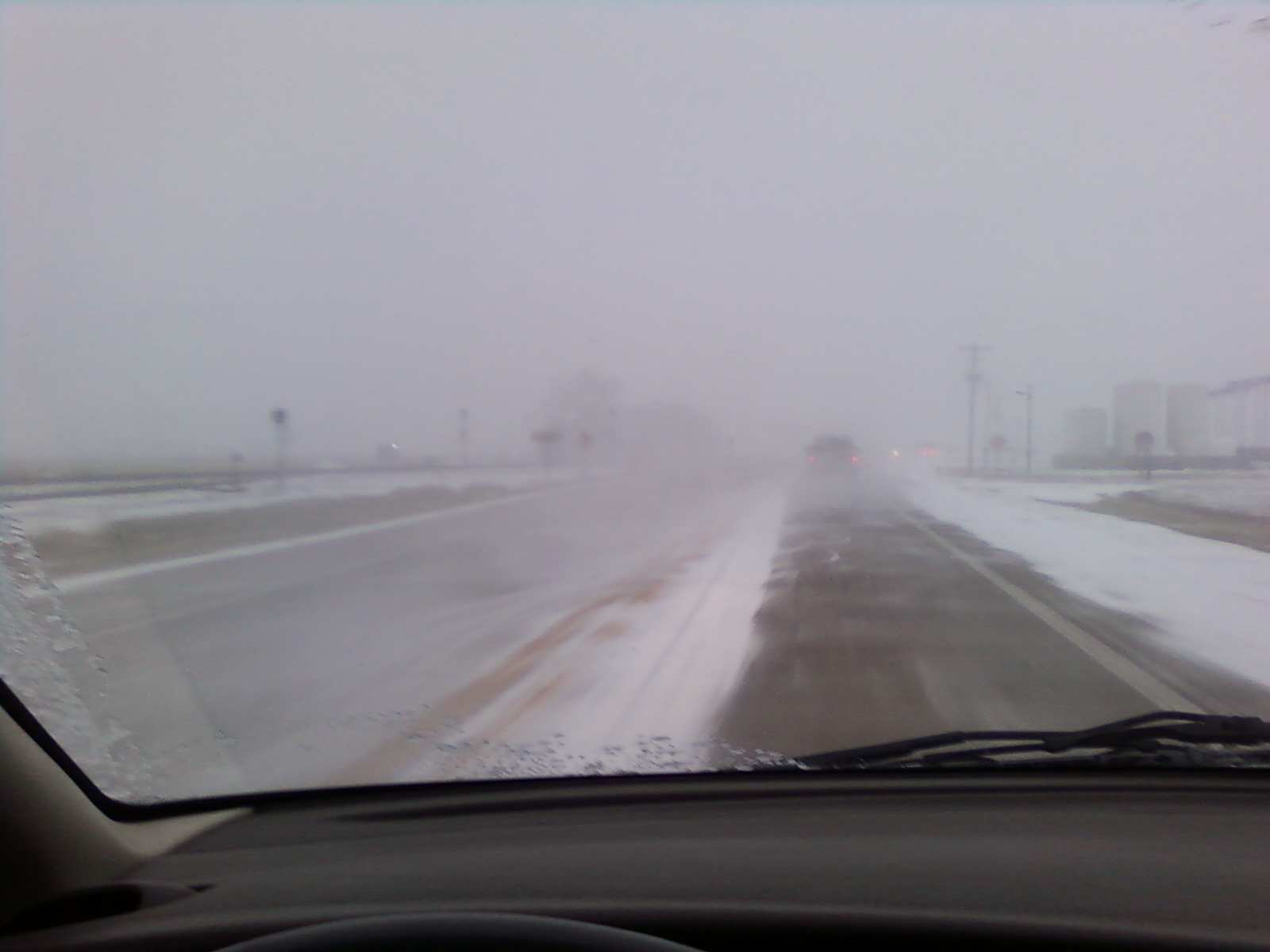
Even though we like to fool ourselves into thinking it won’t happen, winter arrives every year. This is how it looked as I drove to Central City this afternoon.

Useful resources on bioethics from STR: Abortion, euthanasia, stem cell research

Stand To Reason is a great organization that puts out great material to help Christians think more clearly about their faith and give a gracious, even-handed defense of it. This page has some great resources from STR and other places that are useful when talking about issues such as abortion, stem cell research and euthanasia.

Here are just a few of the topics addressed:

The condescendence of Scrabble players

OK. Maybe not all of us are this way. But we’ve all seen it. You know what I mean. The person who just can’t allow you to somehow stumble to a big play or win against them. “I had a really good word for that spot but you messed it up.”

I am not a high-level player, not even close. I do enjoy playing the game, though, and that’s why this amused me. It’s an account in Slate about how one person scored a record 830 (!) points in a Scrabble game, including a record 365 points on one turn when he played QUIXOTRY between two triple-word spots. Here is how author (and self-proclaimed competitive Scrabble player) Stefan Fatsis described what Michael Cresta, along with his oppponent Wayne Yorra (who scored “only” 490 points) accomplished.:

I asked Jason Katz-Brown, a Massachusetts Institute of Technology junior ranked 10th in North America, to analyze the game. Unlike most players mid-level and higher, Cresta and Yorra didn’t keep track of the letters they drew on each turn, so it’s impossible to fully examine their possible moves. But we do know what letters they played on each turn. When Katz-Brown input those into a Scrabble-playing computer program he co-wrote called Quackle, he found that Cresta and Yorra had better moves on 14 of their 22 nonbingo turns. One example: Cresta scored just 30 points using the second blank when he could have held it and tried for another bingo.

Technically, Cresta’s strategy was unsound. Fishing for a once-in-a-lifetime play might be understandable in a casual game, where winning is less urgent. But in competitive play—even in a club setting, where there’s less on the line than in a rated tournament—exchanging letters three times, as Cresta did, to enhance some combination of Q, U, I, and X is unorthodox at best, suicidal at worst. (The strategically correct move was to dump the cumbersome Q and move on.) In Scrabble, the player who waits for the miracle word usually loses. The implication: Cresta wasn’t terribly worried about whether he won or lost.

(By the way, for those like me who don’t know, to “bingo” means to use all seven tiles in one turn)

So Cresta didn’t play the “sound” way and he was rewarded with an incredibly high score and a catty article by Mr. Fatsis. In the end, Fatsis proposes that Cresta’s score stand as the mark for club  play while the previous record (held by “Mr. 770” Mark Landsberg in a 1993 California tournament) stand as the mark for competitive play. Somebody call the waambulance!