
Economy. War. Taxes? Here is one thing that Barack Obama has promised he will do as president as soon as he is inaugurated:
The smoke and mirrors of Obama
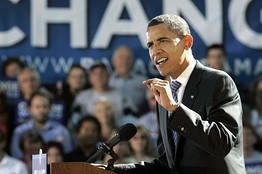
One of Barack Obama’s most potent campaign claims is that he’ll cut taxes for no less than 95% of “working families.” He’s even promising to cut taxes enough that the government’s tax share of GDP will be no more than 18.2% — which is lower than it is today.
It’s a clever pitch, because it lets him pose as a middle-class tax cutter while disguising that he’s also proposing one of the largest tax increases ever on the other 5%. But how does he conjure this miracle, especially since more than a third of all Americans already pay no income taxes at all? There are several sleights of hand, but the most creative is to redefine the meaning of “tax cut.”
For the Obama Democrats, a tax cut is no longer letting you keep more of what you earn. In their lexicon, a tax cut includes tens of billions of dollars in government handouts that are disguised by the phrase “tax credit.”
Read the whole thing
Short film from DG: Is this you?
I came across this today and I have to say that, sadly, it had a familiar feel to it. This reminded me of some of the conversation we were having last night at our small group about how we lack intimacy with those within our own church because we are often harsher than the world with what we see as flaws and failures. Because of that tendancy, I think we tend to put on phony faces in front of each other like we see in the video. What happens is we are a) hypocritical and b) not really helped by or helping those around us.
I love a parade
Especially when it’s the Harvest of Harmony Parade here in Grand Island. And, to top it all, when my daughter is marching for the first time with the Grand Island Senior High band.
Hitchens-Turek debate: Does God exist?
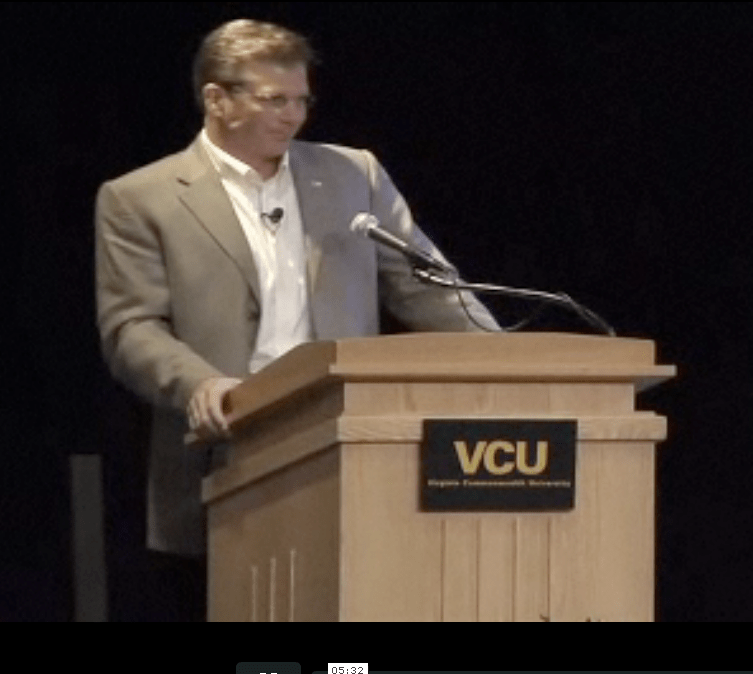
Christopher Hitchens and Frank Turek debated at Virginia Commonwealth University on the topic: Does God Exist? The video is below. Click on the image to view it.
What to say to someone who is depressed, angry, doubting or skeptical
If we call ourselves Christians, then we are to take to heart the Bible’s instructions to bear one another’s burdens. And, in this day and age, there are many things we are burdened with whether it’s finances, relationships, family, health or career. At the Desiring God blog, pastor John Piper gives great counsel about what to say to those who are depressed, angry, doubting or skeptical:
1. Don’t be offended.
First, resist the temptation to be offended. Don’t pout or take your ball and go home. That’s what you may feel like. They wanted to talk, and here they are throwing my suggestions back in my face with a dismissive attitude. Don’t leave. Not yet. “Love suffers long” (1 Corinthians 13:4, NKJV).
2. Listen.
Second, listen to their responses. Part of your power is not only what you say, but how they feel about the way you listen. If your truth produces empathetic ears, it will feel more compelling. This listening will be a witness. In 2 Timothy 2:24-26, Paul describes the kind of engagement that may set people free from sin and error. One feature is “patiently enduring evil.”
3. End with hope.
Third, when you have spoken all the experiential counsel you can think of, and they seem to have demeaned it all, don’t let them have the last word of despair. You leave the last word of hope.
Joe Biden: Confused, dazed and dead wrong
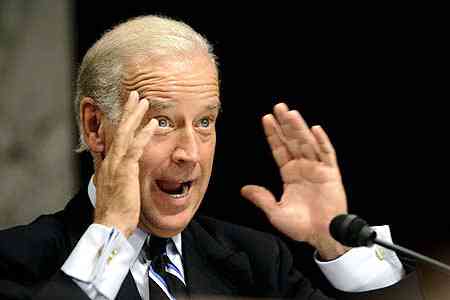
Joe Biden, the man chosen by Barack Obama to serve as his vice presidential running mate, is a man who is not afraid to let his mouth run and say what’s on his mind. And, to be honest, when you hear what’s on his mind it’s not just amusing but more often disturbing.
Of course there is plenty of talk about his gaffes (like referring to FDR going on TV after the 1929 stock market crash), but his thinking about an issue like abortion reveals not just muddled thinking but a man who wants to have it both ways.
John F. Cullinan, in an article on National Review Online, says Biden has often referred to himself as an “Irish Catholic kid from Scranton” as a way of ingratiating himself with voters who hold moral issues highly. But, because of his lack of discipline concerning his tongue, he often betrays himself as a person who holds views that are in fact in opposition. Cullinan gives an example:
One moment he’s wearing his Catholic faith on his sleeve, the next he’s thumbing his nose at basic Catholic teaching. For Biden, faith has long served as sword and shield: “The next Republican that tells me I’m not religious,” he once vowed, “I’m going to shove my rosary down their throat.”
Such calculated bravado has long helped Biden to obscure the radical inconsistency between what he says and what he does, especially regarding the basic human right to life. “My position is that I am personally opposed to abortion,” Biden wrote in his 2007 autobiography, “but I don’t think that I have the right to impose my views on the rest of society.”
Never mind that Biden has otherwise shown no such reluctance to impose his views; that his personally opposed, publicly supportive dodge applies solely to life issues; or that this intellectual and moral muddle is wholly inexplicable other than by political expediency and political partisanship.
While there is talk about Obama somehow replacing Biden on the Democratic ticket, the truth is that Biden’s faux religion serves the purpose of somehow softening Obama’s extreme liberal views. The problem is, however, that Biden continues to put his foot in his mouth and thus makes his religious ruse all too obvious. More people, hopefully, are paying attention.
Interview with John Piper
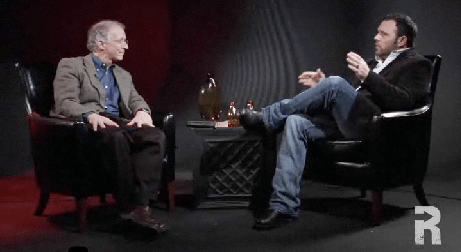
Mark Driscoll, pastor at Mars Hill Church in Seattle, sat down for an interview with John Piper. Driscoll in unabashed in his appreciation for Piper (the post is entitled “Why I Love John Piper,” so that should give you a pretty good idea!) and asks a wide range of questions in the 49-minute talk.
Sarah Palin on the economy
Sarah Palin, in an interview to be broadcast Wednesday night on CBS with Katie Couric, says what could happen if the bailout fails. Click on the image to view the video.

 Rockstanding
You must be logged in to post a comment.