Handle with care and wisdom: Sharp words, harsh words, and words that offer praise

Click on image to view video

James 3:10 says: Blessing and cursing come from the same mouth. My brothers, these things ought not to be.

This video is really discouraging in a way because it is a reminder of how we can deliver a load of garbage with the same mouth we deliver praises, all within the same day. It is a hard thing to realize how far we fall short.

The 2008 Desiring God National Conference, The Power of Words and the Wonder of God, dealt with how we use our words. Now a new book of essays based on that conference is available. Here is what the blurb at Desiring God says about it:

Words carry immeasurable significance: The universe was created with a word; Jesus healed and cast out demons with a word; rulers have risen and fallen by their words; Christians have worshiped through words of song, confession, and preaching. Even in our technological age, politics, education, business, and relationships center on words. Since the tongue is such a powerful force—for good or evil—we are wise to ask: What would homes, churches, schools, even the public square be like if we used words with Christian intentionality and eloquence?

The Power of Words and the Wonder of God seeks to answer this difficult question. In these chapters, derived from Desiring God’s 2008 national conference, John Piper, Sinclair Ferguson, and Mark Driscoll team with worship pastor Bob Kauflin, counselor Paul Tripp, and literature professor Daniel Taylor to help readers harness their tongues and appropriately command their silences for the glory of God and the ministry of the gospel.

We live in a charged age where our words can fly off our tongues (or fingertips) to a wide audience in a moment’s notice. The subject addressed in this book is important. We have a great and deadly tool at our disposal. We need wisdom in using it.

Industriousness grows well in the soil of humility

What does God not need? He doesn’t need proud people. He doesn’t need self-sufficient people. He doesn’t need people who are looking for their own glory. He does not need and so people like that are at odds with who God is.

This past Sunday afternoon, I had the joy of watching three people from my church be baptized. It is a wonderful thing to be a witness to this event in a Christian’s life because it points in a public way to the fact that God does a great thing in people’s live — he saves them — by first making them humble. John Piper, in his sermon from this past Sunday, says that humility “is the work of God under everything that makes all other good things in Christianity possible.” He gives just a few examples:

Faith. Would anyone depend on Christ as a needy, weak, and sinful person, if God hadn’t made him humble?

Worship. Would anyone earnestly make much of the worth of God, instead of craving to be made much of himself, if God hadn’t made him humble?

Obedience. Would anyone surrender his autonomy and submit obediently to the absolute authority of Scripture, if God had not made him humble?

Love. Would anyone seek the good of others at great cost to himself, if God hadn’t made him humble?

So, we are all in need of humility if we are to be of any good to God. The world, Piper reminds us, tells us that the best sort of courage is self-confidence. The humble person, however, is God-confident and lives his life not fearing man, but fearing God. Fearing men is a sign of pride, not humility. And because the humble person fears and loves God, that person works and is not passive. Remember what Paul wrote in 1 Cor. 15:10:

By the grace of God I am what I am . . . I worked harder than any of them, though it was not I, but the grace of God that is with me.

Because we are freed from the chains of self esteem and the concerns of the world, God allows us to be productive, creative, industrious people who do great things for God’s sake, not our own.

Is religion good for the world?

The new documentary movie Collision, based on the series of debates by Christopher Hitchens (God is Not Great: How Religion Poisons Everything) and evangelical pastor Doug Wilson will be released on DVD on Oct. 27. You can pre-order it now at Amazon.

Collision

Abortion really is a part of Obama’s plan. That’s no lie.

The Associated Press reported Wednesday in one of its “Fact Check” stories that some “myths and half-truths” are taking hold to raise opposition to the massive health care overhaul constructed by President Obama and his Democratic allies. One of the items addressed in the article was the idea that the health care overhaul would have federal dollars paying for abortions. This is what the article said:

THE POLL: 50 percent expect taxpayer dollars will be used to pay for abortions; 37 percent don’t.

THE FACTS: The House version of legislation would allow coverage for abortion in the public plan. But the procedure would be paid for with dollars from beneficiary premiums, not from federal funds. Likewise, private plans in the new insurance exchange could opt to cover abortion, but no federal subsidies would be used to pay for the procedure.

Opponents say the prohibition on federal money for the procedure is merely a bookkeeping trick and what matters is that Washington would allow abortion to be covered under government-subsidized insurance.

Obama has stated that the U.S. should continue its tradition of “not financing abortions as part of government-funded health care.” Current laws prohibiting public financing of abortion would stay on the books.

Yet abortion guidelines are not yet clear for the government-supervised insurance exchange. There is strong sentiment in Congress on both sides of the issue.

Here are some things to consider. Public funds are public funds. If someone wants to sign on to the public plan, they will not be able to sign on to just a portion of it. Since the House bill classifies abortion as “an essential service,” abortion will be covered under it. Abortion providers who perform these “services” for those under the public plan, they will be reimbursed by the federal government from the treasury. In addition, because of that classification, private insurance plans will have to provide coverage for them as well. The result, the number of abortions will increase and the number of providers increased to cover the government-mandated coverage.

The idea that President Obama said the U.S. should continue its tradition of “not financing abortions as part of government-funded health care” should be taken with a grain of salt. The part in the quotations is what he said. He did not, however, say we should continue that policy. He merely was observing what the current situation was. If his words mean anything, I would also listen to what he said in the video clip below. The president and his allies like to talk a lot about disinformation being put out there about his health care proposals. I would say a lot of it is being offered by the president himself when it comes to covering over explicit statements he has already made.

I do not want innocent people killed for the sake of birth control. I do not want to be forced to pay taxes so others can do this. I believe there are many others who feel the same way. If you want to read a comprehensive discussion of this particular issue, I would encourage you to look at this fact sheet done by the National Right to Life.

Tax-funded abortion coverage: Who’s being warned?

The Associated Press’ Philip Elliott, writing about the massive health care overhaul that is lagging in support as it becomes clear that it is massively expensive as well  as devious in its intentions, mischaracterizes a statement by New Hampshire Republican Judd Gregg on the effect of abortion services in the legislation:

Republicans paint Obama’s proposals as a massive tax that would leave small businesses wounded, employers shifting away from private plans toward a government-based system, and workers without coverage. Some GOP members have also cautioned that the legislation could fund abortions, a fear crucial to the social conservatives who hold sway inside the Republican Party and a proposition Orszag would not rule out.

A key Republican, however, warned his party not to scuttle health care legislation over abortion.

“No matter what your views are on abortion, you shouldn’t ask people to use their tax dollars if they think that abortion is taking a life,” said Sen. Judd Gregg, R-N.H. “I would hate to see the health care debate go down over that issue. … Hopefully we won’t get ourselves wrapped around the wheel of abortion in this debate.”

Is Gregg really warning Republicans when he says “you shouldn’t ask people to use their tax dollars if they think that abortion is taking a life”? I would say that it is a warning to Democrats not to attach what is most definitely a poison pill to what is already a bloated bill. The fact that Elliott makes this quote a warning to Republicans is yet another case of either shoddy writing by the AP or an attempt to create confusion. I would say the case is the latter since it’s not just “some GOP members” who are saying that the legislation could fund abortions. This is an actual amendment that was voted on and attached to the legislation.

Perhaps this story will be edited at some point to clear up that portion, at least. Until then, the Associated Press seems content to throw out a story that misleads on a serious matter. Once again, it’s a bad job by the AP.

Don’t buy this lemon: Publicly funded abortion on demand

President Obama and his allies, in used car salesman mode, are pushing a massive health care overhaul bill in front of Congress, pestering them to sign it! sign it! sign it! And don’t mind the small type or the cost. Well, you should worry about the small print, because there are things you should not want to be a part of.

For instance, during a committee meeting on July 9, Democratic Sen. Barbara Mikulski of Maryland slipped in an amendment that would provide public funding for abortion. At CNSNews.com, they recount the interaction between Mikulski, Republican Sen. Orrin Hatch of Utah and Democratic Sen. Bob Casey of Pennsylvania as they query Mikulski as to just what her amendment is providing. She is evasive, but it is clear that she is pushing an amendment that will provide for federally funded abortion in a health bill. So much for freedom of choice.

Meanwhile, a Guttmacher Institute review of literature found that in 20 of 24 studies, the number of abortions went down where public-funding restrictions were in place. The results were inconclusive in the other four studies. If  President Obama, who as Candidate Obama stated that he wanted to reduce the need for abortion, is serious about seeing that happen, then he would not be in such a hurry to pass a health care bill that pushes abortion on all taxpayers. But, based on his record in his short time in office, he doesn’t appear to take the words he spoke on the campaign trail or to Pope Benedict seriously. And that is a tragedy.

Click on image to see video of Sen. Mikulski as she answers questions from Sens. Hatch and Casey about her amendment.
Click on image to see video of Sen. Mikulski as she
answers questions from Sens. Hatch and Casey about her amendment.

My Friend, my Friend indeed

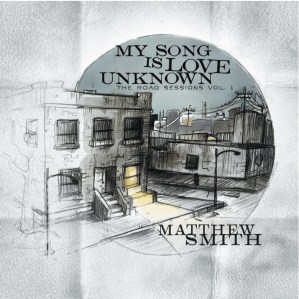
Click on the image to hear Matthew Smith's excellent rendition of this great song

I am very excited that one of my favorite artists, Matthew Smith, will be releasing this fall a new CD comprised on songs off two of his “road” albums. If you’re not familiar with him, what he does is take hymns — many that have been long forgotten — and refreshes the music and smoothes out in some cases archaic lyrics. Great lyrics are wed with great music. The song below is a perfect example. Guitarist Clint Wells provides a musical vehicle for profound lyrics written by Samuel Crossman. I love this song and what it says about a wonderful savior we have in Jesus. I hope it speaks to you as well.

My Song Is Love Unknown

My song is love unknown

My Savior’s love to me

Love to the loveless shown

That they might lovely be

O who am I, that for my sake

My Lord should take, frail flesh and die?

O who am I, that for my sake

My Lord should take, frail flesh and die?

He came from His blest throne

Salvation to bestow

But men made strange, and none

The longed-for Christ would know

But oh my Friend, my Friend indeed

Who at my need His life did spend

But oh my Friend, my Friend indeed

Who at my need His life did spend

Here might I stay and sing

No story so divine

Never was love, dear King

Never was grief like Thine

This is my Friend, in Whose sweet praise

I all my days could gladly spend

This is my Friend, in Whose sweet praise

I all my days will gladly spend

Remembering those who pay the price to advance the gospel

Filling Up the Afflictions of ChristTwitter and Facebook, for all that they offer, will never give us anything like the biography and what it offers. What you get is perspective, something that is sorely lacking in the let-me-tell-you-about-me world of social media.

So, it is with great pleasure that I can tell you about the latest round of biographical accounts by John Piper, this time called “Filling Up the Afflictions of Christ: The Cost of Bringing the Gospel the the Nations in the Lives of William Tyndale, Adoniram Judson, and John Paton.” The book, the latest in his The Swans Are Not Silent series, is now on sale at Desiring God. Here is how it is described at the site:

The history of Christianity’s expansion proves that God’s strategy for reaching unreached peoples with the gospel includes the sufferings of his frontline heralds—the missionaries who willingly die a thousand daily deaths to advance God’s kingdom.

The price William Tyndale, Adoniram Judson, and John Paton paid to translate the Word of God, pave the way for missionary mobilization around the world, and lead the hostile to Christ was great. Yet their stories show how the gospel advances not only through the faithful proclamation of the truth but through representing the afflictions of Christ in our sufferings.

These aren’t big books, yet there is much to be gained through being introduced to the lives of these men who “the world was not worthy of.”

To read and hear biographical messages on these men, visit the links below.

Why William Tyndale Lived and Died

Suffering and Success in the Life of Adoniram Judson

You Will Be Eaten by Canibals! Lessons in the Life of John G. Paton

The high price of life at the White House

Teleprompter with the man he made famous and powerfulPerhaps it was the stress of propping up the most powerful Man in the World, but whatever it was, it was too much. On Monday night, the Teleprompter, barely 2, died in action at a White House while serving at the side of Barack Obama:

The fragile, overused speech aid was little more than 2 years old. No immediate cause of death and no autopsy were announced.

The passing of the celebrated speech-giving helper happened suddenly and unexpectedly. The president was looking right at the teleprompter, giving remarks in the Eisenhower Executive Office Building next door to the White House. He was rigorously defending his economic stimulus package, which has been rigorously criticized recently for being like many political speeches, not very stimulating.

While the Teleprompter was a key member of the administration, his passing was barely noted even by the president himself:

But all that came to a crashing and dramatic end Monday night. As the president launched into his 11 minutes of stimulating remarks, according to eyewitnesses, the old teleprompter simply expired, came loose, fell silently as if in movie slow motion before the stunned eyes of watchers and smashed into many pieces on the hard floor.

“Oh, goodness!” Obama exclaimed. “Sorry about that, guys.” The heartless audience of mayors, urban policy wonks and administration crowd-packers laughed out loud at the sudden death.

As if it was a mere machine, the 47-year-old president displayed no sign of concern or compassion whatsoever for his departed friend. He simply continued his speech with the surviving teleprompter on the other side.

The teleprompter’s remains were removed later by janitorial personnel for private burial. An official period of mourning was not announced. Not even a moment of silence. That’s the Chicago way.