You want brooding literature? Put down Twilight and try The Brothers Karamazov

At one time in my life, I worked a temp job as a telemarketer. It was a great job because I didn’t have to sell anything but instead just took orders from people who were responding to a television commercial. What it meant was that I would sit in a room with lots of other “service reps” and wait for the phone to ring. You could tell when the commercial ran because there would be a wave of calls that would last for about 10-15 minutes. The rest of the time we sat and waited. For me, it was a fruitful time of reading because it helped the time pass.

It was during that time that I read Fyodor Dostoevsky’s The Brothers Karamazov. I have never considered myself a big book reader because I read so slowly. Certainly there are a lot of books out there (and many fewer good ones), so you can’t, or may not have time to, read them all. But Dostoesvky’s books are well worth it. For me, the hardest part about it other than the sheer length of the books was reading the Russian names and them keeping them all straight through the book. Once I determined to note them without devoting too much time to sounding them out, it got easier.

But, for those still daunted by the task yet still desiring to read a great piece of classic literature, there is hope. Christianaudio.com has for this month made The Brothers Karamazov the free audiobook download for December. All you need to do is go here and, when you check out, enter the promotion code DEC2009. So, you too can be an appreciator of great literature while not having to tackle how to say all those names. Here is some background about the book from Christianaudio.com:

Fyodor Dostoevsky’s crowning life work, The Brothers Karamazov, stands among the greatest novels in world literature. His exploration of faith, doubt, morality, and the place of suffering in life are equaled in no other work of literature, save the Bible.

The book explores the possible role of four brothers in the unresolved murder of their father, Fyodor Karamazov. At the same, it carefully explores the personalities and inclinations of the brothers themselves. Their psyches together represent the full spectrum of human nature, and continuum of faith and doubt. Ultimately this novel seeks to understand the real meaning of existence and includes much beneficial philosophical and spiritual discussion that moves the reader towards faith.

This new abridgment done exclusively for Hovel Audio by Russian Studies scholar Thomas Beyer keeps the important religious themes of the novel intact. It is an excellent way for the admirer of Dostoevsky to refresh himself, or to introduce Dostoevsky to a friend who has yet to experience the joy of reading his works.

Fyodor Dostoevsky (1821-1881) writes with a passion and keen insight of biblical grace like no other modern novelist. His works Crime and Punishment and The Idiot testify to his great skill. The Brothers Karamazov has been hailed by readers for over a century as one of the finest achievements in all of western literature.

Thomas R. Beyer is Professor of Russian at Middlebury College in Vermont. He holds three degrees in Slavic Literature including a Ph.D. from the University of Kansas. In his decades of teaching, Tom Beyer has read The Brothers Karamazov dozens of times. His abridgment of the novel for Hovel Audio shows his thorough knowledge of his subject.
Learning where to place my hate

I think about this a lot because I think there a lot of people who look at Christianity as living daily to deny yourself some pleasure without going any further. C.S. Lewis addresses this kind of thinking in The Weight of Glory when he says that we are far too easily pleased, settling for the temporal joys of this world instead of striving for the eternal pleasures that we are offered through Jesus Christ. Because we don’t understand the magnitude of pleasure in Jesus, we don’t understand why we need to hate our sin. Timothy Keller, in Counterfeit Gods, does a great job explaining why this matters:

“In fear-based repentance, we don’t learn to hate the sin for itself, and it doesn’t lose it’s attractive power. We learn only to refrain from it for our own sake. But when we rejoice over God’s sacrificial, suffering love for us – seeing what it cost him to save us fom sin – we learn to hate the sin for what it is. We see what the sin cost God. What most assures us of God’s unconditional love (Jesus’s costly death) is what most convicts us of the evil of sin. Fear-based repentance makes us hate ourselves. Joy-based repentance makes us hate the sin.”

Anything that keeps me from achieving the greatest amount of joy (in Christ) — my sin — is not something I want to protect but instead should be hated and left behind.

HT: Of First Importance

Two ways to look at and talk about Christianity

There are a lot of people who got bent out of shape about pastors who talk like this:

(O)fficial church pronouncements that condone the very sins that keep people out of the kingdom of God, are evil. They dishonor God, contradict Scripture, and implicitly promote damnation where salvation is freely offered.

And then there are pastors who talk like this:

Q: I’m struck by the fact that I don’t hear a lot of explicitly religious language, or mentions of Jesus, from you.
A: I think we have enough religious people who are going around trying to convert people. My guard is up when somebody is trying to convert me to their thing. Are you talking to me because you actually are interested in this subject, because you care about me as a human, or am I one more possible conversion that will make you feel good about your religiosity? I don’t have any embarrassment about my religion, and it’s not that I’m too cool, but I would hope that the Jesus message would come through, hopefully through a full humanity. If you have something to say, whether you’re religious or not, if it is truly Christian and Jesus-centered, then it will help and be interesting and compelling to people, regardless of their world view. But I’m not just interested in talking to Christians. I’m interested in what does it mean to be fully human.

I don’t want my ears tickled when life or death is at stake. I’ll take the former over the latter.

Head over heart: The danger of showing love and why it’s worth it

There is pain all around us, and it is our nature to avoid that pain as much as possible. But, in this season of colds and flus (and flu shots), we know that there is some pain that is unavoidable and, sometimes, necessary. Regarding pain in relationships, we often see that the some of the deepest pain can come from someone or something you love. So that begs the question as to whether it is safer to not love in the first place because your heart can just be broken.

C.S. Lewis provides a wise answer and a strong rebuke in The Four Loves:

Of all arguments against love none makes so strong an appeal to my nature as “Careful! This might lead you to suffering.”

To my nature, my temperament, yes. Not to my conscience. When I respond to that appeal I seem to myself to be a thousand miles away from Christ. If I am sure of anything I am sure that His teaching was never meant to confirm my congenital preference for safe investments and limited liabilities.…

There is no safe investment. To love at all is to be vulnerable. Love anything, and your heart will certainly be wrung and possibly be broken. If you want to make sure of keeping it intact, you must give your heart to no one, not even to an animal. Wrap it carefully round with hobbies and little luxuries; avoid all entanglements; lock it up safe in the casket or coffin of your selfishness. But in that casket—safe, dark, motionless, airless—it will change. It will not be broken; it will become unbreakable, impenetrable, irredeemable. The alternative to tragedy, or at least to the risk of tragedy, is damnation. The only place outside Heaven where you can be perfectly safe from all the dangers and perturbations of love is Hell.

HT: Tyler Kenney

A meditation: The utter helplessness and hopefulness of death

I awake, and I am still with you. — Psalm 139:18b

I can’t do any better than this post from Tyler Kenney at the wonderful Fighter Verses blog. I share it in full here, but I would hope that you visit there, bookmark it, subscribe to it and learn to love the Word of God:

David’s words about waking up to God remind us of that day when we, like all flesh, will be tucked one last time into our earthly beds, returned to rest in the dust from which we came until the day of resurrection.

In his poem, “The Naked Seed,” C. S. Lewis considers our utter helplessness in death but also the hope that waits for those who have God’s Spirit:

My heart is empty. All the fountains that should run
With longing, are in me
Dried up. In all my countryside there is not one
That drips to find the sea.
I have no care for anything thy love can grant
Except the moment’s vain
And hardly noticed filling of the moment’s want
And to be free from pain.
Oh, thou that art unwearying, that dost neither sleep
Nor slumber, who didst take
All care for Lazarus in the careless tomb, oh keep
Watch for me till I wake.
If thou think for me what I cannot think, if thou
Desire for me what I
Cannot desire, my soul’s interior Form, though now
Deep-buried, will not die,
— No more than the insensible dropp’d seed which grows
Through winter ripe for birth
Because, while it forgets, the heaven remembering throws
Sweet influence still on earth,
— Because the heaven, moved moth-like by thy beauty, goes
Still turning round the earth.

God can be trusted: Celebrating the life of George Mueller

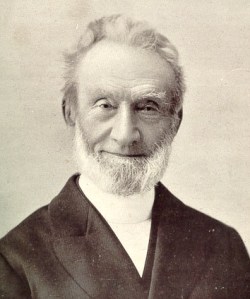
George Mueller
George Mueller

On this date in 1805 in Kroppenstaedt, Germany, George Mueller was born. Mueller would die 92 years later and would be best remembered for his orphan ministry he founded in Bristol, England. From the biographical message delivered by John Piper, we are given these facts:

He built five large orphan houses and cared for 10,024 orphans in his life. When he started in 1834 there were accommodations for 3,600 orphans in all of England and twice that many children under eight were in prison. One of the great effects of Mueller’s ministry was to inspire others so that “fifty years after Mr. Mueller began his work, at least one hundred thousand orphans were cared for in England alone.”

George Mueller pastored for 66 years at his church in Bristol and is said to have delivered at least 10,000 messages. He was a giant in the faith not likely to be seen any time soon. Mueller was a man of consistent prayer who lived daily from God’s word. The way he supported his ministry to orphans was to ask from God and watch and trust God to provide — and he did. Here is more from the Piper message about this:

The reason he is so adamant about this is that his whole life—especially in the way he supported the orphans by faith and prayer without asking anyone but God for money—was consciously planned to encourage Christians that God could really be trusted to meet their needs. We will never understand George Mueller’s passion for the orphan ministry if we don’t see that the good of the orphans was second to this.

The three chief reasons for establishing an Orphan-House are: 1. That God may be glorified, should He be pleased to furnish me with the means, in its being seen that it is not a vain thing to trust in Him; and that thus the faith of His children may be strengthened. 2. The spiritual welfare of fatherless and motherless children. 3. Their temporal welfare.

And make no mistake about it: the order of those three goals is intentional. He makes that explicit over and over in his Narrative.The orphan houses exist to display that God can be trusted and to encourage believers to take him at his word. This was a deep sense of calling with Mueller. He said that God had given him the mercy in “being able to take God by His word and to rely upon it.” He was grieved that “so many believers . . . were harassed and distressed in mind, or brought guilt on their consciences, on account of not trusting in the Lord.” This grace that he had to trust God’s promises, and this grief that so many believers didn’t trust his promises, shaped Mueller’s entire life. This was his supreme passion: to display with open proofs that God could be trusted with the practical affairs of life. This was the higher aim of building the orphan houses and supporting them by asking God, not people, for money. …  Mueller’s faith that his prayers for money would be answered was rooted in the sovereignty of God. When faced with a crisis in having the means to pay a bill he would say, “How the means are to come, I know not; but I know that God is almighty, that the hearts of all are in His hands, and that, if He pleaseth to influence persons, they will send help.” That is the root of his confidence:God is almighty, the hearts of all men are in his hands, and when God chooses to influence their hearts they will give.

So, today we celebrate not only the life of faithful servant George Mueller, but also the God who provides and holds the hearts of men in His hands.

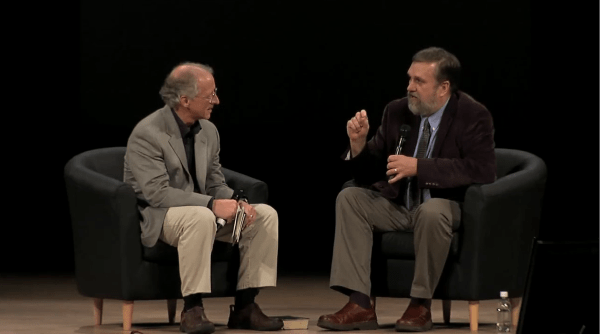
What is Hitchens thinking? Doug Wilson discusses ‘Collision’ with John Piper

‘Collision’ premiered Friday at the 2009 Desiring God National Conference. If you’re not familiar with it, “Collision” is a documentary on the series of debates between pastor/theologian Doug Wilson and atheist/author Christopher Hitchens on their book “Is Christianity Good for the World?”

After the movie was shown, Wilson sat down with pastor John Piper to answer a few questions about the film:

  • Christopher Hitchens said at the end of the movie that, given the chance, he wouldn’t convert the last theist. Why do you think he said that?
  • What is Hitchens’ best counterpoint to the claim that he is getting his morality for judging Christianity from Christians?
  • What is the relationship between doing apologetics and evangelizing?
  • In the video you speak about having “copiousness.” Describe what that is and whether you think it is important for pastors to cultivate.
  • What is your hope for this film?
  • What about the “s” word at the end of the film? Why do you allow for it here but don’t tolerate it from your children?
  • Why the recent upsurge in the New Atheism?
Click on the image to view the video

The 2009 Desiring God National Conference is going on this weekend in Minneapolis. The theme of this year’s conference is “With Calvin in the Theater of God.” You can follow along with the conference’s messages and find audio and video here.

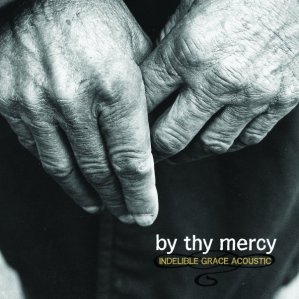
By Thy Mercy: Indelible Grace Acoustic is almost here

By Thy MercyOne of my favorite groups of artists, Indelible Grace, is just about to release its fifth album, called “By The Mercy: Indelible Grace Acoustic.”  To hear the title track, you can go here.

If you have spent any time here, you know that I deeply appreciate the work of these artists. The group’s stated purpose is “to help the church recover the tradition of putting old hymns to new music for each generation, and to enrich our worship with a huge view of God and His indelible grace.

Kevin Twit, who is the campus pastor at Belmont University and is the founder of Indelible Grace, writes on the group’s Facebook page some of the background of the group and more of its goals:

Indelible Grace Music grew out of ministering to college students, primarily through Reformed University Fellowship (RUF). We saw many touched by the gospel, and gripped by the rich theology and great poetry of the hymns of the Church. As these students began to taste more of the depth of the gospel and the richness of the hymn tradition, many began to join the music of their culture with the words of our forefathers (and mothers!), and a movement was born.
But actually, this is not really a “new” movement at all! Up until the beginning of the 20th century, it was common for people to compose new music for each generation for many of the hymns that they loved. There is no rule that says each hymn can only have one musical setting, and in fact, hymnals are designed for you to be able to mix and match words and music — that’s why they have a metrical index. But unfortunately, we lost this tradition and got stuck in a more modern traditionalism of associating one particular tune with one particular hymn. I am reminded of an incident a few years ago at the national meeting of our own denomination after a worship group had played a new version of Wesley’s “And Can It Be” (the one that is on our 1st CD by the way.) Many were upset by the new music and one gentleman stood and protested the new music saying that Wesley had written this hymn to majestic music and that he must be turning over in his grave. At this point, the organist for the convention rose and told the man (correctly) that the critic had probably never heard the music Wesley wrote the hymn to (if he even did write it to music when he composed it), and that the tune the man thought was the original was actually a bar tune!
Our goal is not change for change’s sake, but to rekindle a love of hymns and to invite many who would never associate rich passion with hymns to actually read the words. We believe that we are impoverished if we cut off our ties with the saints of the past, and that we fail to be faithful to God in our own moment of history if we don’t attempt to praise Him in forms that are authentic to who we are.Read More »

Don’t underestimate the depravity of man. Or the love of Jesus

Like Mark Driscoll, I also thought when reading this portion of scripture that it was a brief glimpse of kindness. Instead, it is just another way to show the magnitude of Jesus’ love for humanity.

HT: Zach Nielsen