Getting a grip on how much we’re not worth it: You’re looking the wrong way.

For one will scarcely die for a righteous person—though perhaps for a good person one would dare even to die— but God shows his love for us in that while we were still sinners, Christ died for us. – Romans 5:7-8

The other day I saw a portion of a new book by D.A. Carson called “Scandalous.” In it, he says “Those who draw really close to Jesus think of themselves, first and foremost, as those loved by him rather than those who profess their love for him.” He is talking about the instances in the New Testament where writers described themselves as being loved by Jesus. The point is is that the attention is focused not on them and their efforts but on Christ and what he has done. This is a good thing to think about because we — me, you, all of us — have a tendancy to inflate our self-worth when talking about our salvation.

But, if that’s the case, then how do we read and understand the verse above? When it says God loved us “while we were yet sinners” it doesn’t mean that we were especially valuable. Rather, it points to the depth of his grace and love. We have a tendancy to get it backwards because we are so intent on protecting our self esteem. In Fifty Ways Jesus Came To Die, John Piper addresses this kind of thinking:

I have heard it said, “God didn’t die for frogs. So he was responding to our value as humans.” This turns grace on its head. We are worse off than frogs. They have not sinned. They have not rebelled and treated God with the contempt of being inconsequential in their lives. God did not have to die for frogs. They aren’t bad enough. We are. Our debt is so great, only a divine sacrifice could pay it.

There is only one explanation for God’s sacrifice for us. It is not us. It is “the riches of his grace” (Ephesians 1:7). It is all free. It is not a response to our worth. It is the overflow of his infinite worth. In fact, that is what divine love is in the end: a passion to enthrall undeserving sinners, at great cost, with what will make us supremely happy forever, namely, his infinite beauty. 

Christ’s death on the cross is a magnificent event. We should all look at it and marvel. But if we come away thinking it’s a lesson about our worth, then we’ve tragically missed the point.
What does the resurrection of Jesus prove?

If Christ has not been raised, your faith is futile and you are still in your sins.  — I Corintians 15:17 
In Fifty Ways Jesus Came to Die,  John Piper says that Jesus’ resurrection didn’t merely follow His death, it was the seal of God’s approval:

 Now what is the relationship between this shedding of Jesus’ blood and the resurrection? The Bible says he was raised not just after the blood-shedding, but by it. This means that what the death of Christ accomplished was so full and so perfect that the resurrection was the reward and vindication of Christ’s achievement in death.

Jesus’ death so satisfied God’s wrath that his resurrection was not the final payment but the reward for and vindication of that death. We can rest assured knowing that the shedding of Jesus’ blood fully covers our sins and that now he lives forever on our behalf.


Why the obedience of Jesus matters for us

Although he was a son, he learned obedience through what he suffered. — Hebrews 5:8

Obedience gets a bad rap in some corners in this age. After all, if you are an assertive, goal-oriented person in the Western World, obedience is not one of the virtues that ranks high on your list. A quick search with Google of news stories about obedience brings up warnings to avoid “blind obedience” when it comes to the president or else a series of stories regarding pets.

Yet, when we look at Jesus and his death, we are told in verses like the one above that he learned obedience through his sufferings. Does that mean he had to learn to stop disobeying? No, because the Bible again and again teaches that he was sinless. In I Peter 2:22 it says Jesus “committed no sin, neither was deceit found in his mouth.” He wasn’t getting rid of some imperfections. Instead, Hebrews 2:10 gives some insight behind what his sufferings were accomplishing:

For it was fitting that he, for whom and by whom all things exist, in bringing many sons to glory, should make the founder of their salvation perfect through suffering.

Rather than making Jesus into a more perfect person, God was making Jesus into a more perfect sacrifice for us through the things he suffered. Even though Jesus was perfect and God, he still was human. And we can see that he experienced everything as we do when he lived on earth: hunger (Matthew 21:18) anger and grief (Mark 3:5) and pain (Matthew 17:12). The ESV Study Bible concurs on this view: In saying that Jesus was made perfect, the author is not suggesting that Jesus was sinful  but that as he lived his life, his maturity and experience deepened, yet always with full obedience to the Father. As a human being, he needed to live his life and obey God (which he did perfectly) to become the perfect sacrifice for sins.

In Fifty Reasons Jesus Came To Die, John Piper puts the perfect obedience of Jesus into perspective:

If the Son of God had gone from incarnation to the cross without a life of temptation and pain to test his righteousness and his love, he would not be a suitable Savior for fallen man. His suffering not only absorbed the wrath of God. It also fulfilled his true humanity and made him able to call us brothers and sisters (Hebrews 2:17). (Page 25)

So, we can rejoice in the obedience of Jesus to His Father. Through it, we were not only given a perfect sacrifice for our sins, but we were also given a special closeness to him that goes beyond advocate. He can understand and sympathize with our situation like no one else can.

The beautiful and perfect obedience of Christ

who saved us and called us to a holy calling, not because of our works but because of his own purpose and grace, which he gave us in Christ Jesus before the ages began. — 2 Timothy 1:9

A truly amazing part of the death of Jesus Christ was that it was done willingly, out of perfect obedience to His Father. Returning once again to Fifty Reasons Jesus Came To Die, we see John Piper put it this way (my emphasis):

Jesus did not wrestle his angry Father to the floor of heaven and take the whip out of his hand. He did not force him to be mer- ciful to humanity. His death was not the begrudging consent of God to be lenient to sinners. No, what Jesus did when he suffered and died was the Father’s idea. It was a breathtaking strategy, conceived even before creation, as God saw and planned the history of the world. That is why the Bible speaks of God’s “purpose and grace, which he gave us in Christ Jesus before the ages began” (2 Timothy 1:9).

The idea that God had planned for the death of Jesus to satisfy justice before any history took place is astounding and shows God’s great love. As we have talked about, it is a high standard that God sets, but it is an equally great love He shows in providing a way for us who fall way short of that standard. The fact that it says in Ephesians 5:2 that “Christ loved us and gave himself up for us, a fragrant offering and sacrifice to God” shows that not only was the death of Jesus a willing act of love, but that it pleased His Father at the same time.

We have been saved not by some begrudging arm twisting, but by a beautiful act of obedience. It is well worth our time to consider this and worship the one who has not only planned this by done it for us out of love.

For this reason the Father loves me, because I lay down my life that I may take it up again. No one takes it from me, but I lay it down of my own accord. I have authority to lay it down, and I have authority to take it up again. This charge I have received from my Father. — the words of Jesus in John 10:17-18

The demand for justice: He had to die. The bountiful love: He provided a substitute.

whom God put forward as a propitiation by his blood, to be received by faith. This was to show God’s righteousness, because in his divine forbearance he had passed over former sins. — Romans 3:25 (ESV)

Continuing from our post yesterday, we are looking further at the death of Jesus and why it matters so much to us today. There are two sides to the death of Jesus, namely: It is a just act and it is a loving act.

The reason it is a just act is because God is just and the punishment for sin demands a price. After all, in Deuteronomy 6:5 it says “You shall love the Lord your God with all your heart and with all your soul and with all your might.” That is a high standard that no one has achieved. It’s not that we don’t try to achieve that, it’s that we can’t fully. Sin itself is preferring something else to God, and we do it all the time in the choices we make. We show our love is greater for other things rather than for God. That is why the Bible also says in Romans 3:23: “All have sinned and fall short of the glory of God.”

So what is that price? The price is death and punishment. In Fifty Reasons Why Christ Suffered and Died, John Piper says “[S]in is not small, because it is not against a small Sovereign. The seriousness of an insult rises with the dignity of the one insulted. The Creator of the universe is infinitely worthy of respect and admiration and loyalty. Therefore, failure to love him is not trivial—it is treason. It defames God and destroys human happiness.”

If God were to brush sin aside or put it under the rug, it would make Him smaller and make him less worthy of worship. But God is at war with sin and has made clear through the Bible what that means. “For the wages of sin is death” it says in Romans 3:23 and “The soul that sins shall die” it says in Ezekiel 18:4. Clearly there is a consequence to sin, and justice is demanded from a holy God.

Read More »

The purpose in the passion of Jesus Christ: Why one man’s death matters

This month, like every other month, christianaudio.com is offering a free download of an audiobook. In fact, this month’s deal is even better than in past months because they are offering not one but two free downloads: Dietrich Bonhoeffer’s “The Cost of Discipleship” is free along with John Piper’s “Fifty Reasons Why Jesus Came To Die.”  If these books are not in your library, then this is a great time to add them. To get them for free, all you have to do is go to the page for each audiobook, add it to your cart and then when asked for add coupons or promotion codes enter MAR2010 for the Bonhoeffer audiobook and MAR2010B for the Piper audiobook. After that you will be given a page with the files to download.

Since we are in the lenten season and Easter is just over a month away, I thought it would be good to look through “Fifty Reasons” and see why it matters — not just for Christians, but for all of humanity — why Jesus came to die. It has been said that there is no one who has anyone against Jesus. After all, he is viewed by people of all stripes favorably depending on your world view and what you seek to advance. His death by crucifixion brings the most important question of that time or any time in history: Why did Jesus have to die?

Beyond the human cause, which some would point to, there is a deeper cause if you explore the Bible. John Piper explains in the introduction of  “Fifty Reasons”:

The Hebrew prophet Isaiah said, “It was the will of the LORD to crush him; he has put him to grief” (Isaiah 53:10). The Christian New Testament says, “[God] did not spare his own Son but gave him up for us all” (Romans 8:32). “God put [Christ] forward . . . by his blood, to be received by faith” (Romans 3:25).

But how does this divine act relate to the horribly sinful actions of the men who killed Jesus? The answer given in the Bible is expressed in an early prayer: “There were gathered together against your holy servant Jesus . . . both Herod and Pontius Pilate, along with the Gentiles and the peoples of Israel, to do whatever your hand and your plan had predestined to take place” (Acts 4:27-28). The depth and scope of this divine sovereignty takes our breath away. But it is also the key to our salvation. God planned it, and by the means of wicked men, great good has come to the world. To paraphrase a word of the Jewish Torah: They meant it for evil, but God meant it for good (Genesis 50:20).

And since God meant it for good, we must move beyond the question of human cause to divine purpose. The central issue of Jesus’ death is not the cause, but the purpose—the meaning. Man may have his reasons for wanting Jesus out of the way. But only God can design it for the good of the world. In fact, God’s pur- poses for the world in the death of Jesus are unfathomable. I am scraping the surface in this little book as I introduce you to fifty of them. My aim is to let the Bible speak. This is where we hear the word of God. I hope that these pointers will set you on an endless quest to know more and more of God’s great design in the death of his Son.

There is so much to learn from the death and resurrection of Jesus Christ. It is my hope that we will spend less time thinking about meals, clothes, candy and gatherings at Easter and more about what the Jesus Christ accomplished not only in history but for our lives. In the coming days I will be going through the chapters of this little book. If you are not a big reader (and it is not a big book at all to read), you can go download the audiobook for free so you can follow along. If you do like to read, Desiring God offers the book for free online as a PDF download. Either way, take some time to think about the death of the most important man in history and what purpose it served.

A Sweet and Bitter Providence: Piper examines sex, race and God’s sovereignty in his new book

John Piper’s latest book, A Sweet and Bitter Providence: Sex, Race and the Sovereignty of God is now available. In it, he examines the book of Ruth and how it’s themes are relevant in the 21st century. From the publisher:

The sovereignty of God, the sexual nature of humanity, and the gospel of God’s mercy for the undeserving-these massive realities never change. And since God is still sovereign, and we are male or female, and Jesus is alive and powerful, A Sweet and Bitter Providence bears a message for readers from all walks of life. But be warned, Piper tells his audience: This ancient love affair between Boaz and Ruth could be dangerous, inspiring all of us to great risks in the cause of love.

Chronicles of Narnia update: Dawn Treader movie heading into troubled waters

It appears that the long-delayed movie version of The Voyage of the Dawn Treader, the third installment of The Chronicles of Narnia series, has finally wrapped in Australia. And the word is that Michael Apted, who some had feared as a poor choice to direct the feature, has done nothing to prove his critics wrong. Julia Duin, writing recently in the Washington Times, says Apted seems intent on backing off the Christian theme in the book:

“Voyage” director Michael Apted, who has admitted to excising a lot of the religious connotations out of his 2007 film “Amazing Grace,” sounds double-minded.

The Narnia films, he told Rhema FM, a New Zealand Christian radio station, “present a challenge, for me to put the material out there in an evenhanded and interesting way; and not to be, in a sense, narrow-minded about it, either narrow-minded in a faith way or narrow-minded in an agnostic way. I have to open my heart to what the stories are about.”

“Narrow-minded in a faith way”? That’s going to rev up Christians to see this movie.

This truly is disappointing since many fans of C.S. Lewis’ work had been eagerly waiting to see how these literary treasures would be made into movies. When Disney bailed on the series in Decenber 2008 after The Lion, The Witch and The Wardrobe and Prince Caspian (which already started to drift from the series’ Christian theme), there was much doubt as to whether the series would continue. Fox picked up the series and Dawn Treader, which was scheduled for a May 2009 release, was pushed back to May 2010. Now, Druin reports, the movie will be released in December. As I’ve mentioned before, it’s not that you couldn’t enjoy the movie, it’s just that knowing what the books are like and then seeing the story altered in ways that I’m sure Lewis would be displeased with would be a huge letdown.

As before, my advice would be to find the books. Read them, both for your own sake and your children’s. See exactly what Apted thinks is so “narrow-minded.”

HT: Trevin Wax

Jesus can change your way of thinking

It is now 2010, and many of us have been thinking of ways to discipline our lives. We may not all say it that way, but that’s what we intend. Some call them resolutions (I do) and we hope to improve our lives in some way by doing things either a new way or doing the things we already do in a better way. We need to change our way of thinking.

John Knight, in a post at The Works of God, points to an article in the New York Times that talks about how our brain functions and how, for example, in people who are blind it reorganizes the impulses that usually function for sight to do other tasks. It’s an amazing thing and, for me and many others, points to how God has made our brains in his infinite wisdom. Knight says that this also makes the miracle Jesus performed for the blind man in John 9 even more spectacular because the man’s sight was restored instantly and he saw clearly. By science, this man’s brain would have not been able to adjust this quickly because his it would not have been functioning in this capacity for a long time.

As I read John’s post I thought about my hopes for this year and the goals (resolutions) I have made for myself. I am left feeling hopeful because I can see that God can work in ways that are not my natural inclination, my current way of thinking (although my faith in God is present) to do the thing desired. So, I will press on in hope that God will do the daily miracle in my life. And I hope you, dear reader, press on in God as well that he will change our way of thinking.

Pastor Matt Chandler rejoices in God’s goodness in suffering is his own life

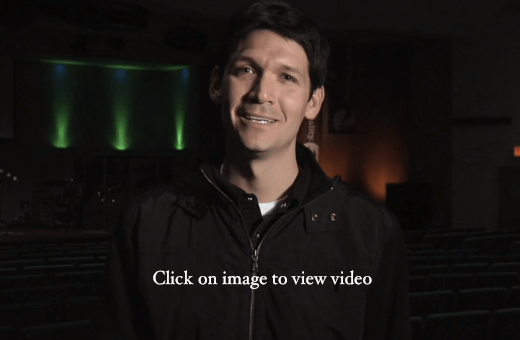
If you have never heard of Matt Chandler, he is a man who loves God deeply and has served well as the lead pastor at The Village Church in Highland Park, Texas. On Thanksgiving morning, he suffered a seizure in his home and it was discovered that he had a tumor growing in his brain. This past Friday he underwent surgery as neurosurgeons removed it. This is a message he taped for his congregation before his surgery. Please keep Matt and his wife and three children in your prayers. He loves God deeply and his life points to God’s greatness. Here is his message to his church and for all of us.

This is the update posted Sunday by the elders at The Village: Matt was moved out of ICU on Sunday and continues to get plenty of rest as part of his recovery, per doctor’s orders. Please continue to pray for patience during this recovery time and to honor family-only visitation until further notice.
Pathology results of the tumor are due sometime mid-week, and we will keep you notified whenever possible.