The greatest event in history: Look and marvel at Jesus and his death

From John Piper, talking about the two paradoxes in the death of Christ:

The death of Christ was the curse of God and the wrath of God; and yet, at the same time, it was pleasing to God and a sweet fragrance. While turning from his Son and giving him up to die laden with our sin, he delighted in the obedience and love and perfection of the Son.

Therefore, let us stand in awe and look with trembling joy on the death of Jesus Christ, the Son of God. There is no greater event in history. There is no greater thing for our minds to ponder or our hearts to admire. Stay close to this. Everything important and good gathers here. It is a wise and weighty and happy place to be.

He died for me because I was his enemy

And when he drew near and saw the city, he wept over it, saying, “Would that you, even you, had known on this day the things that make for peace! But now they are hidden from your eyes. — Luke 19:41-42

Scotty Smith writes great prayers at Heavenward because they go deep. This week I particularly felt touched by this one, based on the verses above:

Dear Lord Jesus, everything about Holy Week reveals the depth of your compassion for sinful, broken people, just like me. The tears you wept coming into Jerusalem, even the anger you showed in driving the money-changers out of the temple… every encounter, parable and action gives staggering clarity to Paul’s words…

“You see, at just the right time, when we were still powerless, Christ died for the ungodly. Very rarely will anyone die for a righteous man, though for a good man someone might possibly dare to die. But God demonstrates his own love for us in this: While we were still sinners, Christ died for us” (Romans 5:6-8).

Paul was writing about me, Jesus. I’m the powerless, ungodly sinner for whom you died, demonstrating God’s incomparable and irrepressible love for me. I was God’s enemy when you reconciled me to him through your death on the cross (Rom. 5:9). May I never believe otherwise.

I would still be blind to what, alone, brings me peace if you hadn’t opened my eyes to see my need of you and your death for me. The gospel would still remain hidden from my eyes unless you had given me sight to behold you as the Lamb of God that takes away my sin. I can’t and I won’t sneer at a single Pharisee, Sadducee, priest or teacher of the law… or anyone else, who tried to trick or trap you during Holy Week. I am just as worthy of judgment as they.

Rick Warren and John Piper: What’s going on with the 2010 Desiring God National Conference?

Rick Warren, author of The Purpose Driven Life and pastor at Saddleback Church, is not a guy who resonates in Reformed circles. So, the word that’s been leaking out the last week or so that John Piper had invited him to be the keynote speaker at this year’s Desiring God National Conference has caused quite a buzz. Ben Terry has the audio (also below) of Piper talking to a group at Mt. Sinai Missionary Baptist Church about what he likes (and what puzzles and confounds him) about Warren.

More will probably come from this as Piper will host a Q&A live tonight at the Desiring God site.

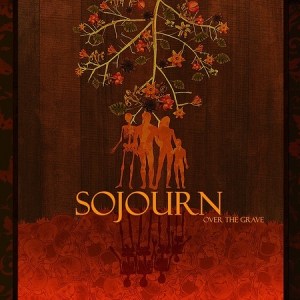
Sojourn: ‘Over The Grave’ sees the glorious God behind the music

Over The GraveSojourn Church, based in Louisville, Ky., is another one of those groups (like Indelible Grace and Red Mountain Music) who take old hymns and refresh them. A few years ago they did the wonderful Advent Songs album, which was a great way to prepare for the Christmas season and the birth of Christ. They have produced another effort that sounds worth at least a listen called Over the Grave. According to the Sojourn Church site, the new CD is the “first installment of the Isaac Watts Project: songs inspired by and adapted from his hymns. The record was written and performed entirely by musicians from Sojourn Community Church — 35 in all. It is our hope that this project, like Watts’s hymns, will point us beyond the music and lyrics to see the glorious Savior who inspires them.”

Justin Taylor, at his blog, has posted one of the songs, Only Your Blood Is Enough, along with the lyrics. Give it a listen and see for yourself the fine work this group of musicians is doing.

Mark Driscoll tells the Washington Post about heaven

Mark Driscoll, pastor at Mars Hills Church, has written a guest editorial in today’s Washington Post about heaven:

Everyone believes in a heaven.

The next time you are standing in line at a store, take a moment to look at the covers of the magazines on the rack. Each cover presents a picture of some sort of heavenly life. There is vacation heaven, fishing heaven, hunting heaven, pet heaven, entertainment heaven, sex heaven, bridal heaven, nicely organized home heaven, baby heaven, and so on. The articles in the magazines speak of life in hellish terms but offer functional saviors to take us from our hellish life to our heavenly one if we just obey the steps and buy the products.

The question persists, however, why? Why do we live for the endless pursuit of heavenly perfection on earth, and spend our hard-earned money relentlessly pursuing that perfect place, perfect thing, perfect person, or that perfect day? Perhaps all of our toys, hobbies, home improvement projects, festivals, parties, toys, joys, and vacations are simply our way of looking for paradise and practicing for heaven.

But practice does not make perfect because we are not able to reach that ideal, no matter how hard we try.

According to the Bible, God kicked us out of paradise because of our rebellion, much like we would do to a roommate who declared war on us in our own home. Subsequently, ever since then we have all been booking airline flights, gassing up our cars, hiking in the woods, buying junk, logging on, and walking on the beach searching for paradise. Deep down we all feel homeless and restless.

Our pernicious problem is that paradise is lost. No matter how close we get to that perfect day in that perfect place, we are continually disappointed because sin is there too and things are not as perfect as we had hoped. Subsequently, we get sunburned, food poisoning, seasick, or bumped off our flight home from the search for paradise and are left to wander through the airport, which is perhaps the best illustration of hell that earth has to offer.

As we progress toward Easter, we should think about what heaven is and how we may be trying to recreate it here on earth. Whatever we think is good about this life, heaven is much better. Of course we are eager to leave behind the pains and disappointments of this world, but we need to look into our hearts and ask if we are treasuring the things we love more than heaven.

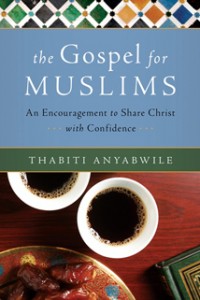
The Gospel for Muslims

The Gospel for Muslims

Thabiti Anyabwile, who grew up in a nominal Christian family in North Carolina, converted to Islam while in college. While there, he became — in his own words — “something of the campus Saul, opposing the gospel and anything having to do with the biblical Jesus.” But, God didn’t allow him to stay there and he returned to Christianity. Today, he serves as pastor of First Baptist Church of Grand Cayman in the Grand Cayman Islands.

He has written a new book called “The Gospel for Muslims: An Encouragement To Share Christ With Confidence” in which he shares ways to stir confidence in the gospel, equipping the reader with the basics necessary to communicate clearly, boldly, and winsomely. It is not an exhaustive apologetic to compare Christianity with Islam, but is meant for the average reader as a helpful guide.

Recently, Anyabwile did an interview with Trevin Wax at Kingdom People. Wax asked Anyabwile why it is that Christians feel nervous about sharing their faith with Muslims and why they should be instead be confident. This is what Anyabwile said:

Many Christians seem to accept two myths when it comes to sharing the gospel with Muslims. First, many Christians tend to think every Muslim has memorized the Qur’an and is likely a radical. That’s the “super Muslim” myth.

Second, many Christians think they need to be world class apologists, able to answer ever Muslim question or critique of Christianity. That’s the “I’m so inadequate” myth.

The result of these two assumptions is that many Christians harbor a lot of fear when it comes to speaking with Muslims. And that fear causes a crisis in confidence—they doubt that the gospel is the power of God unto salvation for everyone who believes. They shrink back, telling themselves that they don’t know enough, that their Muslim neighbor is more confident, and that it’s probably no use.

The truth, however, is exactly the opposite. If we are Gospel-believing Christians, with even a basic understanding of the “good news,” then we know all that we need to know in order to effectively reach our Muslim neighbors and friends. The power of God is not in our wisdom or in our techniques; those things threaten to empty the cross of its power (1 Cor. 1:17).

But the gospel itself, that is the power of God unto salvation for everyone who believes. In the message of Jesus’ perfect righteousness, sacrificial death for our sins, glorious resurrection, and second coming in glory, God has placed His power to make sinners new, to raise spiritually dead men to life, to change the hardest human heart into a heart that loves God, to justify us and satisfies His righteous wrath. What we need is confidence in the gospel, for God makes the gospel to triumph in every nation.

It is a very good interview. Go here to read the rest as you can see answers about how he came to faith, how the Trinity is important in Christian evangelism of Muslims and how hospitality is important. You can find his book here.

Here is how you can use the free ESV on your iPhone or iPod Touch

Crossway Books recently released the free ESV app for iPhone (and iPod Touch), but here is an actual video review showing you how it looks in action. It looks great!

Here is the Crossway page detailing some of the things you can do with this.

What is the good news of the gospel?

Greg Gilbert has written a new book, “What Is The Gospel?” in which he tries to clear up some misconceptions about what the gospel is and present it clearly. As Kevin DeYoung says, “Greg Gilbert, with a sharp mind and a pastor’s heart, has written a book that will be helpful for seekers, new Christians, and anyone who wants to understand the gospel with greater clarity. … As a sure-footed guide to a surprisingly controversial subject, it clears up misconceptions about the gospel, the kingdom, and the meaning of the cross.”

Gilbert explains why he wrote the book in this interview:

Here is a portion of sample chapter that you can read for free online:

Since the very beginning of time, people have been trying to save themselves in ways that make sense to them, rather than listening and submitting to God. They have been trying to figure out how to get salvation to work—how to get the gospel to work—apart from the Wicket Gate, that is, apart from the cross of Jesus Christ.

That is no less true in our own day. Indeed I believe one of the greatest dangers the body of Christ faces today is the temptation to rethink and rearticulate the gospel in a way that makes its center something other than the death of Jesus on the cross in the place of sinners.

The pressure to do that is enormous, and it seems to come from several directions. One of the main sources of pressure is the increasingly common idea that the gospel of forgiveness of sin through Christ’s death is somehow not “big” enough—that it doesn’t address problems like war, oppression, poverty, and injustice, and really “isn’t terribly important,” as one writer put it, when it comes to the real problems of this world.

Especially now, when we are in the Easter season, this is a good book to consider. But since it is small (124 pages) it would be a great book to read at any time and to give to others as well for good, sound advice.

The favor you didn’t ask for but God gave you anyway

I was reading the blog of a friend who is living overseas and this story really struck me as some kind of providence that God had provided (although I don’t exactly know why, but that’s what it seemed like). Perhaps I could be accused of overspiritualizing everything, but I know that there are no such things as coincidences. It would be better that we teach ourselves not to shrug off every occurrence in our days and think about how God has his hand on every moment of our lives. How would your life change? How about your attitude?

Today, as I think about it, I would pray that my eyes be opened to see that God is working in the details of my life. When the Bible says in 2 Chronicles 16:9 that the Lord “run(s) to and fro throughout the whole earth, to give strong support to those whose heart is blameless toward him” that encourages me. It is good to know that God is working in ways that I haven’t even thought of yet. So, it’s a good thing every once in awhile to stop and look around you. There are amazing things happening.

What makes parenting hard: There are no easy times, but there is hope

The biggest problem we face in this world, John Piper preached this past Sunday, is not politics or culture or choices we make but the power of sin. Because sin entered the world, childbearing and childrearing, for one example, became hard. There are no easy times for parents, Piper said, although some times may be harder than others. “If you think (parenting) is easy, you’re dreaming,” he said. “Or wait a few days.”

His sermon, “Parenting with Hope in the Worst of Times,” looked at the situation the prophet Micah was in around 700 years before Jesus was born. What we see in Micah 7 is parenting in the worst of times, where the situation in his culture and at home is bleak. There is no one he can trust, whether it’s in his community or even his own home. In verse 5: “Put no trust in a neighbor; have no confidence in a friend; guard the doors of your mouth from her who lies in your arms.” And it goes further in verse 6: “For the son treats the father with contempt, the daughter rises up against her mother, the daughter-in-law against her mother-in-law; a man’s enemies are the men of his own house.”

Is this uncommon? No. Many have families that are torn with strife, broken in some way either by corruption or some other problem. Or even something else. Jesus in Matthew 10:34 quotes this very passage where he talks about the way he divides one family member from another because of his calling. He does it. Not because he loves to break up families, but because there is something so radical about what Jesus demands that it causes disruptions in families. You know what this looks like. The family that doesn’t get that call accuses the one called of being “arrogant” or “too good” for them. Jesus wants them all, but the split can happen over Jesus. The point is is that the tear is not always over some evil.

What is the response? What can we learn from what Micah says? Here are his words from Micah 7:7-10:

7 But as for me, I will look to the LORD; I will wait for the God of my salvation; my God will hear me. 8 Rejoice not over me, O my enemy; when I fall, I shall rise; when I sit in darkness, the LORD will be a light to me. 9 I will bear the indignation of the LORD because I have sinned against him, until he pleads my cause and executes judgment for me. He will bring me out to the light; I shall look upon his vindication. 10 Then my enemy will see, and shame will cover her who said to me, “Where is the LORD your God?” My eyes will look upon her; now she will be trampled down like the mire of the streets.Read More »