And I am sure of this, that he who began a good work in you will bring it to completion at the day of Jesus Christ. — Philippians 1:6
As a followup on the post on comparing, we also need to know that we kind find hope in not looking around, but looking to Christ. Discouragement is always waiting to devour us if we continually look at others or ourselves and see where we always fall short. But in looking at Christ and what he has done and is doing for us daily before God, we have hope and a way to battle discouragement.
God’s grace is there daily for us to see, even in small measure. If we truly believe that “all things work together for the good of those who love God and are called according to his purpose,” then we can have a strong hope to withstand the attacks of discouragement.
We are not perfect. There are flaws in our lives and the believers we see each day and week. But while we are justified, we are also not what we will be. Know that one day Christ will return and complete that good work he has started. And rest in that hope and press on.
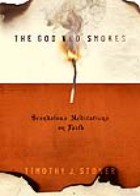
The God Who Smokes: Scandalous Meditations on Faith
I am continually grateful for The Discerning Reader, which “is a site dedicated to promoting good books — books that bring honor to God” and “to help Christians avoid being unduly influenced by books and teachers that are not honoring to God.” Thanks to Tim Challies for the site and all who review books there.
A book that I have been interested in since I first heard the title was Timothy Stoner’s “The God Who Smokes: Scandalous Meditations on Faith.” Reviewed recently by Trevin Wax, who blogs at Kingdom People, Discerning Reader gives “The God Who Smokes” its recommendation. From the review:
Timothy J. Stoner acknowledges the validity of many of the concerns raised by those in the Emerging Church. But unlike some in the Emerging movement, Stoner is able to address these concerns without abandoning historic Christian convictions.
His book, The God Who Smokes: Scandalous Meditations on Faith, is thoroughly enjoyable on a number of levels. First, it is very well-written. Secondly, it uses humor as a way to communicate serious truths. And best of all, Stoner uses personal stories to help him make his case.
Wax continues in his review, stressing that it is not an attack on the emerging movement but rather a clarification:
Stoner’s negative view of Emergent does not lead him to bash those who advocate Emerging theology. In fact, he appreciates many aspects of the Emerging conversation.
But Stoner believes the Emerging movement ultimately delivers reductionistic picture of God. He worries that the Emerging Church downplays the wrath of God and leads to a lopsided vision of God that ignores essential aspects of his character.
“We are not only invited guests but the blushing Bride. And our Groom is a heroic King, a mighty warrior who is good and just and stunning in his beauty. He is so full of passion and blazing emotion that he burns – and yes, smokes in the ferocity of his infinite, holy love that compelled him to give it all away for his Bride. And he who gave it all for us is worth giving ourselves completely to.”
So we worship a God who smokes – a God whose passionate jealousy for the glory of his own name is an integral aspect of his glorious love for creation.
This sounds like it will be a good book perhaps more along the lines of Mark Driscoll than, say, Donald Miller or Rob Bell.
It’s easy to look around and feel discouraged — or proud — when you compare your life to others. We all do it. Even if you say you’re not discouraged or proud, maybe instead it’s a feeling of satisfaction or dissatisfaction. Whatever it is, it’s dangerous.
While it’s one thing to have spiritual heroes (see Hebrews 11), it is also good to remember that we ultimately have one standard. As we enter a new year, many of us have set goals based on how we see our lives as falling short in the past. Some of those may have to do with being more healthy, being better stewards of our finances or times, or living a certain way. Regardless, we have to remind ourselves that there is only one life worth imitating, that of Jesus Christ.
One of my heroes in the faith is John Piper. In this post, he talks about the struggles with trying to measure up to others. In it, he talks about Jesus’ blunt words to Peter from John 21:18-22:
“Truly, truly, I say to you, when you were young, you used to dress yourself and walk wherever you wanted, but when you are old, you will stretch out your hands, and another will dress you and carry you where you do not want to go.” (This he said to show by what kind of death he was to glorify God.) And after saying this he said to him, “Follow me.” Peter turned and saw the disciple whom Jesus loved following them, the one who had been reclining at table close to him and had said, “Lord, who is it that is going to betray you?” When Peter saw him, he said to Jesus, “Lord, what about this man?” Jesus said to him, “If it is my will that he remain until I come, what is that to you? You follow me!”
Piper calls those harsh words sweet words for him and for all of us:
…I was refreshed by Jesus’ blunt word to me (and you): “What is that to you? You follow me!” Peter had just heard a very hard word. You will die—painfully. His first thought was comparison. What about John? If I have to suffer, will he have to suffer? If my ministry ends like that, will his end like that? If I don’t get to live a long life of fruitful ministry, will he get to?
That’s the way we sinners are wired. Compare. Compare. Compare. We crave to know how we stack up in comparison to others. There is some kind of high if we can just find someone less effective than we are. Ouch. To this day, I recall the little note posted by my Resident Assistant in Elliot Hall my senior year at Wheaton: “To love is to stop comparing.” What is that to you, Piper? Follow me.
So, let’s all stop comparing and do the work that God has called us to do. Love God. Trust God. Follow God.
Colin Adams, at Unashamed Workman, gives a great list of things you can pray for your pastor’s preaching this year:
For _________ to love God’s Word and have a desire to meditate on it continually (Psalm 119: 97)
For _________ to preach nothing but Christ and Him crucified (1 Cor 2:2)
For _________to proclaim God’s Word with a demonstration of the Spirit’s power (1 Cor 2:4-5)
For _________ to comprehend the realities of God’s presence; the appearing and judgement of Christ Jesus, and in that light ‘preach the Word.’ (2 Tim 4:1-1)
For _________ to patiently and carefully correct, rebuke and encourage via the instrument of the Word of God, whatever the hostile climate to sound doctrine (2 Tim 4:2-3)
For _________ to boldly proclaim the gospel (Eph 6:19-20)
For _________ to be filled with the Holy Spirit (Eph 5:18)
For _________ to be clear in his proclamation (Col. 4:3-4).
For _________ to prepare God’s people for works of service through the teaching of the Scriptures (Eph 4:11ff)
For_________ to see some fruit for their preaching and teaching: some becoming wise unto salvation by the Scriptures (2 Tim 3:15), others being sanctified by the truth (John 17:17)
It appears that the Associated Press has learned that there are Christians like Saddleback pastor Rick Warren who invoke the name of Jesus (!) when they pray and that it may offend some — notably people like journalists who hold to a faith that relies on human understanding alone. Warren, for his part, played it coy:
Warren did not answer directly when asked whether he would dedicate his prayer to Jesus. In a statement Tuesday to The Associated Press, Warren would say only that, “I’m a Christian pastor so I will pray the only kind of prayer I know how to pray.”
“Dedicate” his prayer to Jesus? What kind of people are these Christians? The Associated Press investigates further and finds this, courtesy of the Rev. Kirbyjon Caldwell, who invoked the name of Jesus at George W. Bush’s 2001 inauguration:
Evangelicals generally expect their clergymen to use Jesus’ name whenever and wherever they lead prayer. Many conservative Christians say cultural sensitivity goes way too far if it requires religious leaders to hide their beliefs.
“If Rick Warren does not pray in Jesus’ name, some folks are going to be very disappointed,” Caldwell said in a recent phone interview. “Since he’s evangelical, his own tribe, if you will, will have some angst if he does not do that.”
This Jesus thing is tricky. Everybody knows that the only people allowed to invoke his name are liberal politicians bent on shaming conservatives into paying way more taxes. When it comes from an acknowledged evangelical minister it can only mean proselytizing. Fortunately, the Associated Press is on the case. Stay tuned.
I have heard this message in the past, but this seemed appropriate because, as this year closes, there are many who are burdened by what seems like a host of problems in this world. This message is from the crew of Apollo 8 on Christmas Eve 1968. This is late, I know, but it is something to think about: How must those three men — William Anders, Jim Lovell and Frank Borman — have felt when they looked upon the Earth in a way that none of us had?
Nineteen sixty-eight was one of the most tumultuous years in American, even in world, history. By Christmas Eve, Rev. Martin Luther King Jr. and Bobby Kennedy lay dead from assassins’ bullets; King’s murder had provoked bitter riots. The Democratic Convention in Chicago was marred by protests in the streets. Over 14,000 Americans died in Vietnam that year, as the Tet Offensive turned the country increasingly against the war. A demonstration in Mexico City ended with hundreds of deaths just before the Olympics there opened. Students rioted in Paris, at Columbia University, and elsewhere. The “Prague Spring” of liberalization was crushed by Soviet tanks.
In this distinctly un-cheery season, a voice of hope spoke from, quite literally, the far side of the Moon. Apollo 8, only the second manned Apollo craft to go into space after the tragedy of the Apollo 1 fire in 1967, had launched from Florida on December 21, 1968. Its crew of William Anders, Jim Lovell, and Frank Borman became the first humans ever to enter the orbit of another heavenly body and the first to see the “dark side” of the Moon. They saw, for the first time, Earthrise as they completed Moon orbits and emerged above the near side pointed towards Earth.
In this historical, breathtaking scene, the three astronauts chose the words from Genesis to give their listeners perspective about Who controls a world seemingly spinning out of control:
In the beginning God created the heaven and the earth.
And the earth was without form, and void; and darkness was upon the face of the deep. And the Spirit of God moved upon the face of the waters.
And God said, Let there be light: and there was light.
And God saw the light, that it was good: and God divided the light from the darkness.
And God called the light Day, and the darkness he called Night. And the evening and the morning were the first day.
And God said, Let there be a firmament in the midst of the waters, and let it divide the waters from the waters.
And God made the firmament, and divided the waters which were under the firmament from the waters which were above the firmament: and it was so.
And God called the firmament Heaven. And the evening and the morning were the second day.
And God said, Let the waters under the heaven be gathered together unto one place, and let the dry land appear: and it was so.
And God called the dry land Earth; and the gathering together of the waters called he Seas: and God saw that it was good.
Let us never forget and let us cling with hope to a God who keeps it all in place and running.
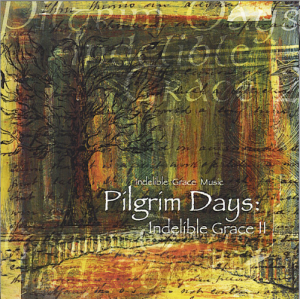
“What Wondrous Love is This” is a song that resonates this time of year when we think of the birth of our Savior, Jesus Christ.
This version, as recorded by Matthew Smith of Indelible Grace, is my favorite. I especially appreciate the bridge he wrote which talks about God’s love that overcomes our stubborn hearts and draws us to Him. Overall, a beautiful song and lyrics that point to verses like Romans 5:8 that deserve meditation on our part.
Here are the lyrics:
What wondrous love is this,
O my soul, O my soul!
What wondrous love is this, O my soul!
What wondrous love is this
that caused the Lord of bliss
To bear the dreadful curse
for my soul, for my soul,
To bear the dreadful curse for my soul.
When I was sinking down,
sinking down, sinking down,
When I was sinking down, sinking down,
When I was sinking down
beneath God’s righteous frown,
Christ laid aside His crown
for my soul, for my soul,
Christ laid aside His crown for my soul.
To God and to the Lamb,
I will sing, I will sing;
To God and to the Lamb, I will sing.
To God and to the Lamb
Who is the great “I Am”;
While millions join the theme,
I will sing, I will sing;
While millions join the theme, I will sing.
And what wondrous love is this,
Thou I raised my clenched fist
he opened up my hand
to receive His gift
And what wondrous love is here,
The God immortal has drawn near
and shed His blood
to close the rift.
And when from death I’m free,
I’ll sing on, I’ll sing on;
And when from death I’m free, I’ll sing on.
And when from death I’m free,
I’ll sing and joyful be;
And through eternity,
I’ll sing on, I’ll sing on;
And through eternity, I’ll sing on
As every kid will tell you, Santa “knows when you are sleeping, he knows when you’re awake, he knows when you’ve been bad or good so be good for goodness sake.” Good for goodness sake? Really? So Santa is up there tallying up our good and bad deeds so we should keep track of the good ones and hope they outweigh the bad ones? There’s no gospel there.
What does Jesus say? He says:
“I lay down my life for the sheep” (John 10:15).
“Whoever comes to me I will never cast out” (John 6:37).
Jesus is the reason for the season because the truth is that none of us has been a good little boy or girl this year, and we need a savior not something in our stockings.
This is the day the Lord has made; let us rejoice and be glad in it. — Psalm 118:24
Do you know people like this? Is this you?
I love that verse. There is a lot of suffering and doubt in Psalms, but there is a lot of hope, too. People who know me here that verse a lot from me. For one thing, I love it because it tells me that a) God made this day and everything I’ll experience in it and b) he wants me to be happy about it and trust Him. Also, I take it as a command: Be happy.
Now, there are some of you, like the Grinch over there, who say: “Why should I rejoice? What do my feelings have to do with anything?” Or maybe you think that your emotions are something that comes and goes, but it’s your duty and sense of responsibility that really matter. Oh really? Does the Bible back you up? Does God really command how we should feel?
John Piper addresses just such a thing in a sermon on Romans 12:9-13:
(There) is a deeply defective way of seeing God and of understanding your own emotions. The truth is that God does have a right to command that we feel anything we ought to feel. If we ought to feel joy in the Lord, he commands, “Rejoice in the Lord” (Philippians 4:4). If we ought to feel the sorrow of sympathy, he commands, “Weep with those who weep” (Romans 12:15). If we ought to feel gratitude for a great gift, he commands, “Be thankful” (Colossians 3:15). If we should feel remorse for our sin, he commands, “Be miserable and mourn and weep” (James 4:9). If we should feel fear of sin, he commands, “Fear the one who after he has killed has the power to cast into hell” (Luke 12:5). And so on.
The fact that our hearts are so distorted by sin that we don’t feel what we ought to feel does not mean that God cannot command what is right and good and fitting for us to feel. We are responsible to feel what God commands us to feel. So I plead with you, be more serious when you read these commands than you might be if you thought God has no right to tell you what you should feel toward others, and that you have no accountability for your emotions.
So, back to the beginning: How do we do something we don’t feel? Again, Piper helps us here by giving us 15 things we can do to “Fight for joy” and not be a Grinch:
1. Realize that authentic joy in God is a gift.
2. Realize that joy must be fought for relentlessly.
3. Resolve to attack all known sin in your life.
4. Learn the secret of gutsy guilt – how to fight like a justified sinner.
5. Realize that the battle is primarily a fight to see God for who he is.
6. Meditate on the Word of God day and night.
7. Pray earnestly and continually for open heart-eyes and an inclination for God.
8. Learn to preach to yourself rather than listen to yourself.
9. Spend time with God-saturated people who help you see God and fight the fight.
10. Be patient in the night of God’s seeming absence.
11. Get the rest and exercise proper diet that your body was designed by God to have.
12. Make a proper use of God’s revelation in nature.
13. Read great books about God and biographies of great saints.
14. Do the hard and loving thing for the sake of others (witness and mercy).
15. Get a global vision for the cause of Christ and pour yourself out for the unreached.
It is not good that there are unhappy people anywhere. For some, it may be a medical issue that they have no control over and for them we must extend grace and help them. But there is hope. God does not command what he won’t help us to do. Seek God. Go with God.
There is a divide in this country, and you can almost discern it based on the question, “How do we help the
How do we help the poor?
poor?” Politically, there is a divide for sure, but even within the church there is divergence on this question. To be sure, the Bible instructs us that we are to care for the poor, but even that point is debated as one group emphasizes responsibility and another justice.
In his essay, Keller explores from the position that the church is commanded to help the poor, yet this is not the primacy of the gospel:
So what does it mean to be committed to the primacy of the gospel? It means first that the gospel must be proclaimed. Many today denigrate the importance of this. Instead, they say, the only true apologetic is a loving community; people cannot be reasoned into the kingdom, they can only be loved. “Preach the gospel. Use words if necessary.” But while Christian community is indeed a crucial and powerful witness to the truth of the gospel, it cannot replace preaching and proclamation. Nevertheless, the primacy of the gospel also means that it is the basis and mainspring for Christian practice, individually and corporately, inside the church and outside. Gospel ministry is not only proclaiming it to people so that they will embrace and believe it; it is also teaching and shepherding believers with it so that it shapes the entirety of their lives, so that they can “live it out.” And one of the most prominent areas that the gospel effects is our relationship to the poor.
It is a lengthy read, but well worth your time. For conservatives, it is a good reminder that merely proclamation of the gospel while failing to help the poor and needy shows a lack of understanding of the gospel. For liberals, it is a good reminder that giving aid is not an end in itself.





 Rockstanding
You must be logged in to post a comment.