
Pride goes before destruction, and a haughty spirit before a fall. — Proverbs 16:18
so that, as it is written, “Let the one who boasts, boast in the Lord.” — I Cor. 1:31
HT: Andy Naselli
Pride goes before destruction, and a haughty spirit before a fall. — Proverbs 16:18
so that, as it is written, “Let the one who boasts, boast in the Lord.” — I Cor. 1:31
HT: Andy Naselli
Kevin DeYoung gives some encouragement via his latest sermon, from Romans 16:
We probably don’t think of Paul has a great encourager, more of a champion of the gospel or defender of the faith, but the only reason we don’t see him encouraging others is because it happens so frequently. Could you find ways to build up those you love in front of others? We tend to put people in their place more easily. We mention the two things that bother us instead of the ten things we appreciate. Or we give a compliment so that we can tear them down (“He’s a good friend. Nice guy. But…” or “Bless her heart…”). Again, God isn’t asking us to be fake. He isn’t telling us to be mindlessly positive about everyone and everything. But frankly that’s not the problem for most of us. We could use the practice–in emails, letters, in everyday conversation –of building people up with encouraging words. How do you publicly talk about your spouse? Your church? Your pastor? The people in your church? Your parents? Your kids? Your co-workers? Are their legitimate opportunities to sincerely encourage them directly or affirm them before others?
Albert Mohler gives sound counsel regarding the recent case in the news about the parents who refused allowing their son to get chemotherapy to treat his cancer due to religious reasons:
As a Christian theologian, my concern is also directed to those who oppose medical treatment on what are claimed as biblical grounds. The Bible never commands any refusal of legitimate medical treatment. I am unspeakably thankful for modern medicine, for antibiotics and anesthesia and chemotherapy and dialysis and diagnostics. The list goes on and on. There is no Christian prohibition against legitimate medical treatment. I believe that God heals, that we should pray for healing in Christ’s name, and that our lives are in God’s hands. I believe that all healing comes ultimately from God, but that He has given us the blessings of medicine for the alleviation of much suffering and the treatment of disease. There is no conflict here.
There are serious issues of medical ethics in the case of some treatments, even as there are excruciating dilemmas that confront physicians, patients, and parents. Those must be acknowledged, but they are not the issues at stake in these cases.
In these cases I advise what the great Reformer Martin Luther advised — take your medicine and put your trust in God. For parents, this means to give your child the best care that modern medicine can offer, and to entrust your precious child to God and to God alone.
HT: Tim Challies
John Ensor, the vice president of Heartbeat International, has written an article for World Magazine talking about a near-tragic episode in his family’s life:
Baby Jack, our 3-month-old grandson, was rocking away peacefully when terror struck. Our daughter-in-law thought a tornado was hitting them. What she really heard was a multi-ton, mighty tall oak tree cracking and crashing onto their old, wooden house, directly and immediately above baby Jack. What she saw, when she got outside, brought convulsive waves of shock and awe. After I, too, calmed down, I was left with an insatiable desire to ask just what do we mean by “providence”?
…
Providence, of course, always has a natural explanation. For many, “it just so happened” is sufficient by itself. In the case of the tree, it just so happened that the tree struck first with a glancing blow, on the single strongest point of the house, the chimney. Absorbing the blunt force of tons of weight, bricks crashed down and rolled into the Ensor living room. Next, the tree hit the roof at precisely the angle where the roofline splits in two and the tree could hit evenly and at the same time the upper and lower roofline, further displacing the weight. Third, it appears that the limbs and branches of greater and less flexible strength further absorbed the blow, like a hundred shock absorbers at work. The roof held. Baby Jack merrily click-clacked away in his swing. His mommy cried like a baby. Lucky? Yes, you might say so. Providential is more to my liking.
But what if it had been a tragic outcome—if the tree had fallen a mere two or three inches to the right of that wonderful old brick chimney? Oh, how we would be weeping this week. The question “Why?” would stick like a shiv in our gut. But the question works both ways. Why was Jack spared? At least part of the answer to either question is found in Psalm 57:2: “I cry out to God Most High, to God who fulfills his purpose for me.” Jack was saved because the Lord has not yet fulfilled his purpose for him. If he had been crushed, though our hearts would be crushed as well, we would take a measure of comfort in knowing that evidently all God’s purposes for Jack’s life here on earth were fulfilled in three months.
There are complexities, bi-directional, even multi-textured joys and sorrows set within God’s providences. But they all together trend in one direction: the goodness of God in the face of Jesus Christ glowing in the hearts of His people. Today I rejoice that God is a God of inches and angles as much as eons and consummating events. That makes me want to get up in the morning and see what the day will bring.
We are all at the brink of eternity. Like John Ensor, I am often left feeling shock and awe when seeing God’s hand in my life or life around me. It doesn’t always go “my way,” but I know that there is nothing that is insignificant to God.
Look at the birds of the air: they neither sow nor reap nor gather into barns, and yet your heavenly Father feeds them. Are you not of more value than they? And which of you by being anxious can add a single hour to his span of life? — Matthew 6:26-27
And we know that for those who love God all things work together for good, for those who are called according to his purpose. — Romans 8:28
ALSO SEE: Who was really behind the crash of USAir Flight 1549
Over the last few days over at the Desiring God blog, Paul Tripp has been answering questions. It’s been a great series, but I thought this one was particularly good:
What is the greatest hindrance to cultivating community in the American church?
The first thing that comes to mind is frenetic western-culture busyness.
I read a book on stress a few years back, and the author made a side comment that I thought was so insightful. He said that the highest value of materialistic western culture is not possessing. It’s actually acquiring.
If you’re a go-getter you never stop. And so the guy who is lavishly successful doesn’t quit, because there are greater levels of success. “My house could be bigger, I could drive better cars, I could have more power, I could have more money.”
And so we’ve bought an unbiblical definition of the good life of success. Our kids have to be skilled at three sports and play four musical instruments, and our house has to be lavish by whatever standard. And all of that stuff is eating time, eating energy, eating money. And it doesn’t promote community.
I think often that even the programs of a local church are too sectored and too busy. As if we’re trying to program godliness. And so the family is actually never together because they’re all in demographic groupings. Where do we have time where we are pursuing relationships with one another, living with one another, praying with one another, talking with one another?
I’ve talked to a lot of families who literally think it’s a victory to have 3 or 4 meals all together with one another in a week, because they’re so busy. Well, if in that family unit they’re not experiencing community, there’s no hope of them experiencing it outside of that family unit.
We have families that will show up at our church on Sunday morning with the boys dressed in their little league outfits, and I know what’s going to happen. They’re going to leave the service early. Now what a value message to that little boy! Do I think little league is bad? I don’t think it’s bad at all. I think it’s great. But they’re telling him what’s important as they do that.
You can’t fit God’s dream (if I can use that language) for his church inside of the American dream and have it work. It’s a radically different lifestyle. It just won’t squeeze into the available spaces of the time and energy that’s left over.
Read the rest of Tripp’s answer here.
Christians are never anywhere by divine accident. There are reasons for why we wind up where we do. Consider what Jesus said about painful, unplanned circumstances: “They will lay their hands on you and persecute you, delivering you up to the synagogues and prisons, and you will be brought before kings and governors for my name’s sake. This will be your opportunity to bear witness” (Luke 21:12 -13). So it is with cancer. This will be an opportunity to bear witness. Christ is infinitely worthy. Here is a golden opportunity to show that he is worth more than life. Don’t waste it.
— John Piper, Don’t Waste Your Cancer
 Rachel Barkey is dying of cancer, and she knows it. She battled breast cancer for four-and-a-half years, but was recently diagnosed with terminal bone and liver cancer. On March 4, she spoke to a group of about 600 women in Richmond, British Columbia. “The gospel is not just a ticket to heaven. It is a whole way of living,” she told the women in attendance. And what does that mean? It means a woman who is coming to the unexpected end of her life and the imminent removal from the family she loves can stand in front of hundreds of women (and thousands more via the Internet) and speak clearly about what faith really is and her confidence in God. What a beautiful testimony to a great God. This woman knows why she was put on her earth and, even in her illness, she is doing it. She is glorifying God. Please watch her talk or listen to it.
From Tim Keller in “The Reason For God: Belief in the Age of Skepticism“:
If there is no God, then everything in and about us is the product of blind impersonal forces. The experience of love may feel significant, but evolutionary naturalists tell us that it is merely a biochemical state in the brain.
But what if there is a God? Does love fare any better? It depends on who you think God is. If God is unipersonal, then until God created other beings there was no love, since love is something that one person has for another. This means that a unipersonal God was power, sovereignty, and greatness all from eternity, but not love. Love then is not the essence of God, nor is it at the heart of the universe. Power is primary.
However, if God is triune [Father, Son, Holy Spirit], then loving relationships in community are the “great fountain … at the center of reality.” When people say “God is love,” I think they mean that love is extremely important, or that God really wants us to love. But in the Christian conception, God really has love as his essence. If he was just one person he couldn’t have been loving for all eternity.
The fine folks at Desiring God are offering significant discounts on some great material.
The Essential Piper Trilogy: Desiring God, Future Grace
and The Pleasures of God
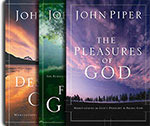
DESIRING GOD:The message of Desiring God is that God is most glorified in us when we are most satisfied in him. In this book, Piper calls this worldview “Christian Hedonism” and explains why pursuing maximum joy is essential to glorifying God. He discusses the implications of this for conversion, worship, love, Scripture, prayer, money, marriage, missions, and suffering.
FUTURE GRACE: What is future grace? It is all that God promises to be for us from this second on. Saving faith means being confident and satisfied in this ever- arriving future grace. This is why saving faith is also sanctifying faith. The power of sin’s promise is broken by the power of a superior satisfaction; namely, faith in future grace. Gratitude for past grace was never meant to empower future obedience. Tomorrow’s crisis demands tomorrow’s grace. And faith that future grace will be there is the victory that overcomes the world. Future Grace contains 31 chapters – one for each day of the month – including practical chapters on how faith in future grace defeats anxiety, pride, shame, lust, despondency and more.
THE PLEASURES OF GOD: One way to see the glory of God is to meditate upon the object of his delight. In this reissued version with a new cover design, John Piper unfolds for us a vision of God through the lens of his happiness. What most delights the happiest Being in the universe? God’s gladness in being God. If God’s excellencies can be admired in his pleasures, and if we tend to become like what we admire and enjoy, then focusing on these pleasures can help us to be gradually conformed to his likeness. In other words, we will be most satisfied in God when we know why God is most satisfied in God.
Don’t Waste Your Life Book and DVD Set

DON’T WASTE YOUR LIFE STUDY EDITION: In this book John Piper describes his journey toward one great, single passion—endless joy in the crucified Christ—and challenges the reader to the same pursuit. The cost is great. But the joy is worth any cost.
DON’T WASTE YOUR LIFE 3-DVD SET: In this 3-DVD set, John Piper challenges viewers to wake up from the American dream to the soul-saving reality that “to live is Christ and to die is gain.”
* Disc 1: Book Study Edition DVD with ten 15-minute teaching sessions. These lessons are designed for smaller groups and work in tandem with the Don’t Waste Your Life group study materials (book, study guide).
* Discs 2-3: Conference Edition DVDs with four new, hour-long messages. These messages enable you to conduct your own Don’t Waste Your Life event or class.
The Complete Romans Series
After 18 years of preaching at Bethlehem Baptist Church, John Piper felt the time had come to preach through Paul’s letter to the Romans. “The glory of Christ, who is the image of God (2 Corinthians 4:4), seems more glorious to me now than it ever has. And there is no greater exposition of the Gospel of God than the book of Romans… I have a deep confidence that the best way to be lastingly relevant is to stand on rock-solid, durable old truths, than jumping from one pragmatic bandwagon to another. Romans is as solid and durable and reliable and unshakable as truth can get.” Come and worship through the Book of Romans with us!
Note on the format: MP3 DVDs can be played in computers with DVD drives and some DVD players. For best results put this DVD in the computer’s DVD drive and copy the MP3 files to your computer’s media player. They will not play in standard CD players.
As it says at the Desiring God site, there is always more to learn, always more to be excited about and more to love God for. As young men and women go off to school next fall, these resources can help them grow even more. Go here to see more information.
Clayton McDonald was taken from the earth to eternal glory on March 16 at age 18. These videos are powerful because they show a young man who saw life more clearly than most people.
Come now, you who say, “Today or tomorrow we will go into such and such a town and spend a year there and trade and make a profit”— yet you do not know what tomorrow will bring. What is your life? For you are a mist that appears for a little time and then vanishes. Instead you ought to say, “If the Lord wills, we will live and do this or that.” — James 4:13-15
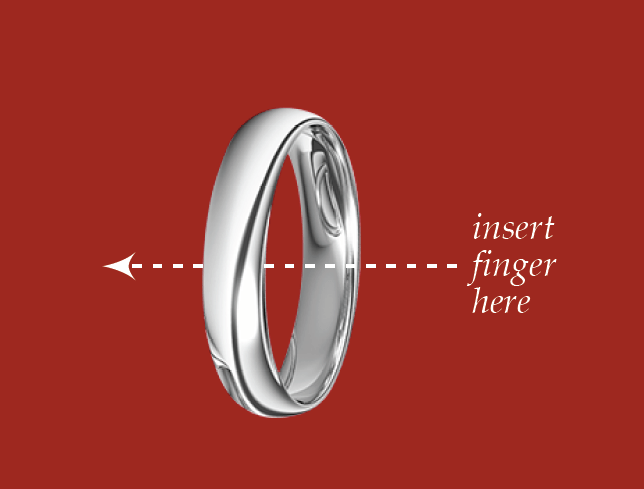 Thanks to the folks at Boundless and Focus on the Family for providing A Guy’s Guide To Marrying Well. The 32-page booklet (a free download at the link) is a collection from several really good books and sources. This is what the folks at Focus on the Family hope the guide will do for young men:
The simple purpose of this booklet is to present a path that is as Biblical as possible in order to help you marry well. But not just so that you can experience all the happiness, health and wealth that guys who marry well enjoy, but so that your marriage can point to God’s glory and His greater purposes.
This guide is based on a few timeless concepts — intentionality, purity, Christian compatibility and community — that we rarely encounter in popular culture but are a proven path to marrying well.
In a world where we get garbage like The Bachelor, it’s good to know that young men can have something more trustworthy when it comes to giving clear, sound advice.
 Rockstanding
You must be logged in to post a comment.