What is Hitchens thinking? Doug Wilson discusses ‘Collision’ with John Piper

‘Collision’ premiered Friday at the 2009 Desiring God National Conference. If you’re not familiar with it, “Collision” is a documentary on the series of debates between pastor/theologian Doug Wilson and atheist/author Christopher Hitchens on their book “Is Christianity Good for the World?”

After the movie was shown, Wilson sat down with pastor John Piper to answer a few questions about the film:

  • Christopher Hitchens said at the end of the movie that, given the chance, he wouldn’t convert the last theist. Why do you think he said that?
  • What is Hitchens’ best counterpoint to the claim that he is getting his morality for judging Christianity from Christians?
  • What is the relationship between doing apologetics and evangelizing?
  • In the video you speak about having “copiousness.” Describe what that is and whether you think it is important for pastors to cultivate.
  • What is your hope for this film?
  • What about the “s” word at the end of the film? Why do you allow for it here but don’t tolerate it from your children?
  • Why the recent upsurge in the New Atheism?
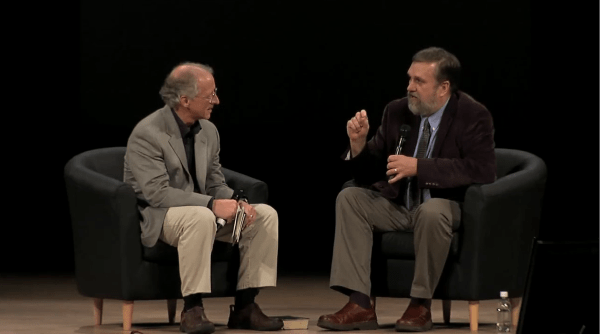
Click on the image to view the video

The 2009 Desiring God National Conference is going on this weekend in Minneapolis. The theme of this year’s conference is “With Calvin in the Theater of God.” You can follow along with the conference’s messages and find audio and video here.
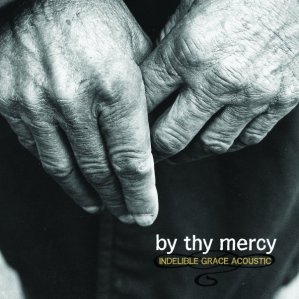
By Thy Mercy: Indelible Grace Acoustic is almost here

By Thy MercyOne of my favorite groups of artists, Indelible Grace, is just about to release its fifth album, called “By The Mercy: Indelible Grace Acoustic.”  To hear the title track, you can go here.

If you have spent any time here, you know that I deeply appreciate the work of these artists. The group’s stated purpose is “to help the church recover the tradition of putting old hymns to new music for each generation, and to enrich our worship with a huge view of God and His indelible grace.

Kevin Twit, who is the campus pastor at Belmont University and is the founder of Indelible Grace, writes on the group’s Facebook page some of the background of the group and more of its goals:

Indelible Grace Music grew out of ministering to college students, primarily through Reformed University Fellowship (RUF). We saw many touched by the gospel, and gripped by the rich theology and great poetry of the hymns of the Church. As these students began to taste more of the depth of the gospel and the richness of the hymn tradition, many began to join the music of their culture with the words of our forefathers (and mothers!), and a movement was born.
But actually, this is not really a “new” movement at all! Up until the beginning of the 20th century, it was common for people to compose new music for each generation for many of the hymns that they loved. There is no rule that says each hymn can only have one musical setting, and in fact, hymnals are designed for you to be able to mix and match words and music — that’s why they have a metrical index. But unfortunately, we lost this tradition and got stuck in a more modern traditionalism of associating one particular tune with one particular hymn. I am reminded of an incident a few years ago at the national meeting of our own denomination after a worship group had played a new version of Wesley’s “And Can It Be” (the one that is on our 1st CD by the way.) Many were upset by the new music and one gentleman stood and protested the new music saying that Wesley had written this hymn to majestic music and that he must be turning over in his grave. At this point, the organist for the convention rose and told the man (correctly) that the critic had probably never heard the music Wesley wrote the hymn to (if he even did write it to music when he composed it), and that the tune the man thought was the original was actually a bar tune!
Our goal is not change for change’s sake, but to rekindle a love of hymns and to invite many who would never associate rich passion with hymns to actually read the words. We believe that we are impoverished if we cut off our ties with the saints of the past, and that we fail to be faithful to God in our own moment of history if we don’t attempt to praise Him in forms that are authentic to who we are.Read More »

Don’t underestimate the depravity of man. Or the love of Jesus

Like Mark Driscoll, I also thought when reading this portion of scripture that it was a brief glimpse of kindness. Instead, it is just another way to show the magnitude of Jesus’ love for humanity.

HT: Zach Nielsen

You don’t believe because your love is misplaced

You can read, listen to or watch the entire message here.

David Robinson: A class act. A servant of Christ.

Like all our heroes here on this earth, David Robinson is not perfect. But the humility he displayed while being given the highest honor in his profession is refreshing and something we can aspire to. While many focused on the speech given by Michael Jordan on this night, it was Robinson who gave the memorable speech. Thanks, David.

Handle with care and wisdom: Sharp words, harsh words, and words that offer praise

Click on image to view video

James 3:10 says: Blessing and cursing come from the same mouth. My brothers, these things ought not to be.

This video is really discouraging in a way because it is a reminder of how we can deliver a load of garbage with the same mouth we deliver praises, all within the same day. It is a hard thing to realize how far we fall short.

The 2008 Desiring God National Conference, The Power of Words and the Wonder of God, dealt with how we use our words. Now a new book of essays based on that conference is available. Here is what the blurb at Desiring God says about it:

Words carry immeasurable significance: The universe was created with a word; Jesus healed and cast out demons with a word; rulers have risen and fallen by their words; Christians have worshiped through words of song, confession, and preaching. Even in our technological age, politics, education, business, and relationships center on words. Since the tongue is such a powerful force—for good or evil—we are wise to ask: What would homes, churches, schools, even the public square be like if we used words with Christian intentionality and eloquence?

The Power of Words and the Wonder of God seeks to answer this difficult question. In these chapters, derived from Desiring God’s 2008 national conference, John Piper, Sinclair Ferguson, and Mark Driscoll team with worship pastor Bob Kauflin, counselor Paul Tripp, and literature professor Daniel Taylor to help readers harness their tongues and appropriately command their silences for the glory of God and the ministry of the gospel.

We live in a charged age where our words can fly off our tongues (or fingertips) to a wide audience in a moment’s notice. The subject addressed in this book is important. We have a great and deadly tool at our disposal. We need wisdom in using it.

Industriousness grows well in the soil of humility

What does God not need? He doesn’t need proud people. He doesn’t need self-sufficient people. He doesn’t need people who are looking for their own glory. He does not need and so people like that are at odds with who God is.

This past Sunday afternoon, I had the joy of watching three people from my church be baptized. It is a wonderful thing to be a witness to this event in a Christian’s life because it points in a public way to the fact that God does a great thing in people’s live — he saves them — by first making them humble. John Piper, in his sermon from this past Sunday, says that humility “is the work of God under everything that makes all other good things in Christianity possible.” He gives just a few examples:

Faith. Would anyone depend on Christ as a needy, weak, and sinful person, if God hadn’t made him humble?

Worship. Would anyone earnestly make much of the worth of God, instead of craving to be made much of himself, if God hadn’t made him humble?

Obedience. Would anyone surrender his autonomy and submit obediently to the absolute authority of Scripture, if God had not made him humble?

Love. Would anyone seek the good of others at great cost to himself, if God hadn’t made him humble?

So, we are all in need of humility if we are to be of any good to God. The world, Piper reminds us, tells us that the best sort of courage is self-confidence. The humble person, however, is God-confident and lives his life not fearing man, but fearing God. Fearing men is a sign of pride, not humility. And because the humble person fears and loves God, that person works and is not passive. Remember what Paul wrote in 1 Cor. 15:10:

By the grace of God I am what I am . . . I worked harder than any of them, though it was not I, but the grace of God that is with me.

Because we are freed from the chains of self esteem and the concerns of the world, God allows us to be productive, creative, industrious people who do great things for God’s sake, not our own.

Is religion good for the world?

The new documentary movie Collision, based on the series of debates by Christopher Hitchens (God is Not Great: How Religion Poisons Everything) and evangelical pastor Doug Wilson will be released on DVD on Oct. 27. You can pre-order it now at Amazon.

Collision

Thank God today for John Calvin, a man who treasured God’s glory

Today is the 500th anniversary of the birth of reformer John Calvin, an important man in the history of the Christian church. To help mark the occasion, the Desiring God blog is doing a nine-part series on his biography. Here is the first part:

Five hundred years ago today, he was born Jean Cauvin in Noyon, France—about 70 miles north of Paris. His father was Gerard, son of a barrelmaker and boatman. Gerard was a lawyer, and it was his law practice that brought him into the everyday sphere of the church.

The young Jean benefitted immensely through his father’s ecclesiastical connections. He was able to be educated privately with the children of the wealthy De Montmor family and eventually garnered church support for his further studies.

Gerard originally planned a career for his son in the church. But when things later soured with the dioceses, he would redirect his son toward law.

When Martin Luther nailed his 95 theses to the church door in Wittenberg on October 31, 1517, and unknowingly launched the Reformation in earnest, the young Calvin was a mere 8 years old. He likely heard very little, if anything, about the rebellious German monk until he left for university in Paris at age 14. There he would hear more.

Portrait of CalvinAs part of the celebration, Desiring God is, today only, offering THL Parker’s 1954 biography of John Calvin, called “Portrait of Calvin,” for only $2. You can also download it for free. Why care about a man who lived hundreds of years ago and is not without controversy? I think John Piper gives good reason in his foreward to “Portrait of Calvin.”

“I am eager for people to know Calvin not because he was without flaws, or because he was the most influential theologian of the last 500 years (which he was), or because he shaped Western culture (which he did), but because he took the Bible so seriously, and because what he saw on every page was the majesty of God and the glory of Christ.”

Rachel Barkey has won. The race is over.

Rachel Barkey, who we talked about here and movingly spoke about her battle with cancer, passed away Thursday morning. We linked to it before, but if you haven’t seen it yet, go view her testimony she gave before a group of women. Keep Rachel’s family in your prayers.