Stepping aside for a time: John Piper is at war

Today, it was announced on the Desiring God site that John Piper — with the approval of the elders — will take a leave of absence from May 1 to December 31 this year. It was a remarkable letter in that he was very open and humble about the concern he had for the ministry at Bethlehem.

I asked the elders to consider this leave because of a growing sense that my soul, my marriage, my family, and my ministry-pattern need a reality check from the Holy Spirit. On the one hand, I love my Lord, my wife, my five children and their families first and foremost; and I love my work of preaching and writing and leading Bethlehem. I hope the Lord gives me at least five more years as the pastor for preaching and vision at Bethlehem.

But on the other hand, I see several species of pride in my soul that, while they may not rise to the level of disqualifying me for ministry, grieve me, and have taken a toll on my relationship with Noël and others who are dear to me. How do I apologize to you, not for a specific deed, but for ongoing character flaws, and their effects on everybody? I’ll say it now, and no doubt will say it again, I’m sorry. Since I don’t have just one deed to point to, I simply ask for a spirit of forgiveness; and I give you as much assurance as I can that I am not making peace, but war, with my own sins.

You can read the complete letter here. We can do no better than to do what he asks and remember the Pipers, Bethlehem Baptist and the ministry team at Desiring God in prayer. And, like Piper, we need also to continue daily to go to war with our owns sins.
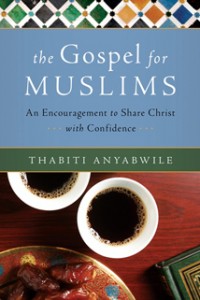
The Gospel for Muslims

The Gospel for Muslims

Thabiti Anyabwile, who grew up in a nominal Christian family in North Carolina, converted to Islam while in college. While there, he became — in his own words — “something of the campus Saul, opposing the gospel and anything having to do with the biblical Jesus.” But, God didn’t allow him to stay there and he returned to Christianity. Today, he serves as pastor of First Baptist Church of Grand Cayman in the Grand Cayman Islands.

He has written a new book called “The Gospel for Muslims: An Encouragement To Share Christ With Confidence” in which he shares ways to stir confidence in the gospel, equipping the reader with the basics necessary to communicate clearly, boldly, and winsomely. It is not an exhaustive apologetic to compare Christianity with Islam, but is meant for the average reader as a helpful guide.

Recently, Anyabwile did an interview with Trevin Wax at Kingdom People. Wax asked Anyabwile why it is that Christians feel nervous about sharing their faith with Muslims and why they should be instead be confident. This is what Anyabwile said:

Many Christians seem to accept two myths when it comes to sharing the gospel with Muslims. First, many Christians tend to think every Muslim has memorized the Qur’an and is likely a radical. That’s the “super Muslim” myth.

Second, many Christians think they need to be world class apologists, able to answer ever Muslim question or critique of Christianity. That’s the “I’m so inadequate” myth.

The result of these two assumptions is that many Christians harbor a lot of fear when it comes to speaking with Muslims. And that fear causes a crisis in confidence—they doubt that the gospel is the power of God unto salvation for everyone who believes. They shrink back, telling themselves that they don’t know enough, that their Muslim neighbor is more confident, and that it’s probably no use.

The truth, however, is exactly the opposite. If we are Gospel-believing Christians, with even a basic understanding of the “good news,” then we know all that we need to know in order to effectively reach our Muslim neighbors and friends. The power of God is not in our wisdom or in our techniques; those things threaten to empty the cross of its power (1 Cor. 1:17).

But the gospel itself, that is the power of God unto salvation for everyone who believes. In the message of Jesus’ perfect righteousness, sacrificial death for our sins, glorious resurrection, and second coming in glory, God has placed His power to make sinners new, to raise spiritually dead men to life, to change the hardest human heart into a heart that loves God, to justify us and satisfies His righteous wrath. What we need is confidence in the gospel, for God makes the gospel to triumph in every nation.

It is a very good interview. Go here to read the rest as you can see answers about how he came to faith, how the Trinity is important in Christian evangelism of Muslims and how hospitality is important. You can find his book here.

Here is how you can use the free ESV on your iPhone or iPod Touch

Crossway Books recently released the free ESV app for iPhone (and iPod Touch), but here is an actual video review showing you how it looks in action. It looks great!

Here is the Crossway page detailing some of the things you can do with this.

What is the good news of the gospel?

Greg Gilbert has written a new book, “What Is The Gospel?” in which he tries to clear up some misconceptions about what the gospel is and present it clearly. As Kevin DeYoung says, “Greg Gilbert, with a sharp mind and a pastor’s heart, has written a book that will be helpful for seekers, new Christians, and anyone who wants to understand the gospel with greater clarity. … As a sure-footed guide to a surprisingly controversial subject, it clears up misconceptions about the gospel, the kingdom, and the meaning of the cross.”

Gilbert explains why he wrote the book in this interview:

Here is a portion of sample chapter that you can read for free online:

Since the very beginning of time, people have been trying to save themselves in ways that make sense to them, rather than listening and submitting to God. They have been trying to figure out how to get salvation to work—how to get the gospel to work—apart from the Wicket Gate, that is, apart from the cross of Jesus Christ.

That is no less true in our own day. Indeed I believe one of the greatest dangers the body of Christ faces today is the temptation to rethink and rearticulate the gospel in a way that makes its center something other than the death of Jesus on the cross in the place of sinners.

The pressure to do that is enormous, and it seems to come from several directions. One of the main sources of pressure is the increasingly common idea that the gospel of forgiveness of sin through Christ’s death is somehow not “big” enough—that it doesn’t address problems like war, oppression, poverty, and injustice, and really “isn’t terribly important,” as one writer put it, when it comes to the real problems of this world.

Especially now, when we are in the Easter season, this is a good book to consider. But since it is small (124 pages) it would be a great book to read at any time and to give to others as well for good, sound advice.

The favor you didn’t ask for but God gave you anyway

I was reading the blog of a friend who is living overseas and this story really struck me as some kind of providence that God had provided (although I don’t exactly know why, but that’s what it seemed like). Perhaps I could be accused of overspiritualizing everything, but I know that there are no such things as coincidences. It would be better that we teach ourselves not to shrug off every occurrence in our days and think about how God has his hand on every moment of our lives. How would your life change? How about your attitude?

Today, as I think about it, I would pray that my eyes be opened to see that God is working in the details of my life. When the Bible says in 2 Chronicles 16:9 that the Lord “run(s) to and fro throughout the whole earth, to give strong support to those whose heart is blameless toward him” that encourages me. It is good to know that God is working in ways that I haven’t even thought of yet. So, it’s a good thing every once in awhile to stop and look around you. There are amazing things happening.

God is still God. And He is still good. To God be the glory

If you then, who are evil, know how to give good gifts to your children, how much more will your Father who is in heaven give good things to those who ask him! — Matthew 7:11

From Zac Smith: God cannot give me a bad gift … If God chooses to heal me, then God is God and he is good. If God chooses not to heal me, then God is still God, and he is still Good. To God be the glory.”

HT: John Piper

What makes parenting hard: There are no easy times, but there is hope

The biggest problem we face in this world, John Piper preached this past Sunday, is not politics or culture or choices we make but the power of sin. Because sin entered the world, childbearing and childrearing, for one example, became hard. There are no easy times for parents, Piper said, although some times may be harder than others. “If you think (parenting) is easy, you’re dreaming,” he said. “Or wait a few days.”

His sermon, “Parenting with Hope in the Worst of Times,” looked at the situation the prophet Micah was in around 700 years before Jesus was born. What we see in Micah 7 is parenting in the worst of times, where the situation in his culture and at home is bleak. There is no one he can trust, whether it’s in his community or even his own home. In verse 5: “Put no trust in a neighbor; have no confidence in a friend; guard the doors of your mouth from her who lies in your arms.” And it goes further in verse 6: “For the son treats the father with contempt, the daughter rises up against her mother, the daughter-in-law against her mother-in-law; a man’s enemies are the men of his own house.”

Is this uncommon? No. Many have families that are torn with strife, broken in some way either by corruption or some other problem. Or even something else. Jesus in Matthew 10:34 quotes this very passage where he talks about the way he divides one family member from another because of his calling. He does it. Not because he loves to break up families, but because there is something so radical about what Jesus demands that it causes disruptions in families. You know what this looks like. The family that doesn’t get that call accuses the one called of being “arrogant” or “too good” for them. Jesus wants them all, but the split can happen over Jesus. The point is is that the tear is not always over some evil.

What is the response? What can we learn from what Micah says? Here are his words from Micah 7:7-10:

7 But as for me, I will look to the LORD; I will wait for the God of my salvation; my God will hear me. 8 Rejoice not over me, O my enemy; when I fall, I shall rise; when I sit in darkness, the LORD will be a light to me. 9 I will bear the indignation of the LORD because I have sinned against him, until he pleads my cause and executes judgment for me. He will bring me out to the light; I shall look upon his vindication. 10 Then my enemy will see, and shame will cover her who said to me, “Where is the LORD your God?” My eyes will look upon her; now she will be trampled down like the mire of the streets.Read More »

Hopeful harmony: Salve for the weary soul

I love to sing, and I love to hear good singing. While it is always a blessing for me to sing with other believers in church, it is especially sweet to hear those who sing harmony. A couple of weeks ago, I stood next to (we stand when we sing at my church) my wife at church and enjoyed singing while also listening for the sweet sounds of her harmonizing with the songs. She usually sings with the worship team and so I don’t always get to experience that.

Sadly, it is a sound that is going away it seems because fewer and fewer people sing harmony. I would point to the increasing use of PowerPoint and the decreasing use of hymnals as one theory. I don’t want to go down the path of arguing against the use of PowerPoint because we can still lift our voices and sing and praise God. But when you don’t see notes, you may not think of different singing parts and therefore little harmonizing happens. I miss it.

Thankfully, I had my spirits raised this morning by a wonderful clip that Robert Cottrill posted on his Wordwise Hymns site. On this date composer Joseph Philbrick Webster was born. Among many compositions, he wrote the music for Sweet By and By. I nearly cried when I heard this  — for the beauty of the words I was hearing and because it had been a long time since I had sung in a group that way: people singing parts with no accompaniment! I just savored that. Today, it was a salve for me as I live between two worlds.

We shall sing on that beautiful shore
The melodious songs of the blessed
And our spirits shall sorrow no more,
Not a sigh for the blessing of rest

In the sweet by and by,
We shall meet on that beautiful shore;
In the sweet by and by,
We shall meet on that beautiful shore.

The executive order is bogus: More hypocrisy from Obama

Andrew McCarthy at The Corner blog at National Review Online summarizes the final bit in a long line of trickery in the effort to ram the Obama health care monstrosity on America. The latest is an executive order to pacify pro-life Democrats (do those even exist any more?) to vote yes on the measure in the House of Representatives:

We spent the eight years through January 19, 2009, listening to Democrats complain that President Bush had purportedly caused a constitutional crisis by issuing signing statements when he signed bills into law. Democrats and Arlen Specter (now a Democrat) complained that these unenforceable, non-binding expressions of the executive’s interpretation of the laws Bush was signing were a usurpation Congress’s power to enact legislation.

But now Democrats are going to abide not a mere signing statement but an executive order that purports to have the effect of legislation — in fact, has the effect of nullifying legislation that Congress is simultaneously enacting?

The Susan B. Anthony List observation that EOs can be rescinded at the president’s whim is of course true. This particuar EO is also a nullity — presidents cannot enact laws, the Supreme Court has said they cannot impound funds that Congress allocates, and (as a friend points out) the line-item veto has been held unconstitutional, so they can’t use executive orders to strike provisions in a bill. So this anti-abortion EO is blatant chicanery: if the pro-lifers purport to be satisfied by it, they are participating in a transparent fraud and selling out the pro-life cause.

But even if all that weren’t true, how do we go from congressional Democrats claiming that signing statements were a shredding of the Constitution to congressional Democrats acquiescing in a claim that the president can enact or cancel out statutory law by diktat?

The dissent of the populace: When does Romans 13 not hold?

Let every person be subject to the governing authorities. For there is no authority except from God, and those that exist have been instituted by God. Therefore whoever resists the authorities resists what God has appointed, and those who resist will incur judgment. For rulers are not a terror to good conduct, but to bad. Would you have no fear of the one who is in authority? Then do what is good, and you will receive his approval, for  he is God’s servant for your good. But if you do wrong, be afraid, for he does not bear the sword in vain. For he is the servant of God, an avenger who carries out God’s wrath on the wrongdoer. Therefore one must be in subjection, not only to avoid God’s wrath but also for the sake of conscience. For because of this you also pay taxes, for the authorities are ministers of God, attending to this very thing. Pay to all what is owed to them: taxes to whom taxes are owed, revenue to whom revenue is owed, respect to whom respect is owed, honor to whom honor is owed. — Romans 13:1-7

Douglas Wilson, over at Blog and Mablog, is about to do a series of posts looking at Romans 13. It is hard to sit by and watch the way our government is working in ways that is highly objectionable. Indeed, in ways that seem criminal. Yet, as Christians, we are to look to God’s word as our guide. We are Christians first and then citizens. Wilson takes up the issue in part:

(Evangelicals) have come to believe that “not allowed” is the necessary meaning of — all together now! — Romans 13. When you get back to the Shire, whatever the sallow-faced thug leaning against the gate says you have to do, you have to do. He is leaning against the gate, isn’t he? I know there is nothing in the Constitution about that, but the Supreme Court said there was. And they are leaning against the gate too.

The doctrine is a convenient one, and it comports well with those who would make cravenness into a theological virtue. A great deal can be said about Romans 13 (which I hope to do, Lord permitting, in the weeks to come), but in the meantime, let this suffice.

Although the populations of different nations and cultures have different threshholds for what they will put up with, the consent of the governed is still a bedrock principle. At a certain point, it becomes obvious that the “consent of the governed” is not an ideal for democracies to strive for, but is rather an unalterable reality under every form of government.

Read the rest of Wilson’s post. I look forward to what he has to say. In the meantime, we will see which way our government proceeds with our business.